From an earlier answer of mine
The Bolsheviks were not really concerned so much with the efficiency of the two implements, but rather their political symbolism. In the immediate aftermath of the Bolshevik seizure of power it became painfully aware that the movement had no identifiable political symbol that was unique to the 1917 Revolution. The red flag, for example, had been a staple of various left-wing groups throughout the latter half of the nineteenth century. One of the common revolutionary songs of the period, "The Internationale" had its origins in the West. Likewise, a number of revolutionaries sung "La Marseillaise" with Russian lyrics. In short, in terms of political symbols, there was very little that was new in the emblems the Bolsheviks had assumed as their own in 1917.
In this vacuum, various symbols had emerged whether from below or from the middle ranks of the Bolsheviks. For example, the first approved symbol of the Bolsheviks was a the Red Army's badge, which consisted of a hammer and plow superimposed on a red star. When Lenin tasked Anatoly Lunacharsky, the head of Narkompros (the Commissariat of Enlightenment and Education) to hold a competition for a new national symbol in 1918, there was already a well-defined corpus of political symbols for Lunacharsky to chose from.
The design chosen by Lunacharsky was a combination of the hammer, sickle, and a short sword. Each of these items allegedly symbolized the troika of the workers that brought the Bolsheviks to power: the urban proletariat (hammer), the peasantry (sickle), and the Red Army (sword). Lenin balked at the inclusion of the sword and after much debate with Lunacharsky, the sword was removed from the winning design. The emblem became ubiquitous in what would become the USSR and was prominently featured on the cover of the first constitution of the RSFSR in November 1918.
The choice of the sickle and hammer was one which simultaneously tapped into both a long tradition of political symbolism and sent a bold message about the Revolution. The hammer had been a symbol of the working classes in Europe for quite some time, and the sickle was also a symbol of the Russian peasantry. As hand tools used by individuals of a distinct class background, both images together conveyed a message of class solidarity of the toiling masses against their oppressors. This was not just an idle symbol in the context of 1917/1918; the Bolsheviks portrayed themselves both to their enemies/rivals on the left (Mensheviks and SRs) and to domestic audiences that they were the true champions of both peasants and proletarians.
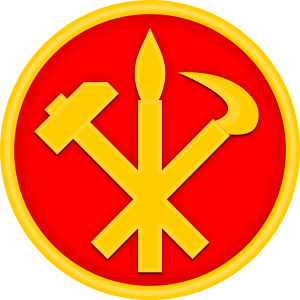
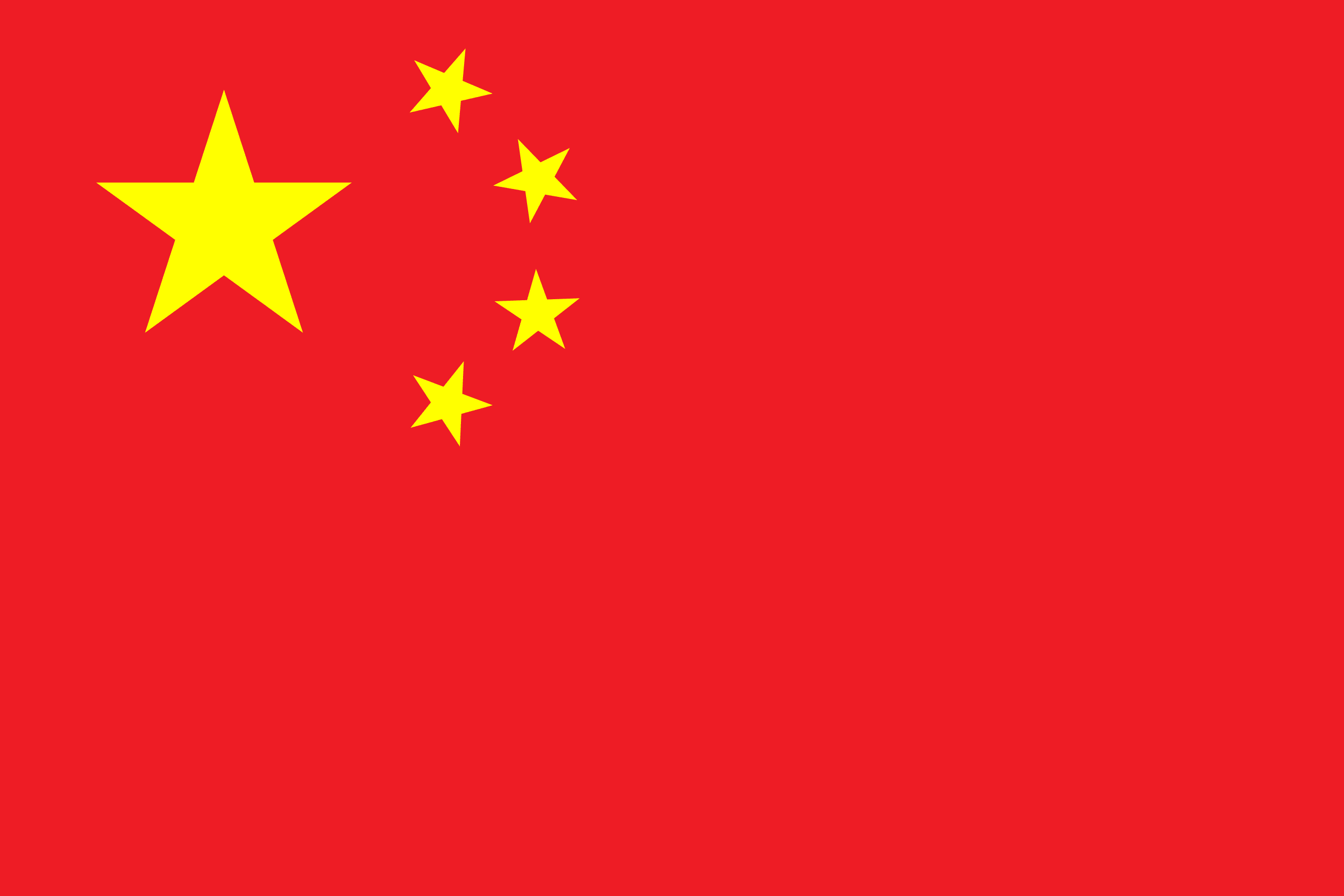
The type of symbolic iconography was not uncommon for Communist states that took shape after 1917. Often the Communist Party leaderships sought symbols that would evoke the Soviet flag, but incorporated indigenous elements that would distinguish them from the USSR. The emblem of Worker's Party of Korea is a good example of this trend. The hammer and sickle comes from Soviet influence (albeit the sickle in this case is more for rice), but it incorporates a writer's brush to symbolize the working intellectual. Similarly, the flag of the People's Republic of China uses Soviet red-yellow scheme and the long established tradition of using a star to symbolize communism, the number and placements of stars represented conditions unique to China in the 1930s and 40s. The larger star naturally symbolizes the Chinese Communist Party, but the surrounding smaller four stars represented the four class groups (peasantry, proletariat, petty urban bourgeoisie, national bourgeoisie) Mao's writings had identified as allegedly allied with the CCP for victory over the KMT.
So the Soviet decision of the hammer and sickle in 1918 provided subsequent Communist groups and iconographic template for national symbols, many of these groups sought to break out of the Soviet mold without undercutting the overarching symbolism of unifying various class groups under the banner of the Communist Party.