The Britannica page for the Chimu says that "The Inca absorbed much of the Chimú high culture, including their political organization, irrigation systems, and road engineering, into their own imperial organization".
Can anyone elaborate on what these systems were and why they were so impressive?
Wow, somebody actually asked a question about the Chimu! This is a unicorn of a question indeed. I’ll do my best to answer this - and if anyone else who knows about the Andes (perhaps /u/CommodoreCoCo) wants to weigh in, I’d be grateful for the help and any corrections or further context.
First, some background on the Chimu, a horrifically understudied culture that far too few people have heard of. I feel obligated to include this because almost nobody ever asks about the Chimu and they’re so interesting.
The Chimu polity (Called the Chimu Kingdom, The Kingdom of Chimor, or the Chimu Empire depending on who you ask), at the time that it was conquered by the Incas in 1470 (which is an interesting story in itself) was the largest and most powerful single polity in the Andes besides the growing Inca Empire, and predated the Inca by hundreds of years (likely dating back to the 900s AD). It controlled about 2/3rds of the “North Coast” area of Peru, which it had conquered through a drawn out process that lasted several centuries. Here is John Rowe’s map of the political situation of the Chimu and Inca Empires right before they went to war. This map is rather old, so ignore the dates. The extent of the Chimu polity itself in this picture is also in doubt, here is a more up to date map. Note that in this map does not show what the authors term “influence” to the northern site of Tumbes before 1450, and possible expansion south to the Chillon River near Lima, where the extent and nature of Chimu influence is uncertain. So Rowe's map isn't wrong, its just unclear if all the areas he has shaded in were actually directly administered by the Chimu.
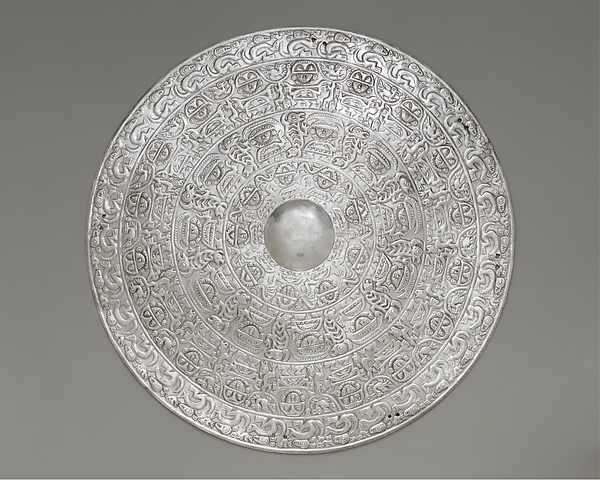
The Chimu are famous nowadays for a few things, one of which is their capital, Chan Chan, which had a population of at least 30,000-40,000 people - a true urban center and one of the largest Andean cities at the time. Chan Chan itself is a massive archaeological site that you can visit today, where you can see the remains of the Chimu palaces (usually called “Ciudadelas”), which are frankly enormous. The largest covers 212,000 meters squared and has 907 rooms of various sizes. It is generally believed that each king built a new palace, and indeed there are 10 pre-Inca Chimu kings and 10 Ciudadelas. The Chimu king at the time of the Inca Conquest (and the 10th Chimu king according to the dynastic history), Minchancaman, was abducted by the Incas and kept in exile in Cusco. The other thing the Chimu are famous for is their artifacts, particularly gold working. Here and here are two wonderful examples of Chimu goldwork courtesy of Dumbarton oaks. More artifacts: 1 2 3
Now that that’s out of the way, it’s time to actually answer your question. Here’s the relevant section of the very short article the OP linked:
There seems to have been much social stratification from peasant to nobility, and probably all the basic elements of the contemporary Inca civilization were present on a slightly smaller scale. In 1465–70, however, they were conquered by the Inca under Pachacuti Inca Yupanqui and his son Topa Inca Yupanqui. The Inca absorbed much of the Chimú high culture, including their political organization, irrigation systems, and road engineering, into their own imperial organization.
I’ve seen this claim in a few places, and it appears to me that it can be originally but partially traced back to an early work on the Chimu by the Andeanist John Rowe, specifically to the article The Kingdom of Chimor, published in Acta Americana in 1948. In it, Rowe says the following:
The kingdom of Chimor was superior in organization and culture to anything the Incas had ever seen at the time they conquered it, and they learned eagerly from their new subjects. We know too little about the constitution of Chimor to be sure just what administrative principles the Inca borrowed, but one of them was probably the system of governing through a hereditary local nobility. The political organization of the Inca empire seems to have been worked out by Topa Inca after the conquest of Chimor, and must have had the experience of Taycanamo’s [that’s the first Chimu king] descendants as his principal model. In matters of general culture the Incas probably learned the use of the rectangular town plan, mass production methods, certain metal working techniques, and refinements at least in tapestry weaving and feather cloth making from the people of Chimor. North coast workmen were much respected and a colony of them was established at Cusco to work directly for the Imperial government.
So, according to Rowe, the Inca did adopt some things from the Chimu, although not everything the Britannica article claims. However, Andean studies have advanced significantly since 1948. Does what he said hold up? Partially, yes.
For one thing, the Incas absolutely made use of the the prestigious culture they had just conquered. After the Chimu were conquered by the Inca, they continued to produce textiles and ceramics that incorporated earlier styles and motifs. Jerry Moore and Carol Mackey say that the Inca may have actually increased production of Chimu textiles and ceramics compared to the Pre-Inca period and distributed them more widely across their empire. Textiles were a common elite good in the andes and the Incas used them as part of their reward structure for local elites, so if the Incas were incorporating Chimu work into that system it goes to show how prestigiously they viewed Chimu culture. And, as noted by Rowe, they brought some Chimu artisans to Cusco to work for them. So, the Inca did continue to use some elements of Chimu culture.
What about political organization, roads, and irrigation? About this, I’m not so sure. I find Rowe’s claim that the Inca learned the strategy of governing through a hereditary local nobility from the Chimu to be highly unlikely. Instead, I would point to an earlier Andean polity that was based in about the same area as the later Inca Empire, the Wari Empire, as the antecedent for much of Inca political organization and even for the road system. The Wari Empire (which some would say was not an Empire, but one of many smaller polities in the Middle Horizon), dates from around 650 AD to around 1000-1100 AD, and was long gone by the time the Incas began their conquests under Pachakuti in 1438. Still, I would point to it as the state that first used Andean imperial strategies like a road system, control through local elites, and the construction of agricultural infrastructure such as mass terracing in conquered areas. We can forgive Rowe for not thinking about the Wari Empire, because back in 1948 the idea of a Wari Empire was in its infancy, and many scholars still believed that Wari sites were actually Tiwanaku (a large andean polity contemporary with the Wari Empire) sites or at least Tiwanaku influenced sites on account of stylistic similarities in their artifacts. John Rowe himself was actually the first to suggest that Wari and Tiwanaku were distinct states later on in 1956. This isn’t to say that the Chimu didn’t have roads or impressive engineering, because they certainly did, and during their rule the north coast road system was expanded, along with irrigation systems (such as the 34 mile long “La Cumbre” canal), to greater extents then ever before. It would just be hesitant to say that the Inca “learned” that from the Chimu, when there was already a cultural tradition in their heartland with similar features. Additionally, its worth noting that the Inca could hardly have picked up north coast desert irrigation systems and transplanted them into the mountain valleys of their heartland around Cusco. Terracing was a much more common practice in the highlands, and it long predates the Chimu.
In conclusion, the Inca didn’t necessarily need to “learn” their political organization, road engineering, or irrigation from the Chimu because they were part of a cultural tradition that had experienced these things already, not to mention practices like Chimu irrigation, adapted to the desert valleys of the North Coast, would have been of little use near Cusco. They did however make use of Chimu culture and artisans. I hope this answers your question! If you have any more questions about the Chimu, feel free to ask, and I’ll do my best to answer them.
SOURCES
The Kingdom of Chimor by John Rowe
The Northern Dynasties: Kingship and Statecraft in Chimor by Michael Moseley and Alana Cordy-Collins et al.
Chan Chan: Andean Desert City by Michael Moseley and Kent Day
The Chimu Empire by Jerry Moore and Carol Mackey in Handbook of South American Archaeology
The Ancient Central Andes by Jeffrey Quilter
Violence, Ritual, and the Wari Empire by Tiffany Tung
EDIT: Fixed a mistake on the Ciudadelas