Because their flag was not a red flag, but a black-white-red one.
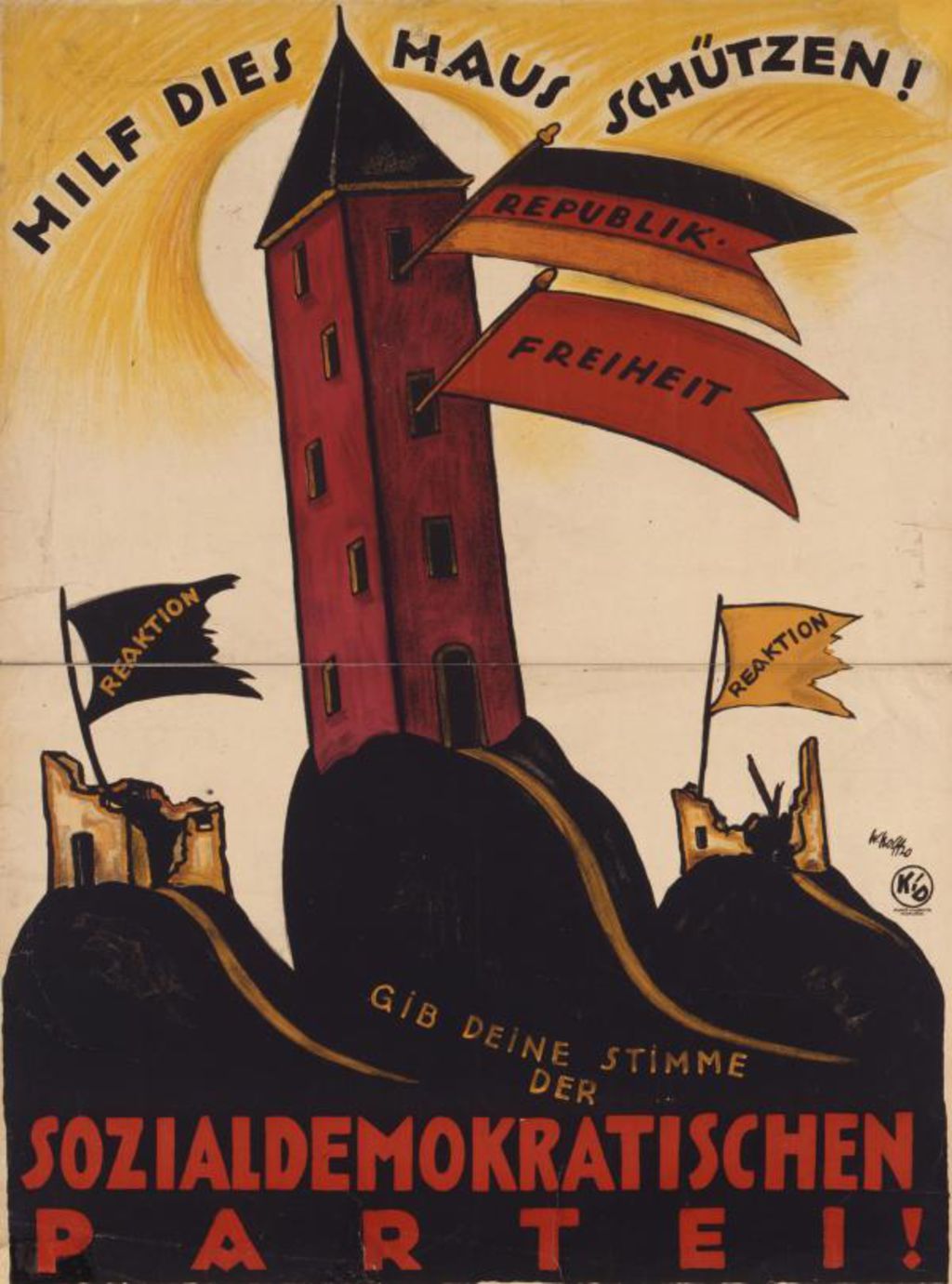
The choice of the Nazi color scheme in their banners was wrapped up in the politics of the German national flag. The flag of the united Germany was the black-white-red tricolor with a more complicated war flag used by some military units such as ships. The imperial tricolor was something of an afterthought for the unified Germany; it originated during the North German Confederation to fulfill a need for a unified ensign for German ships. The flag itself was not a Hohenzollern or Prussian one, although it did incorporate some of their traditional colors. Yet the flag was indelibly associated with Imperial Germany and its lost war. A number of Germans in November 1918 instead opted for the black-red-gold tricolor. These were the colors of the German volunteers in the war against Napoleon and emerged in the post-1815 period as the colors that symbolized a united Germany. The Paulskirche parliament and other 1848ers tended to use the black-red-gold over the red flag as the symbol of their movement, seen here quite vividly in the Germania portrait that presided over the Paulskirche parliament as seen in this lithograph. The failure of the 1848 Revolution in Germany though was not the end of black-red-gold and after 1918, it became the new national flag of Germany. Not only was black-red-gold a break from Prussia and the Hohenzollerns, it was also reaching back to a past German democratic tradition. The SPD, Ebert in particular, invested a degree of effort into making 1848 and its black-red-gold as a historical origin for the Weimar Republic. The red flag did not disappear from the Weimar SPD, but was often coeval with the black-red-gold, such as in this 1920 election SPD poster.
Black-red-gold though was not an especially popular flag though among the German public, especially among the German right. Most of the German conservatives associated the black-red-gold with betrayal of the front in November 1918 and rebellion. They instead pushed for a restoration of the old imperial flag and some of the far-right Freikorps used the battle flag openly. The NSDAP was also among this far right, but also had a degree of marketing savvy that stood it above its contemporaries. The NSDAP ensigns used the black-white-red color scheme of the imperial flag, but within a new set of symbols like the swastika. In this way the NSDAP flags bridged the divide between the various right-wing political symbols by repackaging something old-the imperial color scheme- into a new arrangement.
The Nazis once in power though did little to officially sanction the swastika flag as the new German national flag. While the black-red-gold was out, both the imperial flag and the swastika flag became dual flags of the new German state. Maps from this period would include both the swastika flag and the old imperial tricolor. The anomalous position of the swastika flag led to various incidents in which exiles and other opponents to Nazism desecrated the swastika flags on visiting German ships, most famously in 1935 when protestors tore off the liner Bremen's flag when she visited NYC. Von Hindenburg's death along with these protests led to the official adaptation of the swastika flag as the sole flag of Germany in 1935.
The black-white-red symbolism of the Nazi party flag (which became the national flag of Germany after 1933), has little to do with the choice of Communist or socialist movements to raise a red banner; rather, the color choices date back to the early Nazi movement and even predate it to an extent, being associated with the extremist German right and specifically the anti-Weimar movement.
In 1927, the most important of the German veterans' groups, the Steel Helmets (Der Stahlhelm), issued a manifesto calling for, among other things, the return to the black-white-red [flag of imperial Germany](https://upload.wikimedia.org/wikipedia/commons/thumb/d/d1/Flag_of_Germany_%281933-1935%29.svg/1600px-Flag_of_Germany_%281933-1935%29.svg.png. This made official an association with the old imperial flag that had been fomenting among the far right since the end of the war (and, indeed, the German army -- not a neutral political organization in Weimar Germany -- had kept its black-white-red banners after the Treaty of Versailles). The Steel Helmets, while in theory a veterans group, became more of a paramilitary organization over time, and associated themselves with the right wing of German politics, banning Jewish veterans from their membership and engaging in marches and street brawls. The Steel Helmets essentially became the paramilitary wing of the German National People's Party, which was eclipsed by the rise of Nazism and eventually dissolved itself after Hitler's rise to power; but the old national flag was used (and is still used) as a symbol of the far right in German politics.
In opposition to the far-right groups, the German center and left also had their own paramilitaries -- three major centrist parties founded the Reichsbanner Schwarz-Rot-Gold (Black-Red-Gold) to defend the Weimar ideals, using its banner (the flag of the Weimar Republic,) as a symbol of anti-extremist movements. This more fully cemented the black-white-red banner as a symbol of nostalgia for the old empire, and when Hindenburg was publicly sworn in as President, observers reported black-white-red flags were being displayed everywhere except on state buildings.
The Nazi flag itself drew on that color choice, with the final version either being designed by Hitler or personally approved by Hitler (or possibly both). The major difference between the Nazi flag and the old Imperial flag was, of course, the use of red and the prominence of the swastika. Red, naturally, is a color associated with socialism (which the Nazis paid lip service to, despite being not a socialist party), while the black swastika was already associated with the far-right, and all three colors associated with nationalism. The Nazis, of course, at least in theory wanted to unite parties on the right and left on the basis of race, and in particular racial opposition to Jews, in a pan-German racial state.