In a thread on here today someone asked why the USA didn’t use nukes against the Soviet Union to retake Eastern Europe, and it got me thinking, aside from all the reasons why this wouldn’t happen - Was it even possible to use nuclear force against Moscow at that time?
Did Allied war planes even have the ability to reach the Kremlin at the end of the war in terms of the distance that would need to be covered by those planes?
And, even if they did have the mechanical ability, would they be able to get all that way without being intercepted by Soviet defences?
Or would rockets have made it possible?
The answer to your first question is pretty straight forward: yes, they did have the means to deliver a nuclear payload to Moscow. The B29 superfortress, also the carrier of the Nagasaki and Hiroshima atomic bombs, has a combat range of just over 2800 nautical miles. They could have operated them from forward airbases on mainland Europe, (Berlin- Moscow for instance is a mere 1000 nautical miles) putting the B29 within comfortable reach.
The rest is speculative history which I don’t particularly care for. But from a technical standpoint the Russians could have intercepted the B29’s. Their Yak-9 fighters had an operational ceiling of 35,000ft putting it above the B29’s ceiling of 32,000ft.
Rocketry at this stage was not developed far enough by the western forces as a viable delivery method. This capability was developed after ww2, with the cooperation of captured German scientists like Wernher Von Braun. In the time frame of your question the only delivery method would have been by B29.
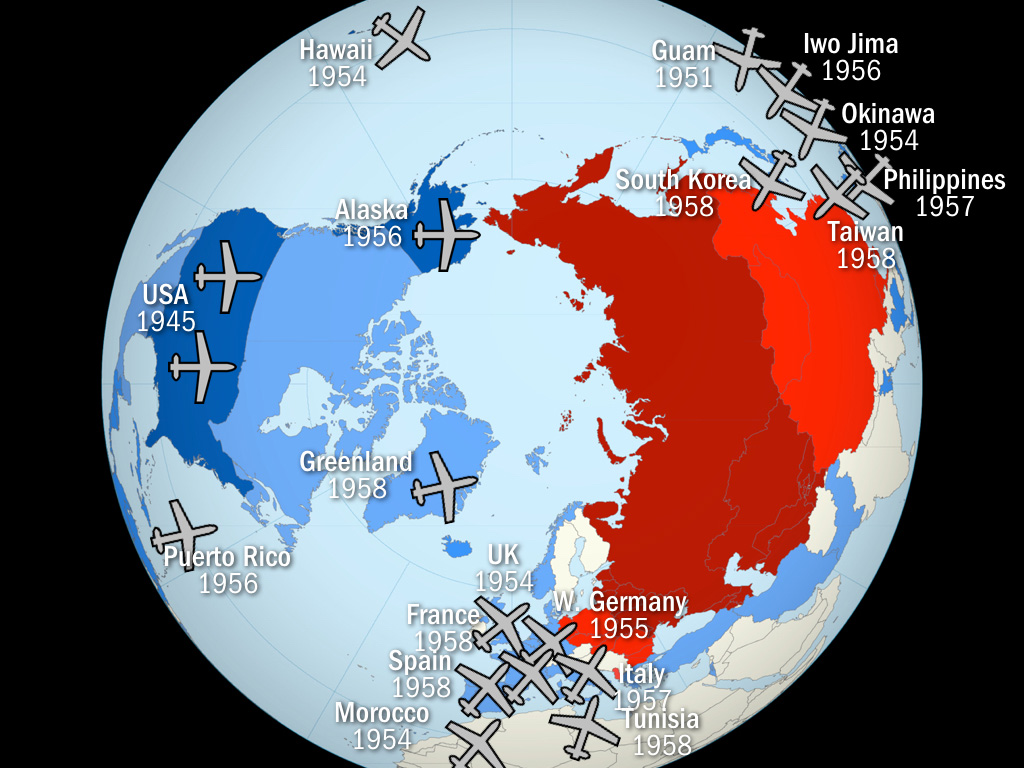
Here's literally how they planned to do it in September 1945 — through forward airbases. The US relied on forward bases for a lot of their early atomic capabilities, and sprinkled them all around the USSR. (More information these September 1945 plans is here and here. What they lacked in the 1940s, however, were very many weapons — so the threat to the USSR in the 1940s was a somewhat hollow one, as the US did not have the capability to deliver an easy "knockout blow" to the USSR. They did not gain that until the 1950s (at which point the cost of starting a nuclear war with the USSR would be much higher, as the USSR had the ability to destroy US allies in Europe and Asia with its own nuclear arsenal; the USSR did not get a strong ability to threaten the US mainland until the late 1950s/early 1960s).
The US did not start fielding nuclear weapons abroad however until around 1950, and even then in very limited numbers. Intermediate-range ballistic missiles did not get stationed abroad until the mid-1950s. By the late 1950s, just before ICBMs would become an issue, the US had ringed the USSR with nuclear deployments. All of which puts the Cuban Missile Crisis into some perspective.
ICBMs (long-range missiles) did not come into the picture really until the 1960s, and submarine-launched missiles were quite crude until the 1960s as well (there were short-range submarine-launched cruise missiles in the late 1950s, but of very limited use). (More on the evolution of the US nuclear "triad" here.)