I would guess you could fit more stuff onto a multi engined fighter, Like guns, fuel, bombs or radar. Or is there some sort of performance advantage?
The idea of a heavy fighter was one that was popular among all the air forces of the interwar period. Numerous examples of this type saw service in the war such as the Japanese Ki-45, Germany's Me-110/410, the Dutch Fokker G. I., the British Whirlwind, and the P-38. None of these heavy fighters fully lived up to their promises though. Some were qualified successes like the P-38 or Me-110, but most of the other heavy fighters were failures during the war.
Although there was no single, overarching idea behind the heavy fighter concept, the various heavy fighters do share a common set of design philosophies. Range was one factor for some heavy fighters; the idea was that a larger fighter could carry more fuel and two engines would give it the requisite speed to be competitive. This would also allow for long-range escort of bombers. Range and speed were two complimentary assets in inception of the heavy fighter as a bomber escort. The idea was that as the bombers would fly at the same altitude as their escorts. Any single-engined interceptor would have to struggle to reach altitude, so the heavy fighter escort would start out at an advantage of speed and height. These two advantages would negate the single-engined interceptors' advantages in maneuverability. On the flip side, a heavy fighter's range and speed were also conceptualized as a vital for air defense. The Luftwaffe for example envisioned that the Me-110 could pursue enemy aircraft after they had been driven out of German airspace. The range of the 110 plus its speed would allow it to overtake these intruders and chase them back across their return home.
Another alleged advantage of the heavy fighter was gunnery. Simply put, the twin-engined layout allowed for a greater concentration of fire and heavier armament. The nose or centerline was an ideal position for the ever-heavier generations of autocannon that were being developed in the 1930s. Single-engined fighters could also have these heavier guns, but this involved design compromises. Placing 20 mm or higher caliber autocannon in the wings necessitated heavier mountings and various bulges for breeches. These cut into performance, but also gunnery. Firing heavy caliber autocannon could twist the wing and distort the projectiles' trajectory. Autocannon firing through the engine block was one solution, but this limited the number of autocannon to a single gun and was limited to whatever tolerances inline engine design allowed for.
The nose armament of most heavy fighters solved some of these problems. Not only would the two engines allow for more and heavier weapons, they could be concentrated for heavy fire. There was no propeller interrupter gear the interfered with the rate of fire and a centerline armament made deflection shooting slightly easier. The potential for concentration of fire is readily apparent in his photo of the Westland Whirlwind's four 20-mm Hispano cannon. The Whirlwind could throw out an impressive weight of metal compared to the .303 bullets of its contemporary Spitfires and Hurricanes, as this photo demonstrates. The German Zerstörer concept likewise stressed the utility of heavy armament that could be brought rapidly to bear. Whether as a bomber escort or as a bomber destroyer, the Zerstörer's armament made it a dangerous opponent to be in front of.
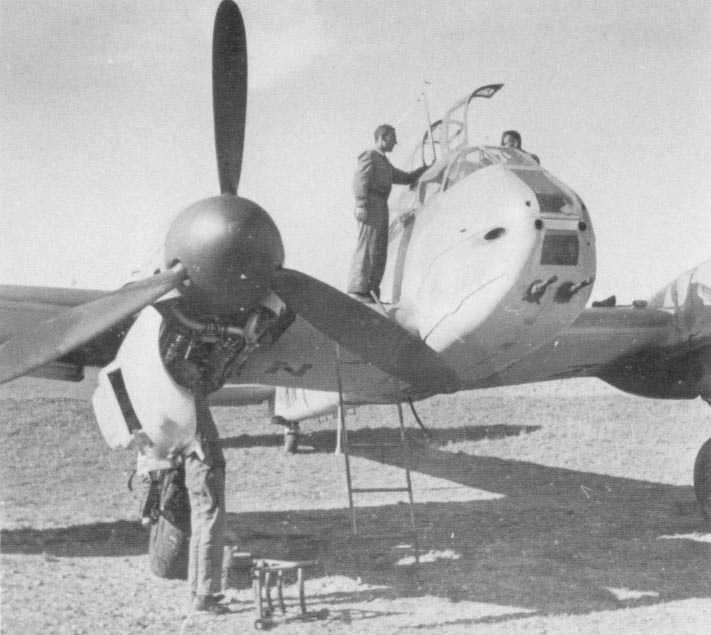
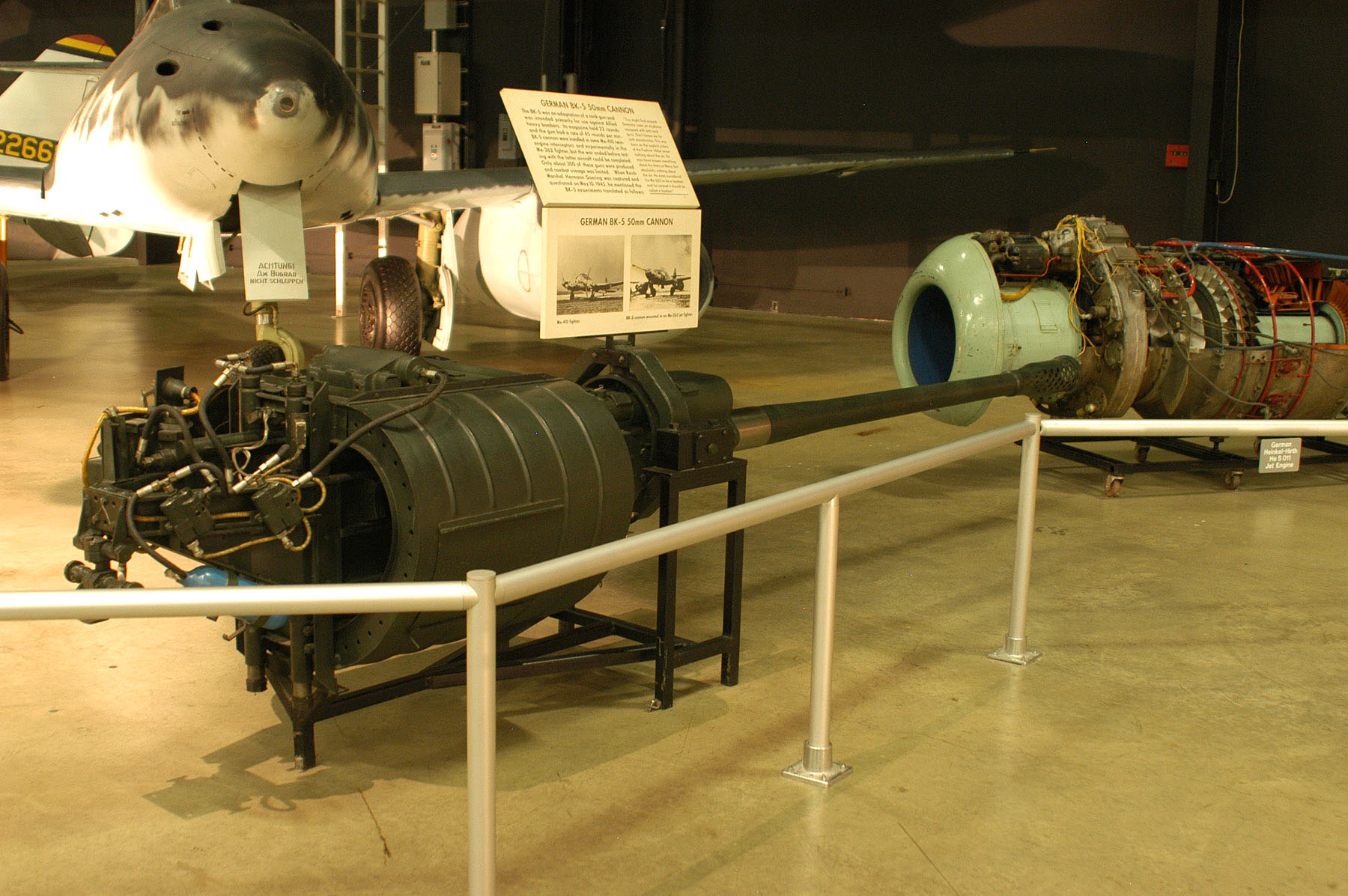
The balance between offensive and defensive use of the Zerstörer underscores another aspect of the heavy fighter. Many air forces envisioned their heavy fighter as a jack of all trades. A heavy fighter could be used as an air superiority escort, but also as a fighter-bomber or interdictor. This idea arguably peaked with the Me-410 which had a modular bombay that could be configured for a variety of missions such as bombing, bomber interception, armed reconnaissance, or an upgunned Zerstörer. Although not all heavy fighters were meant as multipurpose aircraft, the power of the twin engines allowed them to fulfill a number of different missions. They could carry new equipment like radar or ever heavier autocannon like the German 50-mm monstrosities.
One relatively underappreciated advantage that some heavy fighters had over their single-engined counterparts was that they usually had an extra crewman. This initially was as a rear gunner and radio operator, but the extra crew allowed for more sophisticated equipment like radar to be installed and operated on the airframe. This took a good deal of the workload off the pilot, which was essential for complex missions like night-fighting. The P-38M managed to barely squeeze in a radar operator station into the cramped flight pod.
The advantages outlined above though beg the question as to why did the heavy fighter prove to be underwhelming during the war. Some of the problems of the heavy fighter were that they did not take into account the explosive growth in performance of single-engined fighters. Engine development led to fast climbing and diving fighters that outstripped the capabilities of their predecessors. Moreover, the greater maneuverability of single-engined fighters meant that they could denude the effectiveness of the heavy fighter's concentrated armament. Although the Me 110 was not the unmitigated failure in the Battle of Britain that popular memory holds it to be, the RAF soon learned tactics to keep away from its deadly nose. The autocannon armament also was difficult to square with operational realities. Autocannon tended to have low rates of fire and their shells typically had poor muzzle velocity. This made it harder for autocannon to hit their targets as subsequent generations of aircraft aircraft grew faster and more maneuverable. Autocannon developed in the mid-1930s like the 20-mm MG FF had the performance envelope to reliably hit aircraft of that generation, but they had a much harder time of it against wartime opponents that were faster. Solutions to this problem such as gyroscopically-stabilized gunsights or revolver autocannons were introduced late in the war, but the technology was still somewhat immature. The heavy fighter's size was also a disadvantage. The visual signature of the P-38 or Ki-45 was much larger than their single-engined counterparts. As Hub Zemke, who flew P-38, P-47, and P-51s in the ETO noted, this was a disadvantage:
Another factor to degrade the P-38's combat capability was the identification factor. The eyes of a pilot often picked up specks in the distance that could not be immediately identified as friend or foe. These were reported in as "bogies." Appropriate tactical maneuvers were taken to prevent bogies from having the advantage of a subsequent attack. In the case of the P-38 the twin booms and slab elevator gave this aircraft's identity away- as far as the eye could see.
Aerial combat was sometimes less about the performance of the aircraft and more about who saw who first and got into an advantageous position.
The potential of the heavy fighter was always quite strong on paper. Most twin-engined heavy fighters had impressive top speeds, good range, and strong armament. In theory, these assets could outweigh the heavy fighters' lack of maneuverability, higher cost, and other demerits of the heavy fighter. But operational realities of aerial warfare in a period of constant and breathtaking development meant that such demerits became real liabilities that degraded this type's efficacy.