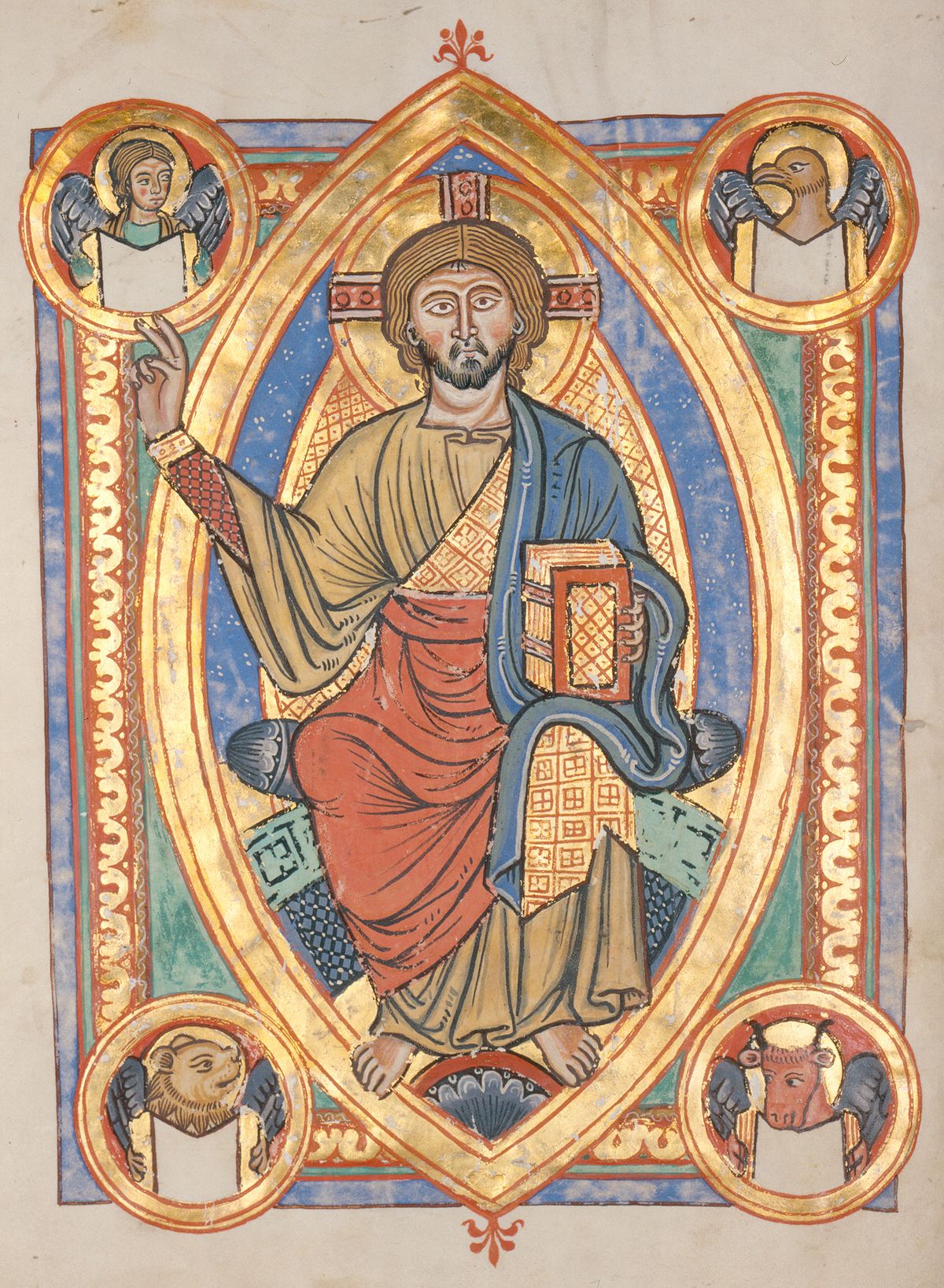
To start off, when I think of Medieval Art, I think of something like this, so, correct me if I'm wrong, but how did completely two-dimensional paintings, many of them goofy-looking, turn into the great works of art we see in the Renaissance?
I'm more interested in the techniques in shading (and who developed them) that led to 3D paintings like Mona Lisa, for instance, and improved even further in the Baroque period by painters like Caravaggio. Are there any known artists to develop such techniques?
So there was definitely no 'leap'. It is very important to remember that Giotto, the first figure in the classical narrative of Renaissance art was born c. 1270 and died in 1337. This is, of course, in the middle ages. The technique of one point perspective would not be developed for another 100 years and the renaissance style of art would not take over broadly in Europe for another 100 years.
But more importantly art is governed more by developments in style and taste than along a continuum of quality. Prior to Giotto there were some moves towards realism in sculpture in the 13th century in Germany (examples of which I gave in a post from about 5 years ago) this can also be seen in metalwork as in the Shrine of the Three Kings in Cologne (egs. 1, 2). But these were not universal, as the international gothic style developed as another mode of art up to the 15th century alongside the early renaissance art of Giotto etc. So different styles can exist alongside one another, and styles can move both in and out of verisimilar or abstract phases.
But even if we restrict ourselves to pre-13th century manuscript illuminations there are plenty which are not only clearly technically accomplished but also very beautiful by modern standards (even if not to every individual's taste). For example the Book of Kells or the Utrecht psalter.
But /u/Guckfuchs's recent post from the FAQ explains this far better than I have here.