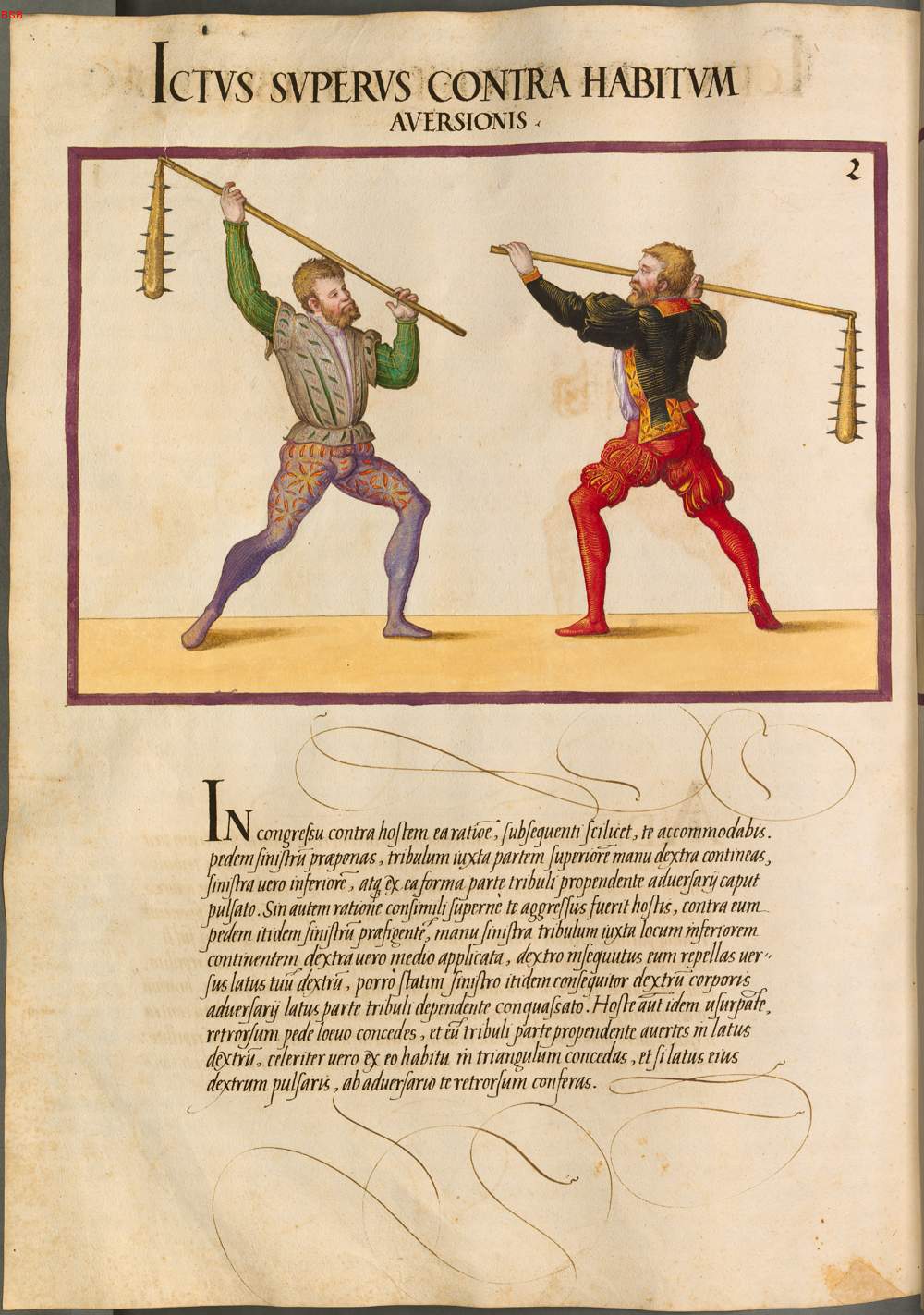
From the wiki page, it seems that most uses of the flail were by untrained peasant infantry who modified agricultural tools into their weapons. Military flails are labeled as dubious. But from my Dagorhir experience, flails are really hard to use (although you can get a good payoff if you figure out how). These qualities seem suited for a knightly weapon. Were purpose-built military flails really so rare?
Broadly, I would say that the Wikipedia article is correct. Generally, military flails are less common than other staff weapons. Compared to the variety of axes, spears, swords and other weapons on medieval battlefields, flails would be relatively uncommon. If you follow the link in the wiki page to the article that discusses the iconic '(spiky) ball and chain' style of flail, you'll see some core arguments. Namely, that flails of this design are dangerous and ungainly, and that they don't provide a significant advantage in power. While in sport combat like Dagorhir (or historical sport combats) having a 'tricky' weapon can be advantageous if it is used properly, battlefield weapons are generally selected for their practicality and versatility. Moreover, the articles notes that many depictions of these weapons are showing warriors in fantastical settings, in which case ball-and-chain flails and other arms might be there to let viewers know 'this is far away and long ago, see that warrior is swinging around a spiky ball on a chain.' Finally, many surviving museum examples of this flail design are dubious in one way or another, as the article listed above observes.
However, there are two caveats here. First of all, the article is not talking about military flails in general, but about the ball-and-chain type. There is no doubt that other types of flails were used in war, and some of those were purpose built, though they were still infantry weapons. Waldmann is his book 'Hafted Weapons of Medieval and Renaissance Europe' argues that ball and chain flails were used uncommonly - he points to one surviving example with a wooden ball and to the same sort of artistic depictions we discuss above, looking at much the same evidence and reaching a somewhat different conclusion. Waldmann is able to point to some examples that show more contemporary soldiers with ball-and-chain weapons, but he does not offer a detailed analysis of his sources. Waldmann is often rather uncritical in his use of artistic sources, so we should not take his statements as definitive. However, Waldmann stresses that if these weapons did exist, they were uncommon.
That leaves us with the other type of flail, where a stick is connected to another stick with a short (sometimes very short) length of chain or other flexible...thing. As I said, these definitely existed, and some of the depictions in art show weapons that, while crude, don't look like converted farming implements. Famously these kinds of flails were used by the Hussites - an army that started off with many peasant troops but became increasingly professional as time went on. Moreover, we can see some cultural practices that indicate that this kind of flail had become a weapon in its own right. In The 'Triumph of Maximilian' by Burgkmair and others we see soldiers carrying a kind of leather fencing flail. Paul Mair included this form of flail in his mid-16th century fencing manual. The creation of specialist practice/sport weapons and the systematization of flail fighting techniques in a formal fighting manual both speak to a weapon that has become more specialized than being an ad-hoc weapon of the peasantry. Interestingly, the 16th century also saw other non-elite weapons (like the halberd) gain more systematic treatment in fencing manuals, perhaps reflecting a vogue for formerly low-status weapons among higher-status people. Indeed, Emperor Maximilian himself is shown fencing with a flail in one of his fictionalized autobiographies. So to conclude, the evidence we have for ball-and-chain flails is scanty and has been debated. The evidence we have for 'swinging stick' flails is very firm. While they may have had their origins as ad-hoc weapons, like other weapons they show more specialized forms and more trained usage as times goes on. Even this form of flail was not common compared with other weapons of the late medieval and early modern battlefield.
Since you asked about relative rarity, I'll expand on just how unccomon flails are in our sources. You can look through artistic depictions for hours and see a handful of flails and thousands of glaives, halberds, pollaxes and spears. While English muster rolls and household accounts may list dozens of 'gleyfes' they don't mention any flails. And when we survey surviving examples, we have only a handful of surviving flails, many of them dubious, while we have dozens and hundreds of other forms of weapons. To be fair, some of this may be survival bias - truly ad-hoc peasant flails would be less likely to be preserved in arsenals. But on the other hand if 'chained morning stars' were a more common weapon of semi-professional soldiers we would expect more to survive - yet they do not. Essentially, flails are rare no matter what kind of evidence we consult - artifacts, artistic depictions, or written accounts. That's why we can say fairly firmly that they were less common and that some forms, such as the ball and chain, were very rare indeed, if they did exist.