One would think European legal philosophy was already past the point where it couldn't make difference between the property of an individual and an institution. Did priests really had the right to pass the property of the Church to their children through inheritance? How often did it happen anyway?
The medieval Church was in the business of saving souls. This is the key point to remember when looking at motivations that we might today classify as "sacred" versus "profane". The distinction would have seemed beside the point to eleventh- and twelfth-century reformers who believed that a powerful, independent, and wealthy Church was an effective Church. So scholars more typically classify the evident motivations for the ideology of clerical celibacy as ritual and practical.
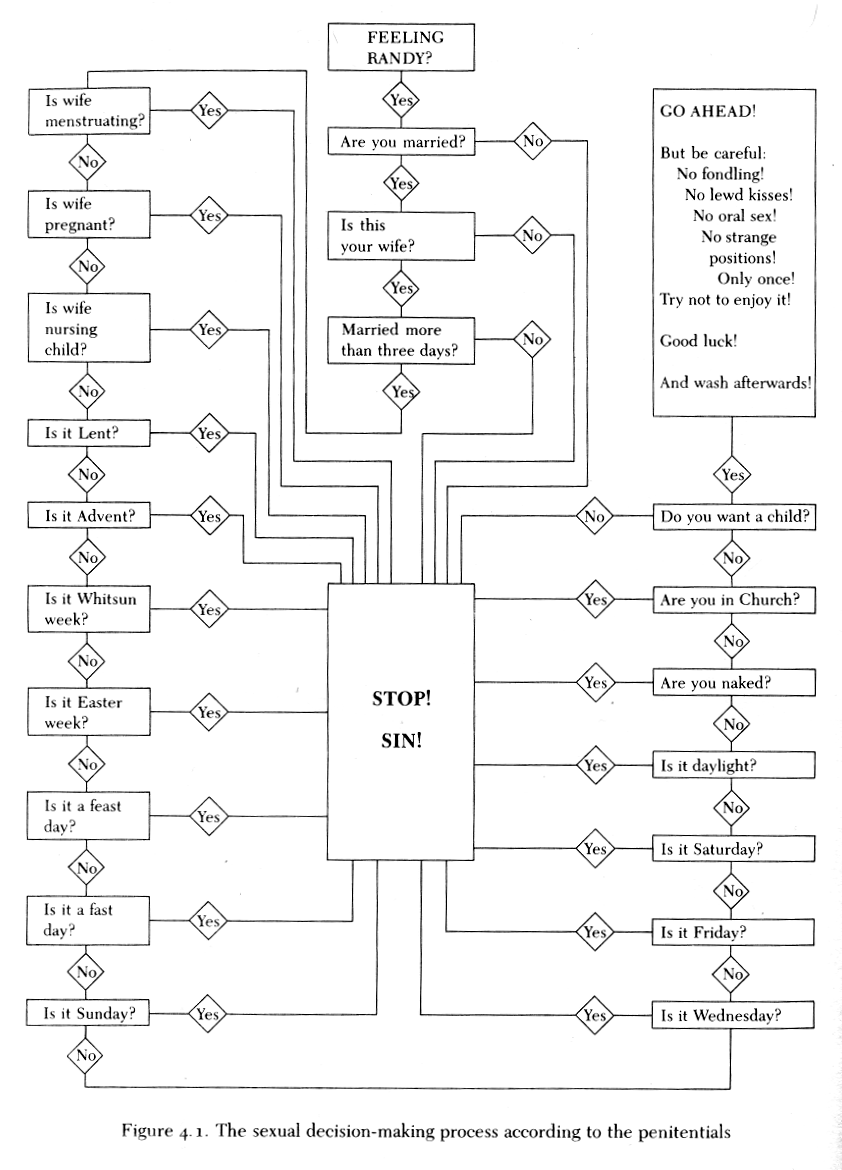
On one hand, sex was dirty and women were dirtier. For priests who stood in for Christ in celebrating the Eucharist (Communion, the major sacrament of the Church), it was necessary to be freed of "the reek and screams of snivelling brats, side by side with a smirking, randy wife...[and] daily temptations to unclean thoughts, words, and deeds" (James Brundage, of Medieval Penitential Sex Flowchart fame, paraphrasing theologian Peter Damian). Sex and marriage (implying sex), argued the reformers, threatened priests' ability to perform their duties most properly.
On the other hand, leading reformers had practical, economic/social concerns over clerics as heads of families. First, families were more expensive to keep up than one man or one man and a servant. First, reformers argued that donations/tithes to a church or cathedral chapter would go towards supporting a wife and children instead of being funneled back into the parish or cathedral church.
Second, and more importantly, reformers had good reason to fear that clerics with families were loyal to their families, bound up in worldly socio-political networks and relationships so that they thought of their families first rather than the good of the Church. The most (in)famous form of this, of course, was clerical sons inheriting Church positions from their fathers. It was standard in the Middle Ages for sons to follow their fathers into a profession; we have ample evidence that this was no different for clerics' sons (including after clerical marriage was abolished so all children were illegitimate! they just needed special dispensation from the bishop, which was basically always granted).
Why this was a particular problem was that many, though definitely not all, Church positions were amply or even lavishly funded benefices. (Many clergy, especially village priests, actually worked separate jobs such as blacksmithing in order to survive). Allowing clerics to have families of their own kept them, through marriage and through social status as virile/reproductive men, tied into aristocratic or even small-scale social networks and thus sharing the concerns of their extended family. That is, the good of the family and individual relatives rather than of the Church.
We know that the ability to link into extended family webs was a major temptation for high medieval clergy. One preferred strategy was to acquire, in addition to, say, a role as a chantry priest or parish priest, multiple positions as a canon at a cathedral--positions that did not require active pastoral ministry, but came with a nice income. This allowed priests to pass on an inheritance to multiple sons.
As for daughters, both potential marriage matches and offspring were concerns for Church authority. Nicholas Crocemannus in 12th century England passed on two of the prebends he had acquired at St. Paul's to his grandsons! And reformers had long viewed it as advantageous for the Church to have a say in aristocratic partnerships. The strict but Church-waivable rules on consanguinity (i.e. incest) might be selectively applied in order to increase the chances that future generations of a family would find it more advantageous to leave a "leased" tract of land in monastic or episcopal control rather than reclaiming its rents and products. (There seems to have been a belief that too-powerful lords would repossess lots of land, whereas if tracts of land could be kept relatively small, the Church would be more likely to maintain control.)
One of the most important things to remember about the campaign for clerical celibacy, however, is that it spent the Middle Ages basically not working. Ruth Mazo Karras and others have studied court cases involving clerical concubinage/fornication in the late Middle Ages, and basically concluded that it didn't matter as a general rule; specifics of a given case--popular anger at a particular cleric for some perceived breach of duty--were necessary to trigger an investigation and prosecution. Jennifer Thibodeaux has shown how, in the centuries following the eleventh-century reforms, clerical sons adapted to the new rules and still managed to (a) become priests (b) sometimes wealthy ones.
Further Reading: