Book 2, Chapter 10, footnote 15
The Republic of Thiascala, enclosed by the Mexican Empire, preferred doing without salt to buying from the Mexicans, or even getting it from them as a gift. The Thiascalans were wise enough to see the snare hidden under such liberality. They kept their freedom, and that little State, shut up in that great Empire, was finally the instrument of its ruin.
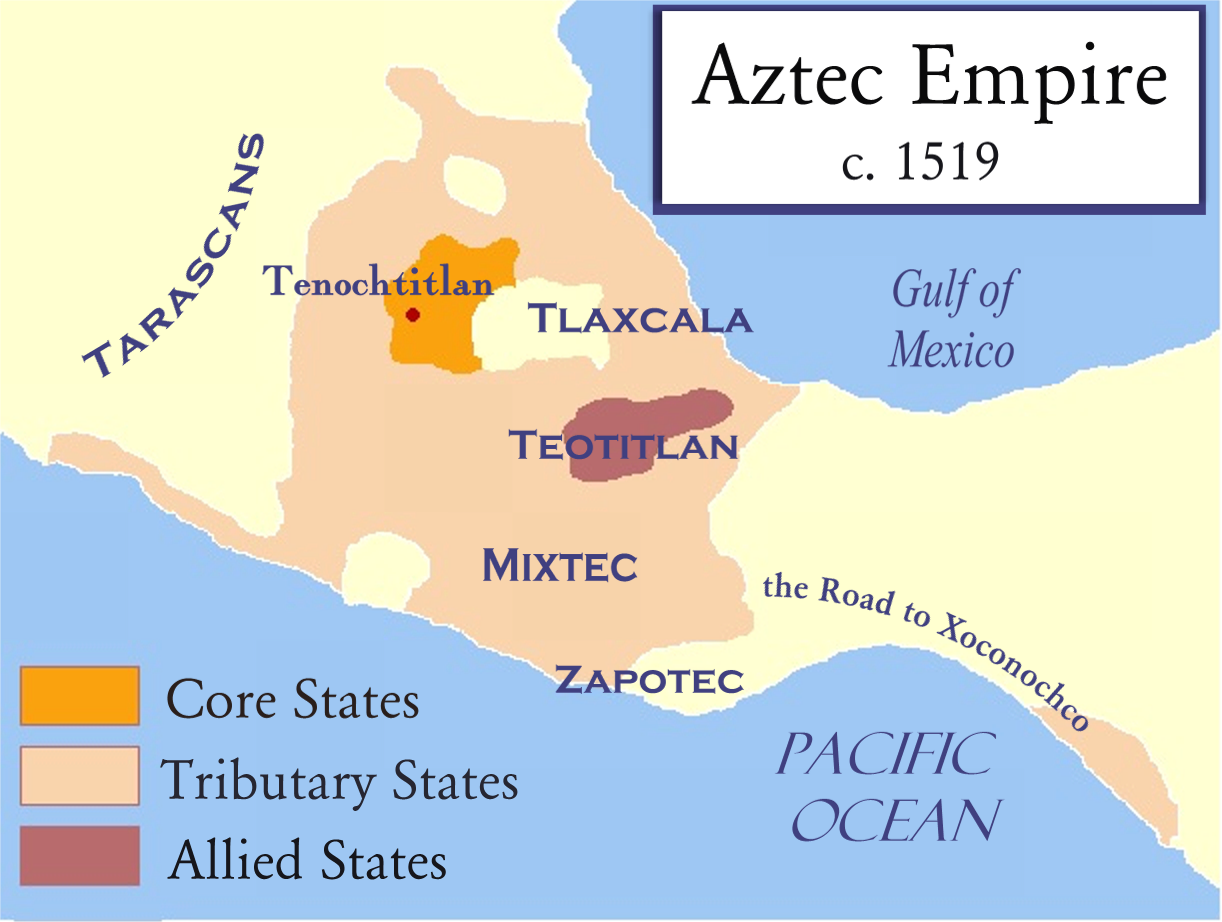
Rousseau was writing in the 18th century, so his assessment doesn't fit at all into the historiography of post-colonial America, because Mexico was still a Spanish colony when he was alive. In the passage that you quoted, Rousseau is talking about Tlaxcala, an indigenous, pre-colonial Nahua state that was entirely closed by the Aztecs (or what Rousseau calls the "Mexican Empire"). Here is a simple map depicting Tlaxcala and the surrounding Aztec empire.
It is not certain why the Aztecs never conquered Tlaxcala outright (since they completely enveloped them and clearly had greater resources and superior armies at their disposal), but a common explanation is that the Aztecs wanted a steady stream of sacrificial victims along with opportunities to train their warriors for combat, so instead of annexing Tlaxcala they conducted a series of intermittent, ritualistic wars called "Flower Wars" where Tlaxcalans were captured and sacrificed. Because their state was totally surrounded, the Tlaxcalans also could not trade with anyone except the Aztecs to acquire commodities like salt. As you can imagine, the Tlaxcalans were not very happy with this situation, and their treatment seems to have fostered a great deal of resentment and hatred towards the Aztecs. When the Spaniards under Cortes arrived in Mexico in 1519, the Tlaxcalans allied themselves with the Spanish, and played a pivotal role in the subsequent conquest of the Aztec Empire (the Spanish only had a handful of men with them, and desperately needed the manpower and reliable native allies that Tlaxcala provided). This is what Rousseau means when he says that the Thiascalans were the "instrument of ruin" of the Aztec/Mexican Empire.