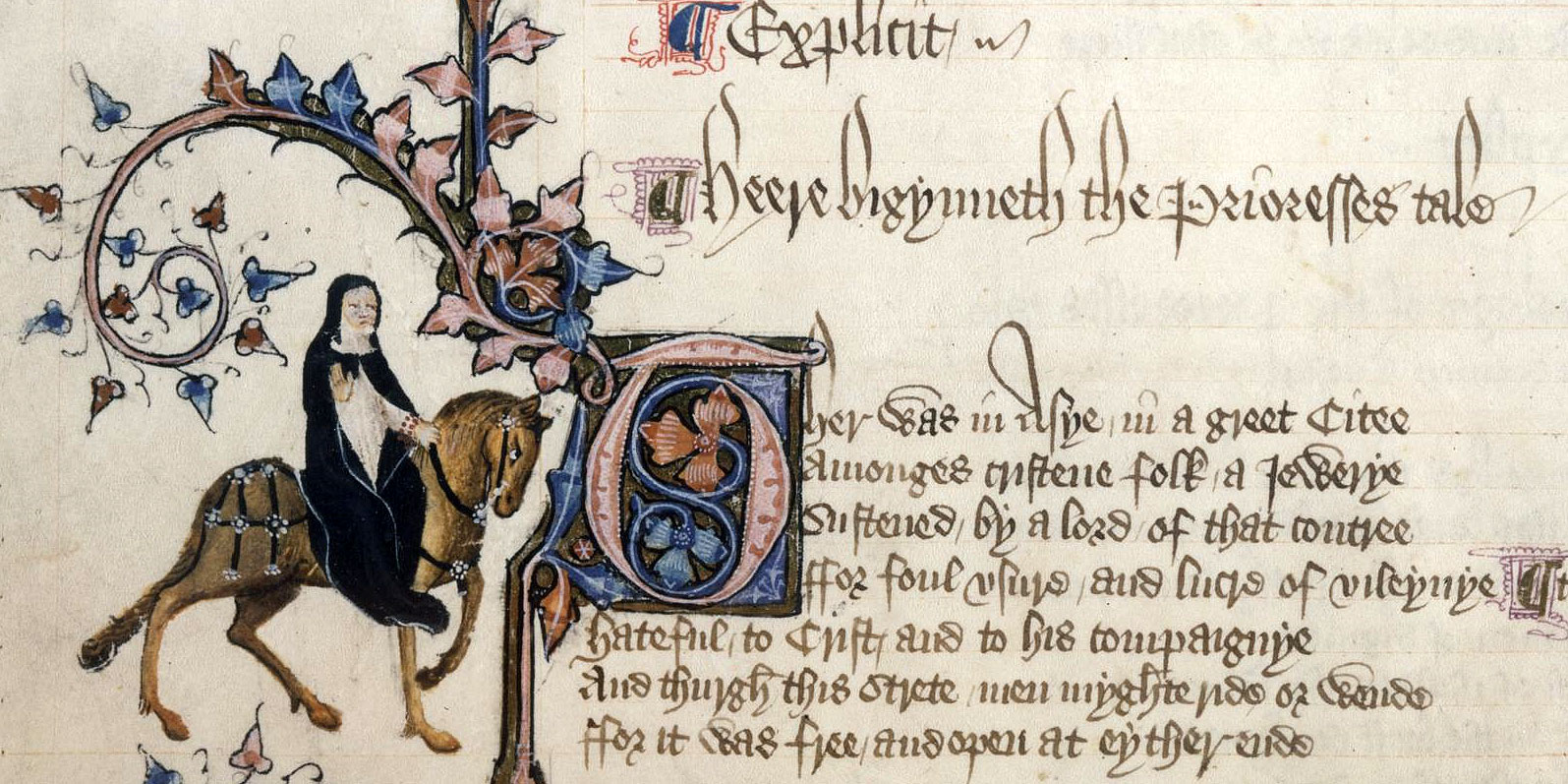
In the fourteenth-century Europe in which A Knight’s Tale is ostensibly set, the middle and upper classes had a range of options when it came to white cloth. I defer here to Newton’s excellent Fashion in the Age of the Black Prince, which exhaustively examines descriptions of clothing, purchases of cloth and oft-flouted sumptuary laws in the second half of the fourteenth century. Several kinds of textile came naturally in white or off-white, which as u/SamsonFox notes (although this comment seems to have vanished?) could further be bleached in a variety of methods – you might be interested in this blog post that tested out the effectiveness of lye and sunlight on linen. Wool, linen and imported silk of various grades (sindon, camocas etc.) and fur (ermine being perhaps the most heavily regulated in sumptuary laws) could all serve as parts or whole garments. Newton refers to some astonishingly rich white silks woven with gold sported by Cola di Rienzo (tribune of Rome), doublets, tunics and hoods owned by Edward III, livery for the Order of the Garter, garments for the king’s archers and chamberlains, and the white fur trims permitted to the wives of rich Castilians and merchants, to name just a selection. Attestations of white clothing were also attached to less luxuriant figures. The habits of Cistercian monks and Benedictine nuns (like Chaucer’s Prioress) included white cloth, as did the “whit cote” of Chaucer’s Miller, a figure on the lower end of the middle class. The full range of materials (particularly richer furs and silks) might have been beyond the scope of much of fourteenth-century society, but clearly the colour would not itself constitute a rare novelty.
I know less specifically about bleaching and cleaning, but thought I’d draw your attention to a stanza of a little fifteenth-century poem by John Lydgate known as the Tretise for Lauandres (The Treatise for Laundresses). Lydgate adopts the posture of advising the chambermaids who wash “my Ladis atyere” (my Lady’s attire), which might allude to several of his wealthier female patrons. Lydgate spent portions of his life in Benedictine monastic communities and so may well have had some first-hand experience with laundry – although what gave him the idea that laundresses needed telling how to do their job I can’t say. There’s actually a little more to the poem than that. Maura Nolan has discussed the way that it unites the language of devotional purgation of sin with that of washing clothes; indeed, in one of the five manuscripts in which it survives (BL MS Harley 2251) it is grouped with material that emphasises the devotional element, and in another (BL MS Harley 3528) it is grouped with alchemical material that highlights the poem's description of the chemical removal of stains. Nevertheless, it has a bearing on our understanding of later medieval laundry practices, and one stanza is worth including:
Of wyn away the moles may ye wesshe,
In mylk whyte; the fletyng oyly spott
With lye of beenes make hit clene & fresshe.
Wasshe with wyn the feruent inkes blot,
All oder thynges clensed well, ye wot,
Wyth water cler, is purged & made clene,
But thes thre clense, wyn, mylkes, and beene.
You may wash the stain of wine in white milk. Make the insoluble(?) oily spot clean and fresh with the lye of beans. Wash the stubborn blot of ink with wyn. All other things may be well cleansed, as you know, purged and made clean with clear water – but these three cleanse with wine, milk and beans.
The somewhat unusual “lye of beans” would (the MED entry tells me!) have been made from the ashes of bean straw and was mildly alkaline, counteracting oily stains – so perhaps Lydgate really did have some idea of what he was talking about. (Although Nolan notes the absurdity of the wine – would you then have to clean that with milk?!)
The last thing I’ll note is that A Knight’s Tale was – quite deliberately! – post-modern in its depiction of medieval clothing. White might not have been an anachronistic colour, but the cuts and fabrics often strain believability. I fondly remember a medievalist movie night in which the sight of This Hat reduced me to tears of laughter and a full hour of hiccups.
Sources:
Stella Mary Newton, Fashion in the Age of the Black Prince (1980). Simply marvellous.
Laura F. Hodges, Chaucer and Costume (2000); Chaucer and Clothing (2005); Chaucer and Array (2014). I don’t give the full titles of these for convenience’s sake. Although the ostensible focus of this trilogy is on Chaucer’s literary descriptions of clothing, they contain a great deal of valuable material (pun intended) on the real history of clothing in the fourteenth and fifteenth centuries.
Maura Nolan, ‘Lydgate’s Worst Poem’, Lydgate Matters: Poetry and Material Culture in the Fifteenth Century, eds Lisa H. Cooper and Andrea Denny-Brown (2008). The only close study of Lydgate’s poem for laundresses of which I am aware.
Related question: what was the size and importance of the medieval bleach industry?