I know France and the Low Countries were practically lost because Germany got their army through one place that was either not fortified or defended by hundreds of thousands of troops. But I never understood, how? It's a thick forest and it seems like those big panzers could've never made it through. I tried finding an answer to this question but I came up short of an answer.
I believe you have an inaccurate image of what the actual terrain was like. It was not a primeval, unbroken dense forest that they somehow managed to get tanks through.
The Ardennes was an inhabited region covered in roads. Those roads were challenging and small, yes. But they were still driving tanks down established, mapped roadways.
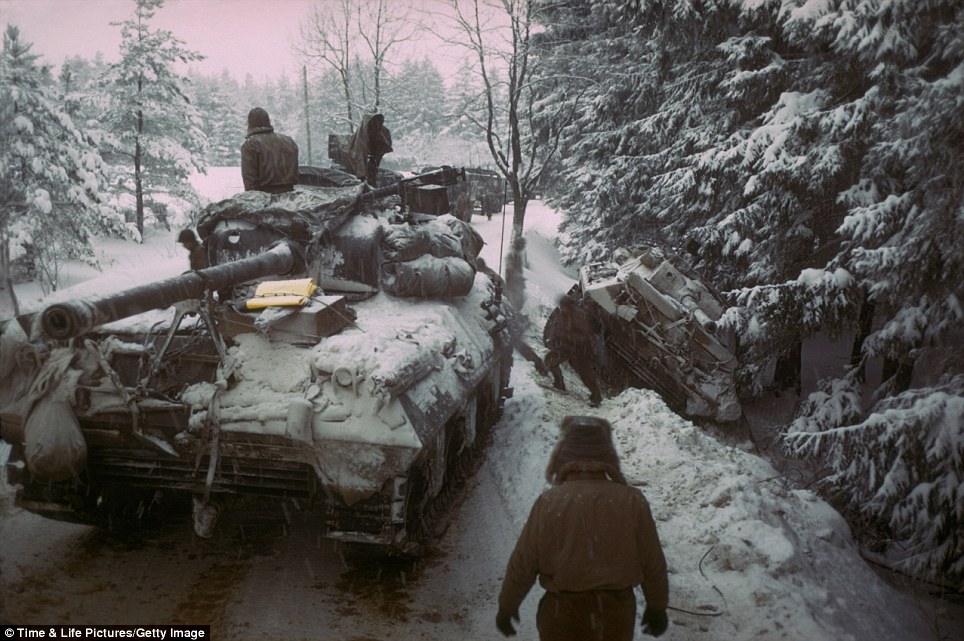
This is a good example of what the movement of tanks through a particularly challenging part of this particular landscape would have looked like. It is from the Allies at the battle of the bulge, later in the war, but it is a great illustration of both the challenge involved as well as the possibility of success. Keep in mind that this is at the end of the war, and the Shermans in this image are much larger than the Panzer IIs that the Germans needed to move. The early war vehicles were substantially smaller than the late-war behemoths that capture popular imagination.
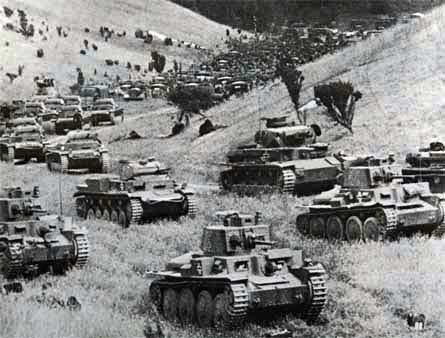
This is a relatively rare image of German tanks in the Ardennes in the early part of the war. Again, note that they were not blazing new trails through wilderness.
This is another good example, near Sedan in 1940. It illustrates that the Ardennes region was not just dense forest - it was a patchwork of cleared fields, hedges, and woods.
It was never thought that the Ardennes were actually unpassable. The French and their allies had actually conducted test maneuvers in the region before the invasion. They concluded that it was militarily impossible to safely move a large mechanized force through the Ardennes quickly enough.
It was thought that any movement through the area would be very slow and exposed to air force retaliation. It was assumed that the slow pace would ruin the element of surprise and let the French response pick it apart. It was assumed that a mass movement through the region would be easily spotted in time. It was not assumed that they could not move through it at all - just that they couldn't move through it fast enough and safely enough to matter.
And keep in mind that assumption came very close to reality. A french plane actually spotted columns moving through the forest, but the report was ignored. Early warning networks repeatedly failed. Had the Germans been properly spotted and the Air Force properly utilized in response, the tank columns would have been easily immobilized sitting ducks. The plan was considered a dangerous gamble to the Germans, and there was some surprise at how effective it actually ended up being.