A friend of mine made the observation recently that the Roman economy was unsustainable outside the conquring of new provinces and the subsequent influx of income from tribute, plunder, and the sale of slaves; and that once Hadrian set up fortifications in the Rhine, the East, and the north of Britain, that it was the end of Rome's territorial and economic expansion - which in his view was a mistake.
What is the truth about Roman economics?
Was it a sustainable system with long-distance trade with China, India, Africa, and the surrounding territories? Is there evidence that there was massive economic decline due to the end of territorial expansion or was this due to more complex issues such as lack of taxation of the rich in the dominate period, and the economic damage that civil wars and invasions cause?
The question of plunder and continued imperial expansion is, as far as I can see, more or less irrelevant to a discussion of the sustainability of the Roman economy. We might go into an examination of whether plunder ever actually stopped coming in, whether imperial expansion ever really stopped, and, if if did, whether the Roman economy truly did not survive this. But frankly I can't see the relevance. The imperial economy depended heavily on the output and economic activity generated by the provinces, but the economic impact of the creation of new provinces must be considered, in any serious modern examination of the imperial economy, negligible and misunderstands the way the Roman economy functioned.
The Roman economy, like all pre-modern, pre-industrial economies, was an agricultural economy. So much so that there's a collection of essays, Economies beyond Agriculture in the Classical World, which while challenging the notion that pre-modern agricultural economies were somehow "underdeveloped" nevertheless still cements by its very existence the preeminent importance of agriculture in the ancient economy. The major economic activity of the Roman economy was generated by farmers on the countryside, both in Italy and the provinces, and by the cities that consumed their produce. This produce consisted mainly of grain, which was traded throughout the Mediterranean, but also fruit, meat, and luxury goods like oil and wine. The influence of slave estates on the Roman economy has often been pointed to in the past, but most modern scholarship has found little reason to cling to such a model. Slave estates certainly existed in the Italian countryside and in the provinces, but their numbers and impact have certainly been overstated. Slave estates, such as they existed, appear mainly to have dealt in cash crops and likely did not generally overlap with the production of the free farms that made up the bulk of the countryside. Such estates did of course need slaves, but Roman soldiers were not idle on the frontiers, and between constant frontier fighting and trade outside the empire, it seems that a consistent source of slaves was secured. We certainly hear pretty much nothing from our sources either about a shortage or slaves or the need to conquer more provinces to provide slaves, and given the realities of the slave economy, mainly that it specialized in a particular type of (largely non-essential) agriculture, it is hard to see how a shortage of slaves might have had devastating impacts on the economy as a whole.
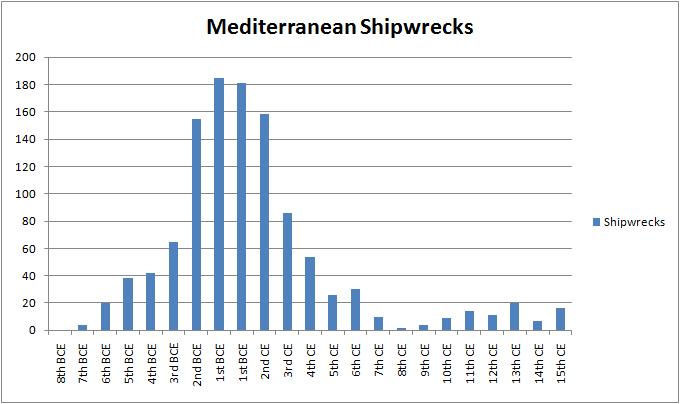
There were, of course, direct material benefits extracted from the provinces. Precious metals, for example, while relatively rare in Italy, were plentiful in Spain and other provinces, and drove the monetary economy. But the massive increase in wealth that Roman authors identified as occurring after the capture of Africa and the east should not anachronistically be shifted into the Principate. Republican provincial expansion occurred at a massive rate, and Roman armies subjugated some of the wealthiest regions of the ancient world within only a few generations. A lot of work is being done on early Roman expansionism, pushing back on the idea of Rome as an "accidental" empire, but nevertheless the impact of the rapid expansion of the Republican empire was certainly identified by the Romans themselves as having a massive impact on the available wealth in Italy. This sort of economic impact was, however, highly unusual, and by the traditional date of the end of the Roman state in the west it had been over for around half a millennium. The tribute extracted from the provinces was extremely important for state finances, but I know of no reason to believe that the Roman state ever outstripped its supply of tribute, and in any case state funding and private enterprise are not the same thing. As far as the day-to-day workings of the economy, so to speak, went, the provinces were important features of the Roman economy not so much as exploited sources of funding but as increasingly integrated parts of a Mediterranean trade economy. The image of Rome as the "parasite city" sucking the provinces dry has increasingly become discarded. All cities are parasitic on their hinterlands, and Rome as the largest Mediterranean city and the center of a vast provincial trade network that fed into it made up the lion's share of urban trade, but trade to other cities throughout Italy and the provinces drove local economies and integrated them with trade networks throughout the Mediterranean. The establishment of stable peace in the Mediterranean meant that this sea could be used as a trading thoroughfare on a scale never seen before the second century, B.C. Sea transport was both cheaper and faster than land transport in antiquity, and it could be easier and more profitable to trade with fairly distant markets oversea than a nearby market overland--consider the grain market at Rome, which dealt mainly in Sicilian, Sardinian, and African grain rather than pay the expense of hauling grain from Campania or Apulia. The volume of sea traffic in the Mediterranean during the late Republic and the Principate is staggering. There are well over a thousand excavated ancient shipwrecks in the Mediterranean, all of them trade ships, the vast majority of which are from the late Republic and Principate. To use this graph, which I just pulled from Wikipedia but which uses Parker's 1992 figures of Mediterranean shipwrecks, the trend becomes obvious. The amount of trade (and therefore market activity) generated during the late Republic and the Principate was several times what we might consider the "base" level of trade activity through a politically divided and unstable Mediterranean. The sharp decline in shipwrecks beginning in the third century cannot possibly be explained by a lack of imperial expansion in territories far from the Mediterranean, but is easily explained when we consider the breakdown of stability in the Mediterranean itself over the course of the third century. Certainly trade between the Mediterranean world and outside peoples, especially India or across Asia, occurred and was an important part of the economy, and there are others who might discuss that more directly. But it becomes increasingly clear how important trade within the empire itself was, as the provinces became more integrated politically and economically with Italy. Goods and coins from one side of the Mediterranean routinely are found on the other, and the volume of trade that we know about from archaeology and our texts is staggering. And indeed, even the "idle" (that is, not engaged in further massive expansion) armies along the frontier fed this trade economy. Roman frontier forces demanded supply and communication, opening up new routes for the transport of bulk goods and new markets for them to be sold.
As a sort of last remark I think it's important to note that, to my knowledge, no ancient author ascribes a decline of the economy to any sort of lack of eager military expansion. That alone is hardly insignificant