TLDR: Yes.
First, let's begin with an overview of medicine in the ancient Near East. People living in the Fertile Crescent believed that causes for illness included displeasing the gods, someone using black magic against you, and the work of demons.
A good example of the first case is the plague in Hittite Anatolia in the 14th century BCE. As the Deeds of Šuppiluliuma I (written by his son) tell us, the Hittite king received a letter from a widowed Egyptian queen informing the king that she had no sons and so wished to form a marriage alliance. The identity of the queen is not known, but Ankhesenamun, the widow of Tutankhamun, is the most likely candidate. Šuppiluliuma was quite understandably wary of this proposal and sent an official to Egypt to investigate the claims. The queen's claims were supported by this report, and so Šuppiluliuma dispatched one of his sons to Egypt. Unfortunately, the prince died en route to Egypt. The circumstances of his death are unclear, but Šuppiluliuma blamed the Egyptians and promptly went to war against them. The Hittites fared well in the fighting and brought back a considerable number of Egyptian prisoners-of-war. Unfortunately, these prisoners brought plague that killed Šuppiluliuma, his son and successor Arnuwanda II, and thousands of other people in Anatolia. Šuppiluliuma's young son Muršili II came to the throne and blamed the plague on his father's blasphemy.
With regard to the problem of the oath of the gods which was established as a cause for the plague, I have offered the ritual of the oath for the Storm God of Hatti, my lord. I have also offered to the gods, my lords...As for the ritual of the Mala River, which was established for me as a cause for the plague, since I am on my way to the Mala River, forgive me, O Storm God of Hatti, my lord, and O gods, my lords, for neglecting the ritual of the Mala River. I am going to perform the ritual of the Mala River, and I will carry it out. And as for the reason for which I am performing it, namely, because of the plague, have pity on me, O gods, my lords, and may the plague subside in Hatti.
There are many cases of black magic in the ancient Near East. Some witchcraft was caused by cursing someone with words. The Hittite king Muršili II, for example, claimed that his stepmother caused the death of his beloved wife by cursing her before the gods.
She stands day and night before the gods and curses my wife before the gods. She wishes for her death, saying: "Let her die!" O gods, my lords, why did you listen to this evil talk? Did my wife cause any harm to the queen? Did she curtail her power in any way? And yet, Tawananna killed my wife.
Another method was to use analogic magic to harm someone, the principle behind law §170 of the Hittite laws.
If a free man kills a snake and speaks another's name, he shall pay 40 shekels of silver. If it is a slave, he shall be put to death.
Because antagonistic magic was frowned upon, we know of black magic primarily from rituals designed to counter witchcraft. For example, this Old Babylonian ritual from Nippur contains a recipe for purifying a victim of magic.
If a man is bewitched: You parch "apricot-turnip," kupad-salt, the kidney of a lamb that has not yet eaten grass, and ernīnu-plants. He eats it and will recover.
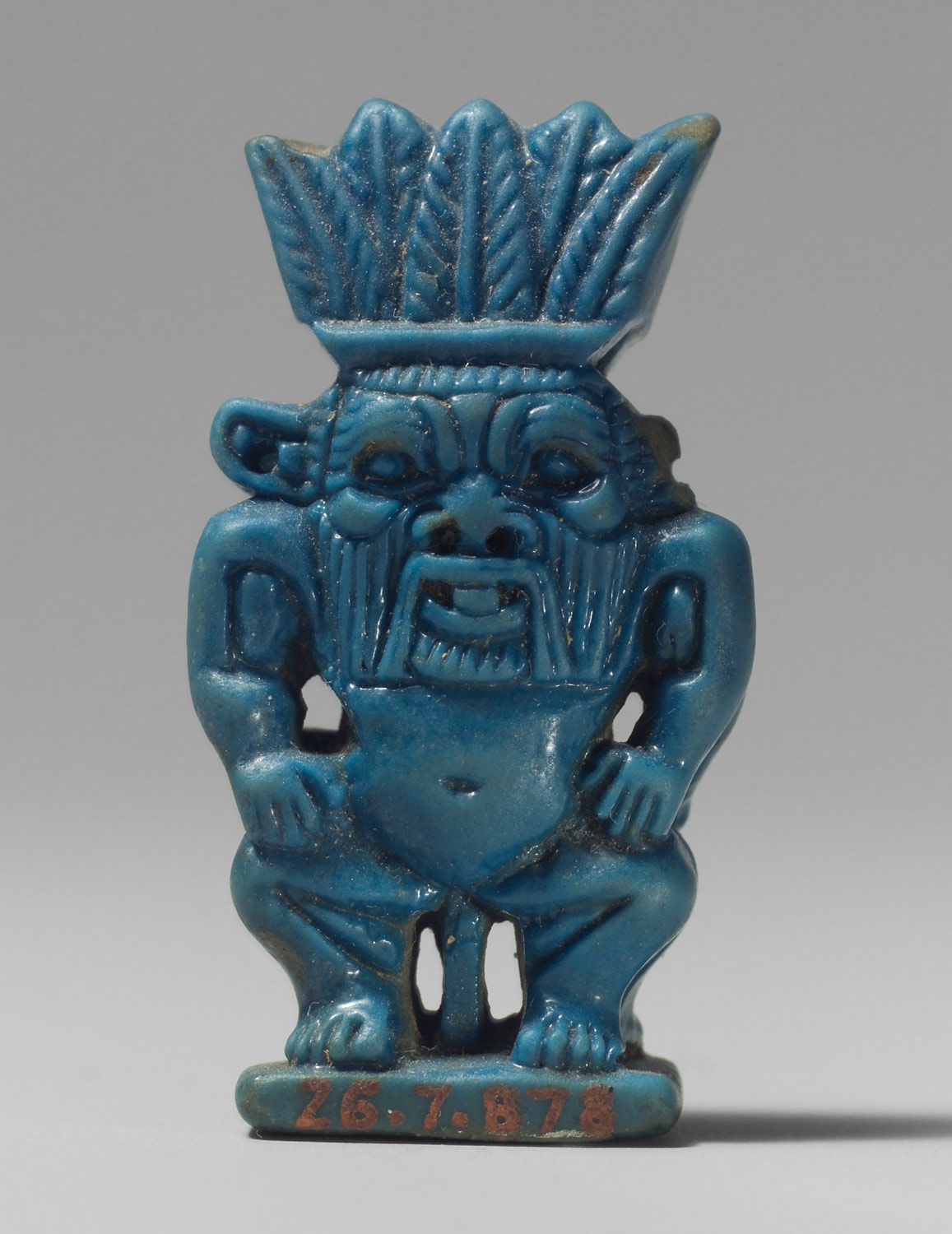
Demons, the third cause of illness, were the most feared. People in Mesopotamia and Egypt had a variety of methods to prevent the evil actions of demons. Protective amulets were especially common. In Egypt, amulets took the form of the body part the owner wished to protect or of a protective deity. Mesopotamia had similar amulets, such as the Lamaštu amulets that protected against the baby-snatching demon Lamaštu. In Egypt, mothers used magical wands to draw protective circles around their infants. One could also recite a spell to drive away demons.
Another spell: May you go away, he who comes in the darkness and enters in secret, with his nose behind him and his head backward, failing in that for which he came!
May you go away, she who comes in the darkness and enters in secret, with her nose behind her, and her face turned backwards, failing in that for which she came!
Have you come to kiss this child? I will not let you kiss him! Have you come to silence him? I will not let you silence him! Have you come to injure him? I will not let you injure him! Have you come to take him away? I will not let you take him away from me!
I have made his magical protection against you out of clover, which blocks you, out of onions, which injure you, out of honey, which is sweet for men but bitter for demons, and out of the roe of the abdju-fish, the jawbone of the meret-fish, and the backbone of the perch.
In spite of these protections, sometimes people fell prey to demons anyway. There is an excellent literary example in the Bentresh Stela, the source of my username. The story in the Bentresh Stela begins with King Usermaatre-Setepenre (Ramesses II) holding court in Naharin (Syria). The princes of the city-states of the Levant came to pay tribute to the Pharaoh, bringing gold, silver, lapis, turquoise, and so on. Most importantly, the prince of Bakhtan sent his daughter along with gifts to the king, offering her hand in marriage. The king duly accepted, and his wife took the Egyptian name Neferure.
The Bentresh Stela is a late text, probably written during the Ptolemaic period, and recalls events that took place nearly 1000 years before. Egypt had no relations with Bakhtan (Bactria) in the Ramesside period, of course; rather, Ramesses II had taken a Hittite princess as his wife. This Hittite princess took the name Maathorneferure, and it was the latter part of her name that the Egyptians remembered.
Returning to the story, in the 23rd year of the reign of Ramesses II, the king was in Thebes when a messenger came to him. The messenger had been sent by the king of Bakhtan, the father-in-law of Ramesses II, to inform him that the queen's sister, Bentresh, was gravely ill. A spirit had seized her body and refused to exit. Knowing the Egyptians' reputation for medicine, the king of Bakhtan requested an Egyptian exorcist. Ramesses II promptly summoned members of the House of Life (part of the temple) and his council. The king requested one "wise of heart with fingers skilled in writing" from among the men gathered in the palace, and the royal scribe Thothemheb volunteered.
The royal scribe Thothemheb traveled to Bakhtan but found the demon to be a more formidable opponent than he had anticipated, one that required divine intervention.
He found Bentresh to be possessed by a spirit; he found him to be an enemy with whom one could fight. Then the prince of Bakhtan sent again to his majesty, saying: "O king, my lord, may your majesty command to send a god to fight against this spirit!"
Upon receiving this message, Ramesses II went to the statue of Khonsu-in-Thebes-Neferhotep and requested his help in getting the aid of the god Khonsu-the-Provider.
Then Khonsu-in-Thebes-Neferhotep proceeded to Khonsu-the-Provider, the great god who expels disease demons. His majesty spoke to Khonsu-in-Thebes-Neferhotep: "My good lord, if you turn your face to Khonsu-the-Provider, the great god who expels disease demons, he shall be dispatched to Bakhtan." Strong approval twice [i.e. the results of the oracular inquiry]. His majesty said: Give your magical protection to him, and I shall dispatch his majesty to Bakhtan to save the daughter of the prince of Bakhtan." Very strong approval by Khonsu-in-Thebes-Neferhotep. He made magical protection for Khonsu-the-Provider four times. His majesty commanded to let Khonsu-the-Provider proceed to the great bark with five boats and a chariot and many horses from east and west.
After another year and a half, the god Khonsu-the-Provider arrived in Bakhtan, whereupon he cured the princess.
The god proceeded to the place where Bentresh was. He made magical protection for the daughter of the prince of Bakhtan, and she became well instantly.
Then the spirit who was with her [i.e. had been inside her] spoke to Khonsu-the-Provider: "Welcome in peace, great god who expels disease demons! Bakhtan is your home, its people are your servants, and I am your servant! I will go to the place from which I came, so as to set your heart at ease about that for which you came. May your majesty command to make a feast day with the prince of Bakhtan and me!"
The god Khonsu-the-Provider then ordered the king of Bakhtan to celebrate a feast day in honor of the spirit, which he did.
Now while this took place between Khonsu-the-Provider-in-Thebes and the spirit, the prince of Bakhtan stood by with his soldiers and was very frightened. Then he made a great offering to Khonsu-the-Provider-in-Thebes and the spirit, and the prince of Bakhtan made a feast day for them.