Pull up a couch, grab your favorite blanket, drizzle popcorn with all the butter, and call your geekiest bestie for the greatest historical flicks available.
We've got the best historical movies/shows right here, and we'll tell you why they're worth your time!
Our World War is a BBC 3 show that is available on at least the U.S. version of Netflix. Each hour long episode is standalone and follows a different individual/group of individuals in World War One. The events the show portrays is fairly accurate, and while at times it shows that their CGI budget was low, they held no punches in the costuming department. The first episode takes place in 1914 at the Battle of Mons, the second during the middle of 1916 at the Somme, and the third follows a Mk V. tank crew at the start of the 100 Days Offensive in 1918.
It's a Docu-drama and has sections where it cuts away to an overhead map explaining what is going on in the battle. These are frankly, the weakest points, and it would have been better served just not including those imo.
It's greatest strength is the fact that It's a Long Way to Tipperary isn't heard, at all. What I found remarkable is that it really attempts to not use popular images and ideas of the war. There's no songs from the era, but rather when music is used it's modern. Fast and punk at times too. Or instead of doing an episode on the Somme that's the first day, they chose a time after that. A very good choice imo.
It's generally up to newer interpretations on the war, and is overall very enjoyable.
While no work of fiction is perfect, there is a special place in my heart for The Mission.
The beginning of the film follows two main protagonists, Father Gabriel (Jeremy Irons) and a slaver Rodrigo Mendoza (Robert de Niro), as they arrive, via different paths, at a Guarani mission of San Carlos above Iguazu Falls in Paraguay. The film drips with complexity, from the political infighting between the Jesuits and Rome, the tension between the church and lay businessmen, and the question of how to serve God in a violent world. The role, and devastation, of the Indian slave trade is front and center in this film. There are some serious issues with temporal accuracy (events more than a century apart are pushed together for the narrative), and the film does follow tropes of "Indians on screen" (like no subtitles when the Guarani speak, a white guy just interprets), but I love this film. Also, the soundtrack is absolutely amazing.
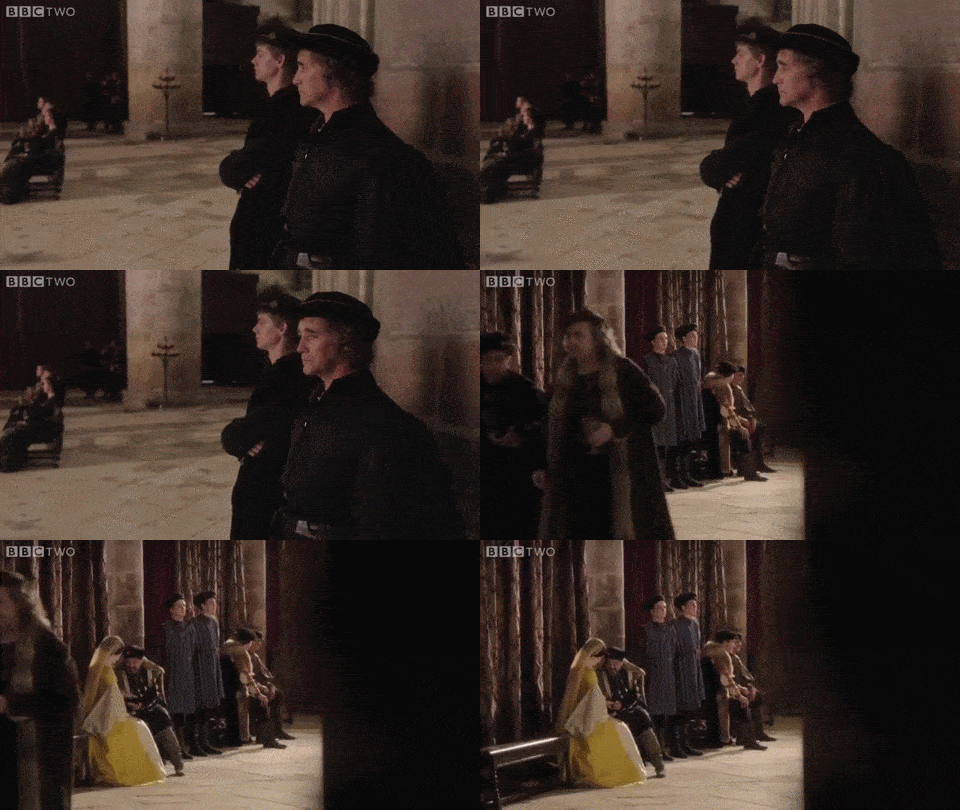
Previously I held forth about the Many virtues of the BBC adaptation of Wolf Hall. I will reproduce it here for your convenience.
First of all, the costuming of Wolf Hall is fairly closely modelled on original examples and portraits. The general silouette, from the absurdly broad shoulders of menswear to the odd stiffness of women's corsetry, is basically right - there isn't an attempt, ala Reign or the Tudors, to make characters look stylish and sexy in a modern way. The color pallete (which to be fair is easier on our eyes than the bright brimary colors of the 15th century) follows the rich warm tones you see in many garments of the period (particularly in England). The fabrics are appropriate for the time (wools and linens, no synthetics) and for the garments (no gowns made out of linen looking weird). Everyone wears hats! I repeat, everyone wears hats! These are all details, but every time they depart from our modern preconceptions about clothing, they remind us, in every scene, that this is an era and a society quite different from our own.
But more importantly, people are dressed according to their station. You can actually track Thomas's social position based on what he's wearing - from a rather plain professional black gown in the early flashbacks with Wolsey to more oppulent, textured and subtly colored fabrics as he ascends into the King's favor. The upper nobility and the royalty are dressed with appropriate oppulence - brocades, silks and furs. These class distinctions show the rigidly hierarchal nature of society, which is in contrast to productions like Braveheart, which by clothing William Wallace like everyone around him creates a false egalitarianism (meanwhile, the costuming of Game of Thrones for groups like the Dothraki and the Ironborn emphasizes similarities within cultures rather than intra-cultural class distinctions, which says a lot about how GoT thinks societies work). They balance this with using the costumes to characterize each figure. Mary has low necklines, Anne is always the best dressed person in the room, Henry's clothes try (and don't quite succeed) in making the very thin Damian Lewis look broad-shouldered, Nofolk's heavy, dark gowns and furs add to his belligerant personality and Thomas More's stained gown and velvet doublet (based on Mantel's description and Holbein's Painting) belie his paradoxical and possibly hypocritical combination of courtliness, humanist scholarship and asceticism.
The same points that apply to the costuming applies to the set designs - the desks are stacked with papers using archaic systems of filing of the sort you see in paintings of the period. Cromwell has a counting board (a simple analog calculator)! The sets and the costumes both often turn into a game of 'spot the Holbein painting', which is fun if you're like me.
The effect of all of this is that every single (candlelit) scene shows us something we don't expect. If we're open to it, every set and costume is something that is removed from our own world and our own lives. Rather than letting the audience get comfortable with the tropes of our own stories, the props themselves pull us back and remind us how foreign this all is. To me, this only invites more questions.
The Deuce by HBO is a fantastic recreation of early 1970s New York City, especially the crime-ridden and prostitution-heavy areas of Time Square. It captures the mixup with race, pimping, drugs, and mafia involvement that was so essential to the beginning of the pornography business. These would of course all combine together in Linda Lovelace's Deep Throat in 1972.
Especially of note are the advertisements, posters and signage, which was pretty comprehensively recreated from old pictures of New York. Additionally, nearly every one of the Mafia figures is based on a real-life mafioso, James Franco is based on a real-life bar owner where a lot of these types and figures mixed up in, and the NYPD is just as corrupt as they were in the 1970s.
But perhaps the best thing from a historical perspective is that it grants agency and real characterization to the sex workers that made their careers in the tumultuous era.
Also of interest is The Libertine the 2004 Johnny Depp movie about John Wilmot, the Earl of Rochester. On the downside, the film is really historically inaccurate with dates and order of events. For example, the play that the King commissioned in the movie was never actually commissioned, and there is debate whether Rochester ever actually wrote The Farce of Sodom, or The Quintessence of Debauchery. Signor Dildo, which he reads in the movies 1675 was actually written in 1673. His relationship with Lizzy Barry is overexaggerated, as he actually did have quite the happy relationship with his wife (after kidnapping her has a teenager, you wouldn't think so, but it was), but there is evidence that he would seduce women and teach them "the arts of love" before introducing them to Charles II. The film also has the timeline of his drunkenness (everyone was drunk) and his decline off--but I think it does a decent job of capturing who Rochester was as a person and how and why he advocated libertinage in the face of death.
Oh man, is it finally my time to convince people to watch the 2016 film Silence while it's on Amazon Prime? It's a historical drama directed by Martin Scorsese about a persecution-racked clandestine community of 17th century Japanese Catholics and the duo of fresh-faced Portuguese Jesuits who enter into this community in a search for their fallen mentor. Struggle ensues -- language barriers and cultural differences, political hostilities, massive quandaries around conscience and responsibility, mutually incompatible visions of empire, and the meaning of salvation. The film carries over one of the novel's deliberate inaccuracies (it fudges Alessandro Valignano's death date by decades) and adds a few less-than-accurate flourishes of its own -- somewhat stylized costuming, filming locations, the grand tradition of Anglophone actors with slightly goofy accents playing Portuguese-speakers, some mildly clunky bits that struggle to convey the novel's sense of interiority, one mildly groan-inducing pun. That said, the film is incredibly pretty, with a fabulous and award-worthy use of ambient sound in lieu of a traditional score and loads of intense, memorable performances. Issei Ogata's performance alone would have sold me on this film, Shinya Tsukamoto is amazing, Tadanobu Asano is wonderfully wicked, Nana Komatsu is heart-wrenching, and Adam Driver's marvelously horsey-looking face is put to great use. I also take my hat off to Andrew Garfield's dedication to getting into the Jesuit Zone to play the priest Rodrigues; the whole crew worked closely with James Martin, SJ and a number of other Jesuits on the historical research and Jesuit culture side of things, and they were pretty receptive to making suggested changes, which always makes me happy. (For Martin's remarks on the whole process as well as some of his fascinating nitpicks, his interview in the Journal of Jesuit Studies is a pretty neat read.)
For those who say the film is slow and boring: that's the way I like 'em, and it has more wince-inducing scenes of torture going for it than There Will Be Blood, at least. I found it an interesting and rewarding film with multiple layers of engagement with Catholicism, both Early Modern and regular modern -- the novelist Shusaku Endo's personal relationship with faith as a postwar Japanese Catholic and that of Martin Scorsese as an Italian-American Catholic. Overall it's worlds more accurate than Scorsese's last collaboration with screenwriter Jay Cocks (2002's Gangs Of New York, which is... fun) and engages pretty earnestly with imperialism and religious faith. Mix up the stiff drink of your choosing, free up two hours and fifteen minutes out of your weekend, and stream this film.
Okay, friends, buckle up, because we're going for a tour of streaming costume dramas!
Wolf Hall (Amazon)
Wolf Hall has its issues with how it presents the series of historical events, but in terms of costuming, it turns a lot of heads.
While the fabrics sometimes look a bit flimsy and cheap, it undeniably presents an authentic view of masculine and feminine silhouettes of the period - the smooth cone of women's corseted torsos beneath a wide, square (or convex) neckline, and the big, broad-shouldered mantles worn by men. It even managed to show a French hood made like an actual hood, rather than a sun visor with a veil! pic
Sure, the men don't wear accurately-sized codpieces and everyone but Thomas More strides around in anachronistic boots. It's miles better costuming than The Tudors had, with sumptuous fabrics and furs instead of boobs and glued-on upholstery trim!
Versailles (Netflix)
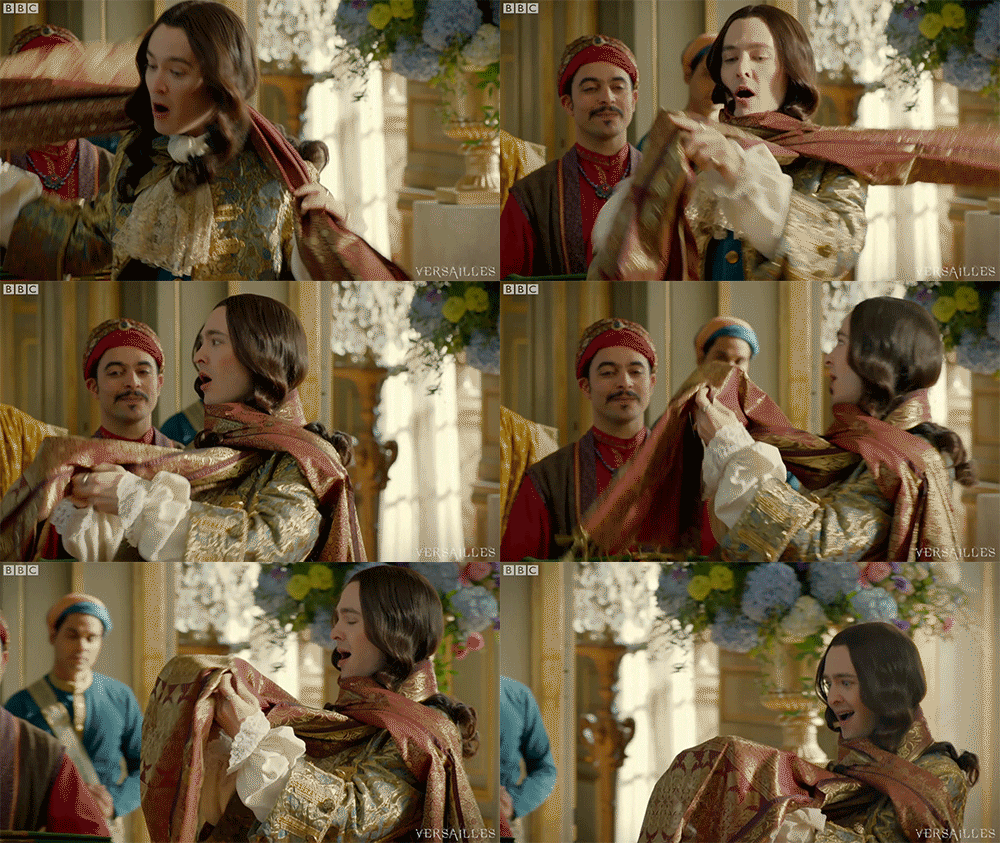
Versailles runs into the same issue of sometimes looking cheap, but the costume designer clearly gets the aesthetic of the period.
The broad necklines seen on the women at court are usually a perfect match to those in paintings, as are the rest of the bodices - for instance, the way the stiffened point is worn over the skirt, or the dropped armscyes. Women and men usually have shinier hair than was the norm at the time, but even with that they still often achieve period looks.
There's also a ton of not-bad lace. Lace was pretty important to the French economy at the time, being a luxury that had to be painstakingly made by hand rather than churned out of a machine, and once you start to notice crappy polyester lace in historical films you really appreciate the use of better stuff.
Plus, George Blagden, who's very easy on the eyes.
Cranford (Amazon)
Cranford is a big step away from the previous two entries here. It's not about royalty and it's not glossy - it's set in a small town in rural England in the 1840s where the middle-class society is largely made up of older widows and single women. (Who are often played by heavy hitters like Judi Dench, Eileen Atkins, Imelda Staunton ...)
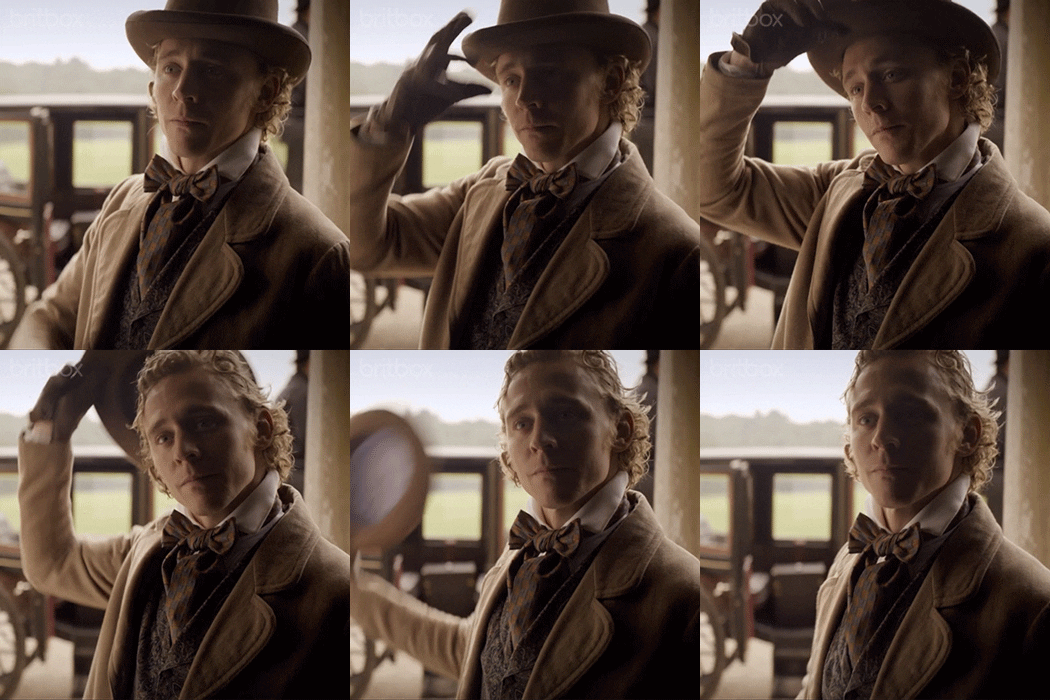
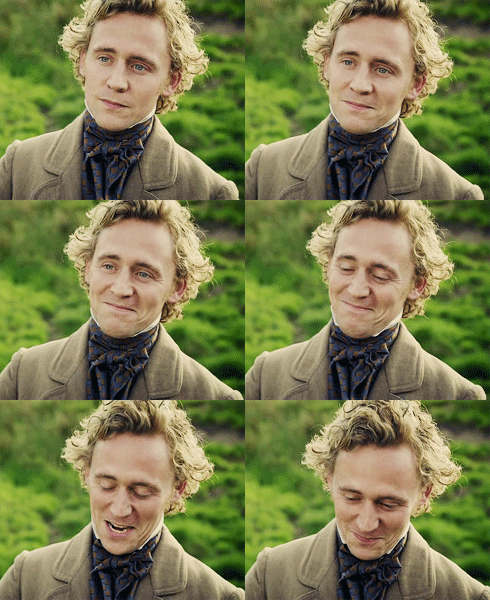
Here's the number one reason you should at least check out the Christmas special - Tom Hiddleston in period drag, ladies and gentlemen! Long before he came to mainstream American notice as Loki, T-Hids played the ingenue's love interest in the Cranford Christmas special. Amazing. When it first aired I dismissed him as "a poor man's JJ Feild".
Anyway, the show as a whole presents a great range of 1830s-1840s clothing. Some of this is the result of the costumer being loosey-goosey with the time period, but most of the characters are cash-strapped and/or older and just can't be very up-to-date. Some are just eccentric, like Lady Ludlow, who dresses like it's still 1795. There's great attention to detail, though - take a look at this crowd scene and note Philip Glenister's low-crowned hat and notched lapels, and Imelda Staunton's gathered sleeves and late-1830s-style bonnet brim.
If you are one for battle scenes and politics, you will probably be bored, but if you like good costuming and a cast made up of essentially every British period actor of a certain age, you will very much enjoy it. And let me repeat: Hiddleston as a young railway engineer.
To Walk Invisible (Amazon)
(Giphy's got no love for this movie.) To Walk Invisible is the story of the three famous Brontë sisters - Charlotte, Emily, and Anne - and their brother Branwell. To me, what makes it great is the way it fleshes out their characters: we know them today largely as names, the authors of classic literature that many people disliked reading in school. To Walk Invisible makes them into real people whose relationships to their fiction are very clearly shown.
Charlotte (right) is thirty pounds of dynamite in a three-pound bag. Small but furious, intelligent, and resourceful, she often dresses in suitlike outfits with shiny, smoothed-down hair. She well understands the world and its hostility.
Emily rarely looks as put-together as her sisters, as she acts as the family's housekeeper - their own Nelly Dean. Her dresses are often several years out of date and very worn, and her hair gets put up just to be out of the way. There's a moment in one scene where she retells a piece of old gossip to Anne that inspired her to write Wuthering Heights (basically a plot summary of the novel), and you can hear the Gothic nastiness bring out the passion in her voice. She's certainly more comfortable with the grime of life than the others.
Anne is my favorite, for a few reasons. She's more delicate and retiring than the other sisters, dressing with a little more frilliness and doing her hair more prettily. Where Charlotte expresses her intensity in her writing and Emily her interest in people being jerks, Anne is anti-jerk and pro-nice people in a more conventional way, and her books reflect that.
The Crimson Field (Amazon)
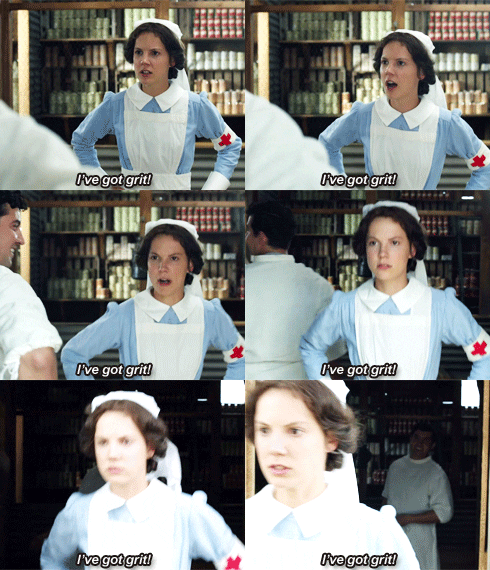
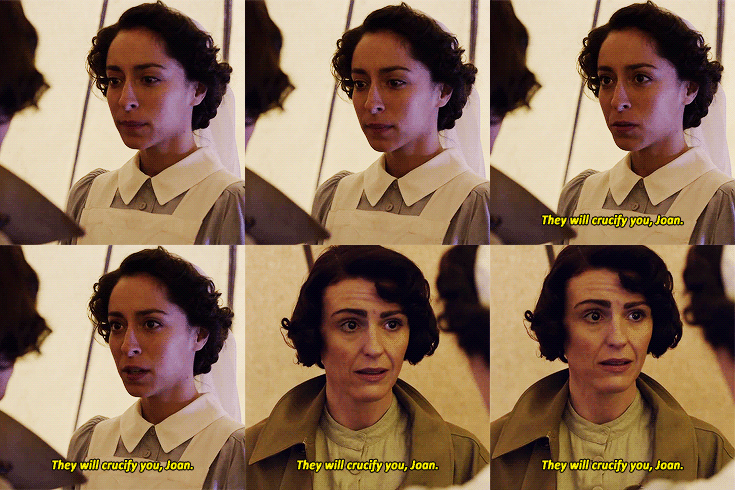
The Crimson Field is a World War I drama, and as such, it falls more to the "gritty" than "glossy". Everyone wears a uniform all the time, so there's not much to say about characterization-through-clothes. It's accurate, though! (Cue one of the military historians telling me it's not.)
Parade's End (Amazon)
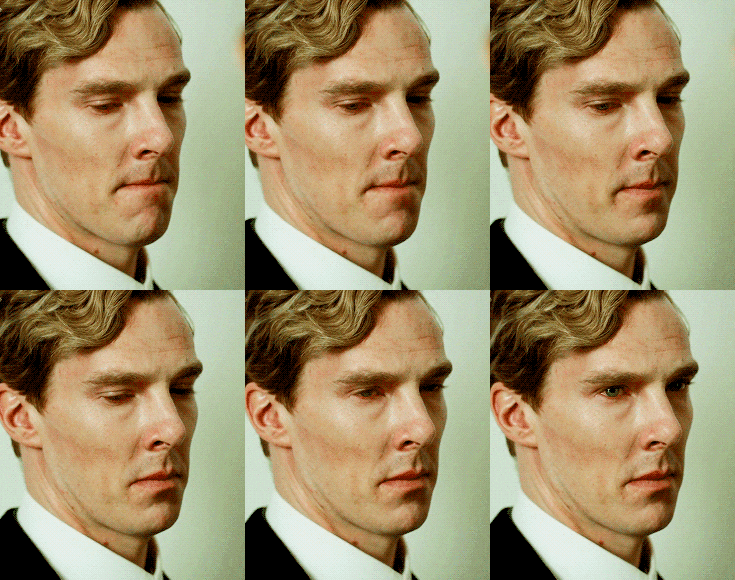
Parade's End is also set during World War I. Adapted from Ford Madox Ford's tetralogy of the same name, it's not actually a show I particularly like for the plot or most of the characters. Sorry, Benedict. It falls into a plot trope I don't enjoy: the upstanding man whose beautiful wife is a heartless philanderer, so he bears up with it and eventually takes up with a much younger suffragist who's much better than the silly wife who just cares for parties and dresses. Cumberbatch's Christopher Tietjens comes off as a prig who's causing his own problems, tbh.
Where I love the miniseries is in its Looks. Both Sylvia (the wife) and Valentine (the suffragist) have some great Looks. Sylvia always looks like she stepped out of a fashion plate, with details that costumers don't often think to include from the period or real effort put into giving her the correct posture and silhouette. Valentine is much less well-dressed, as a teenager from a middle-class family, but her outfit is always on point and sometimes includes original pieces. That being said, her hairstyle bothers me - they want to show her militancy and modernness with a haircut most women wouldn't have had at the time, but it's anachronistic.
(To be continued!)
She's Beautiful When She's Angry is a documentary currently streaming throug Netflix about second wave feminism in the U.S. and the radical women's movement of the late 1960s and early 70s. This era gets a pretty bad rap from modern feminists, people who mildly support many principles of feminism, AND people who can't say the word "feminism" without turning more colors than the pride flag and accidentally shooting their tobacco wad out of their mouth like a projectile. You probably think "racist", "transphobic," "lesbian is not a novelty high school clique," "all things considered I am bullish on bras."
I'm not going to say this documentary necessarily changed my mind about all those things, but it made me understand some of them. Particularly the idea of what they called "political lesbianism". That is, calling oneself a lesbian by living in an an environment with another woman/other women and spurning male control, power, or partnership as well as societal norms for women based on heterosexual marriage structures. In interviews with some 1970s radical feminists, the anger and behind their adoption of "lesbian" as well as the hope that this identity brought was really instructive.
It's also very beneficial to me as a premodern historian. Since traces of lesbianism can be very difficult to tease out in older sources (clerical men, who wrote most surviving texts from medieval Europe, tended to believe that if they did not mention lesbian sex or intimacy, naive innocent women would never get the idea into their heads), scholars often follow Judith Bennett in looking for "lesbian-like" women, comsidering lesbian as a lifestyle rather than strictly-speaking a sexual orientation. That's not to say that the 1970s radical communities would match up with medieval possibilities. Rather, it's a visible and vivid way of historicizing the concept of "lesbian" even after Foucault and the whole "identity" Continental Divide.
Another thing that really surprised me was the amount of mental and emotional labor that really was the heart of the movement for so many women, even before any political activism. The idea of "consciousness-raising groups," that college and adult women would have to gather together to make themselves into people who recognized their oppression and validated their life struggles against a sexist, was something that, again, it really took all the interviews with the women involved to convince me just how important the women's movement was.
There's so much else to say--I was surprise to learn how pro-mother/working class mother the women's movement was. But overall, I think that was the major takeaway for me. By "sitting down with" second wave feminists themselves, rather than the mythology about them, I was able to realize just how important that era and those women are. We have very good reasons to be critical of many facets, of course (see above), but the fact that there are people to do the criticisms rather than dismiss women's opinions as irrelevant owes so much to them.
EDO PERIOD DOCTORS HATE HIM! DR. JIN’S ONE WEIRD TRICK TO REWRITING 19TH CENTURY HISTORY: TIME TRAVEL VIA FALLING DOWN STAIRS.
Historically accurate, hah! I’m here to talk up a Japanese TV series about time travel where I sometimes yell at the TV important corrections such as “SATSUMA DOMAIN DIDN’T START THAT FIRE, THEY STARTED THE OTHER FIRE!” and “WHY ARE THE PROSTITUTES LIVING IN THE TEAHOUSE F0R ASSIGNATIONS?”
So, the show is Jin, a two-season live-action Japanese TV series, in which a modern Tokyo neurosurgeon falls down a flight of stairs and finds himself in 1862, in the last years of the Tokugawa shogunate. He saves the life of a wounded samurai, runs into famous Japanese historical figures, and before he knows it is changing history by “inventing” penicillin, saving people who should have died etc. It’s a time-travel story where he constantly worries about the morality of his actions, and particularly their effect on his beloved fiancée in the future. His fiancée back in the 21st century is in a vegetative state after an unsuccessful operation to remove a brain tumor, and it occurs to Jin that if he can push forward medicine in the 19th century, she could be saved in the 21st. Or he could make it so she’s never born. (He has a Back to the Future style photograph of him and his fiancée which changes in response to his actions here in the 1860s.)
As mentioned up-front, this show is not always historically accurate. Some of that may be the effects of time-travel, but since in general, the time line stays the same, it’s usually carelessness, dramatic effect, budget concerns, or modern aesthetics at work. Top Yoshiwara courtesan Nokaze wouldn’t seem so beautiful and desirable to a modern audience if she painted her teeth a historically-accurate black. Our heroine Saki, the daughter of a samurai family, behaves in ways that would get her locked up under house arrest in real life. Most everything is filmed on the Edo Wonderland tv set/amusement park in Nikko; these sets pump out historicals and if you watch enough Japanese tv/movies, you’ll see the exact same sets over and over and over again, slightly modified for the show in question.
But the show is fun, it has great characters, exciting plot lines, and who can resist some guy trying to grow penicillin from scratch with the help of a bunch of Edo soy-sauce makers? On the historically positive side, the show peels back the legendary glamour and drama of the brilliant pleasure quarter to show the struggles of Edo Period sex workers, and often focuses on the “little people” who are trying to live in the shadow of great historical events. There’s an immensely satisfying moment for me where Jin screams at legendary “model of honour” “Last Samurai” Saigou Takamori and his officers that neither they nor their Choshu samurai opponents care about ordinary people’s lives, and he’d prefer to let them all die.
The comic heart of the show is Japanese historical superstar Sakamoto Ryoma, a country bumpkin ronin who in real life brings together two enemy domains to unseat the shogun and create the modernizing Meiji government of Japan. Jin plays up Ryoma’s lovable buffoonery, boundless self-confidence, and an aversion to brushing his unruly curly hair or wearing clean clothing. Can Jin save his friend from his scheduled assassination in late 1867? Or will he get Ryoma assassinated super early by involving him in his schemes?
I’m actually in the middle of watching the show, but Season 1 in itself is great TV. It doesn’t have an official English release, but you shouldn’t have to search too far online to watch it with fan-made English subtitles. The show itself is based off a manga which the author is releasing in English via Patreon. There’s also a Korean remake, Dr. Jin, reworked into a Korean historical setting which is quite popular and I’m sure very good, but as you can see from my flair, I’m a fan of this particular era of Japanese history.
Stars' Spartacus is an incredible piece of historical fiction! The plot follows the sources close enough for a TV adaption. The characters are well-drawn - if more complex than Plutarch suggests, again a change suited to the medium. The depiction of life in the ludus is particularly true to our best sources.
Of course, Lucy Lawless as Lucretia was spectacular, and she should have won awards!
10/10 would assign for class, if it weren't three seasons long.
Van Diemen's Land (FFilms)
In 1822, eight Irish and English convicts escaped from the hellish penal colony Macquarie Harbour in Tasmania. As they were all originally from urban areas, none of them had any idea how to survive in the harsh Tasmanian wilderness. They had one woodcutting axe between them, and over the next few months they all turned on each other and resorted to murder and cannibalism. Only one man lived to tell about it and his name was Alexander Pearce.
This 2009 independent Australian film is I think about the closest anyone can get to experiencing this in all its gritty detail. The movie seems to be closely based on the non-fiction book Hell's Gates: The terrible journey of Alexander Pearce, Van Diemen's Land cannibal by Paul Collins which I've read, as well as contemporary sources and Alexander Pearce's own two (slightly differing) confessions. Filmed on location in the primordial Tasmanian wilderness in both English and Irish Gaelic and using essentially only eight actors, I'm certainly not able to find anything inaccurate about it aside from some minor abbreviations of the plot. It's a gritty, violent, realistic and suspenseful thriller about a horrific incident that really happened and I would highly recommend it to anyone interested in this historical time and place or who enjoys movies with those themes.
Aguirre, the Wrath of God (Amazon)
Like Van Diemen's Land, this 1972 movie by the German director Werner Herzog is another film shot very much on location in the actual Amazon River where it is set. It depicts an ill-fated and hellish Spanish conquistador expedition down the Amazon in search of El Dorado in 1560-61 which quickly descended into mutiny and systematic murder, as a psychopathic veteran conquistador named Lope de Aguirre overthrew the expedition's leader, personally killed or had his henchmen kill anyone who resisted his authority and then planned to overthrow the Spanish Empire in the New World and make himself ruler. Aguirre even sent a strange letter to the Philip II of Spain declaring his eternal rebellion and giving himself outlandish titles like "Wrath of God," "Prince of Freedom," "King of Tierra Firme," and "The Traitor" and "The Wanderer."
Probably needless to say, the real Lope de Aguirre seems to have been pretty mentally unhinged, and one of the reasons I love this movie so much is that the actor who plays him was in fact quite unhinged and psychopathic himself and most of all famous for his insane screaming fits of rage that have to be seen to be believed. The relationship between the German actor Klaus Kinski (who plays Aguirre) and director Werner Herzog is extremely complicated but it was often filled with violent threats and mutual hatred. During the filming of Aguirre, Kinski and Herzog were both armed with guns and Kinski shot off a native extra's finger because he was annoyed by the sound coming from a hut. At one point when Kinski threatened to leave the production over his grievances with Herzog's directing style, Herzog claims that he threatened to shoot Kinski unless he returned. These incidents are discussed in Werner Herzog's 1999 documentary My Best Friend specifically about his relationship with Kinski (this is a clip of Herzog talking about Kinski). In his personal life, Kinski has also been accused of far worse things which I won't go into here. I think it's impossible to know what the real Aguirre was really like in every detail, but I can't think of a better person to portray the deranged paranoid megalomaniac that he was on screen.
As for the more technical historical accuracies of the film, although it is ostensibly about Aguirre's 1560-61 expedition down the Amazon, it in fact combines many events from both that expedition as well as the conquistador Francisco de Orellana's 1541-42 expedition some twenty years earlier. A short list of these mergers are how the expedition begins by crossing the Andes to reach the Amazon basin, which is taken from the 1541-42 expedition, while the 1560-61 expedition was able to travel by boat from the beginning. The premise of Aguirre taking control of the expedition when he is sent down the river with a smaller party and gets carried away by the current is also taken from the 1541-42 expedition. The ending of the movie in which Aguirre is one of the last survivors while his crew is shot to death by native arrows seems to be taken from the reported end of Francisco de Orellana during his second expedition in 1546, while Aguirre was eventually killed by his own men after being surrounded by Spanish soldiers in Venezuela. Also the Spanish Dominican priest Gaspar de Carvajal who narrates the movie and is portrayed as being part of Aguirre's expedition is in fact based on the priest who accompanied Orellana and wrote an account of that expedition.
Most of the other events portrayed in the film as occurring during Aguirre's expedition do seem to be based on fact. Aguirre really did take control of the expedition in essentially the way portrayed, behead people without warning for slight offenses and write that bizarre letter to the King of Spain which is portrayed in the film.
A historical book I would highly recommend about these events is The Golden Dream: Seekers Of El Dorado by Robert Silverberg which contains very detailed accounts of both Aguirre and Orellana's expeditions down the Amazon in the 16th century.
<<Warning: Thar be subtitles here!>>
Qin Empire: Alliance
51 episodes that drops you in the middle of the Warring States Period of China, and follows the trials and tribulations of the State of Qin, a backwater on the far western edge of the fractured empire that has, thanks to massive internal legal reforms become a regional powerhouse. Unfortunately, the first series from 2009 that shows the rise of Qin and the reforms of Shang Yang are not on Netflix (as is apparently Netflix tradition). It's still very solid in its own right, though, and culminates with 5 of Qin's rivals joining forces to attack the state they've all come to understand is so threatening.
King's War
80 or so episode About the Chu-Han Contention after the fall of Qin between 206-202 BCE. Modeled closely on the annals of Sima Qian, it pits the forces of the de facto leader of the Chinese states amid the breakup of the short-lived Qin Dynasty, the Hegemon-King of Western Chu, Xiang Yu... against the King of Han, Liu Bang. When the third (and final) nominal Qin Emperor surrenders to Liu in 206, it's game on: which warlord will emerge as the next imperial master of China?
Mongol
Easily the best film on the life og Temujin, the man who would become Genghis Khan. Though there are certainly liberties taken - especially with his early life, which is just rumors anyway - it does a remarkable job of showing the harshness of life on the steppe and the hardened men and women who band together under the banners of the Khan to send the world reeling. Filmed on-location in Inner Mongolia and Kazakstan (very nice!) Rumors abound that the second film (it was initially supposed to be the first entry in a trilogy) might be in production... but only time will tell. In any case, it bests the hell out of John Wayne in yellowface.
I'd recommend Sergei Bondarchuk's 1970 movie Waterloo if you are interested in war during the Napoleonic period, though I'd imagine if you were then you'd already have seen it!
Bondarchuk had assembled the 7th largest army in the world to make this, he had loaned 19,000 Soviet soldiers and had them operate as British/Allied, French and Prussians during the 100 days war and I'm comfortable in saying there isn't a more true to history telling of Waterloo or any other battles of the time.
The movie opens with Napoleon exiled to Elba and his return and confrontation with Marshal Ney, Steiger does an excellent job in humanising the semi mythological character of Napoleon and deserves credit for making this movie rewatchable.
The movie touches on most things crucial to the battle, Hougomont, Ney's cavalry charge, the retreat of the Guard etc but I wish it had spent more time on Blücher and his Prussians who are relegated to a footnote.
A solid 8/10 both as a watchable movie and historically accuracy too.