Please Be Aware: We expect everyone to read the rules and guidelines of this thread. Mods will remove questions which we deem to be too involved for the theme in place here. We will remove answers which don't include a source. These removals will be without notice. Please follow the rules.
Some questions people have just don't require depth. This thread is a recurring feature intended to provide a space for those simple, straight forward questions that are otherwise unsuited for the format of the subreddit.
Here are the ground rules:
Questions should be clear and specific in the information that they are asking for.
Questions which ask about broader concepts may be removed at the discretion of the Mod Team and redirected to post as a standalone question.
We realize that in some cases, users may pose questions that they don't realize are more complicated than they think. In these cases, we will suggest reposting as a stand-alone question.
Answers MUST be properly sourced to respectable literature. Unlike regular questions in the sub where sources are only required upon request, the lack of a source will result in removal of the answer.
Academic secondary sources are prefered. Tertiary sources are acceptable if they are of academic rigor (such as a book from the 'Oxford Companion' series, or a reference work from an academic press).
The only rule being relaxed here is with regard to depth, insofar as the anticipated questions are ones which do not require it. All other rules of the subreddit are in force.
Would the Mongol fleets destroyed by the kamikaze have been created by Mongol or Chinese shipbuilders?
When was the Korean peninsula first unified (while independent from neighbours like China and Japan) and under what kingdom/empire?
Whats the capital of Peru, Lima, named after?
Are there any (reasonably priced, reasonably readable) books that narrate and examine different socialist revolutions in the 20th century? Or just the best books on Russia, China, Cuba, etc? Cheers
Why does “Byzantine” mean complicated?
The first stage of European integration was Coal & Steel Community. The idea of it was to make French and Germans manage coal and steel together. Later this thing was swallowed by other treaties and organizations that culminated in European Union as we know it. But do French and Germans still manage their coal and steel together? Common sense and intuition suggest no, but... do they? And if no, when did they stop and why?
upd: I've found a good article myself http://buffett.northwestern.edu/documents/working-papers/Buffett_07-001_Alter_Steinberg.pdf
What would happen to orphans in the XI century if they were not taken by the Church or a guild?
Was there a US submarine that warned of the Japanese fleet approaching Pearl Harbour?
I need the story regardless if it's fact or conspiracy theory.
In Hobsbawm's The Age of Extremes, when listing countries not involved in WW2, he says that Afghanistan "possibly" wasn't. What does he mean by that? As in, why is there ambiguity?
Wouldn't a sally port make a castle excessively vulnerable?
I just visited Knaresborough Castle and went down the sally port. Why would an attacking force siege the castle rather than find the portcullis entrance to the sally port and enter that way?
I obtained Chernow's Washington biography. Gordon Wood gave it glowing praise, so it's good right? What about his other bios? I heard Hamilton's bio has a "Federalist bias", but I don't know if that's significant enough to avoid the book or just bear it in mind.
Are questions about Pre-History generally well received and responded to here? (Also) Are questions regarding modern archaeological findings and their interpretations considered current events( and therefore against sub rules?) even if they are concerning say, the Aegean Bronze Age?
In describing geographical locations, I know there are terms used like "Middle East" and "Near East" but how well defined are these regions from a historiography standpoint? At what point is an empire or city considered to be in the middle east as opposed to the near east and vice versa?
A bit late, but I just read that Kermit Roosevelt, 2nd son of Theodore Roosevelt, completed his degree in 2.5 years, right after taking a year long sabbatical to complete an expedition with his father in his Freshman year.
Obviously, this doesn't seem normal to me, for either nowadays or back then. Was he some sort of extraordinary super genius? Did he just work his butt off? Was it due to preferential treatment due to his literally being the President's son? Or some combination of all the above?
https://en.wikipedia.org/wiki/Kermit_Roosevelt#Childhood_and_education
Before the onset of firearms and modern euthanasia practices, what methods were used to put down animals as efficiently / humanely as possible? For instance a terminally sick or mortally wounded working dog, or a pack animal with a snapped leg. To what degree did people prioritize being humane in these circumstances? Any details from any region / time period are appreciated
How much responsibility should be assigned to Churchill for the Bengal Famine casualties of 1943?
Can eunuchs be considered a third gender in the Islamic world? Based on their ability to move between the female and male worlds - That is, guarding the harem, but also able to go outside it, in ways not allowed the women? That suggests they were somehow outside or between the constructions of male and female!
What's a good book that gives a good overview of American history? One that's relatively normal sized, not overtly long, but still gets more detail than usual?
Where is the wall with flags or coat of arms of every princes of Holy Roman Empire? (I've seen the picture of it once and since I am travelling to Austria and Germany soon, I would like to visit that place)
What was life like for soldiers on there way to Europe or the Pacific while on the boats from America? Did they have duties/training or was it like a cruise?
Was there a prescribed ratio of regular vs tracer ammo for machine guns inside tanks during WW2? British ones interest me the most
How historically accurate are the works of Michel Foucault? I'm stubbornly bashing my head against The Order of Things right now, and what I understand of it is fascinating, but if the history is deeply flawed it would lose a lot of its impact. I've got a stack of his other books to struggle with when I'm done, and I want to know what I should be taking with a grain of salt.
Art History
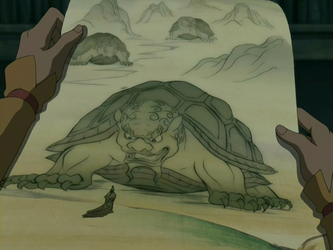
Is this painting from the Avatar television series based on a specific Art movement or which movement is it most related to?
Are YouTube video ok as a source if they are from a reputable channel and include link's to their sources in them?
How did people speak to kings in court? I know it's a broad topic but I think reading about any kind of etiquette or dialogue would be cool
Is the book "Two Hundred Years Together" anti-semitic? What's its thesis?
I watched recently a video featuring an anti-semite asking Jordan Peterson if jews in the US were plotting some kind of revenge against Russians/Ukrainians. Obviously I have no love for anti-semites, and equally none for Peterson, but in the video, he gives (kind of as his "evidence") Peterson the book "Two Hundred Years Together".
Looking on Wikipedia it seems to have been criticized for being antisemitic by some authors, while others (who I don't know well enough to judge them as anti-semites or not) say it isn't. Is this an academic historical work? Is it anti-semitic?
And I apologize, I would read it myself, but I don't want to be chilling in my school's library reading a book akin to Mein Kampf and realize halfway through it's literally just "Jew Hatred - The Musical".
It isn't possible to downvote posts while browsing AskHistorians. (Or at least I can't.) Does that mean any downvotes to posts (as opposed to comments) come from users browsing the Reddit front page?
Has there ever been a time with more past US presidents?still alive then now? Whats the record?
Was bootcamp shorter/easier during military drafts in the United States?
When and where is the Bohemian fashion style based on?
In the high middle ages, if I were to besiege a well-defended castle or fortress, how many pieces of field artillery should I bring with me? (Ballistae, trebuchet, etc. Assuming this is before the introduction of gunpowder.) If I'm defending a castle, how many pieces of artillery should an opponent bring to bear to make me capitulate?
I remember hearing about this empire, possibly the Akkadian or Assyrian Empire, that believed in this prophecy. It said that if they lost even one battle, the apocalypse would come and the empire would come to it's end. At some point they lose a major battle and the empire collapses in a few years.
Of course this was not a major factor in their collapse, but it's an interesting story regardless. Does anyone know what was the name of that empire, or is there any truth to this story?
During the Rwandan genocide, where did the Rwandan government get all the weapons from to arm the killers with?
Has there ever been agressive territorial expansion within the Holy Roman Empire?
I know there were wars prompted by succession crises, or wars related to religious issues, or wars between the Emperor and some of his subjects, but did it ever happen that a prince blatantly attempted to annex another territory with no other justification than force?
How common was Polio before the creation of the vaccine in 1955? What were my chances of catching it before it could have been prevented?
Did europeans also swing their swords like helicopters? Like how horde type cavalry is often shown in movies when riding into battle ?