Were the WWI trenches the well dug and deep style seen in many of the media about or set in the period, or were they different, like just some relatively shallow ditches in the ground connecting foxholes and artillery craters?
Edit: For further specification, I am speaking chiefly of the western front and for both “sides” (Germany, A-H. France, Britain). An example of the trenches I’m speaking of may be seen in All Quiet on the Western Front, and many other movies and documentaries.
I think you should specify your question a little bit. Are you referring to french/ english trenches, or german trenches. Or maybe some of the other combatants (russia, us). Its also heavily dependent upon which battlefield and of course the level of entrenchment. And finally, which movie were you referring to?
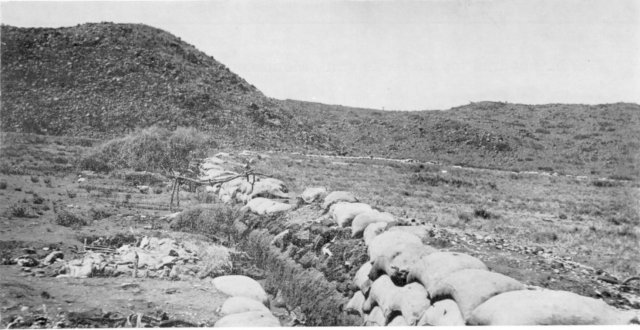
During the initial stages of trench warfare, the Entente and Central Powers trenches were little more than ditches deep enough to shield the soldier somewhat from small arms fire and give them a place to take cover in the case of an artillery barrage, such as the BEF trenches from the first battle of the Aisne, and are very similar to the "trenches" used by both the British and the Boers during the "South African" or Second Anglo Boer war 15 years before.
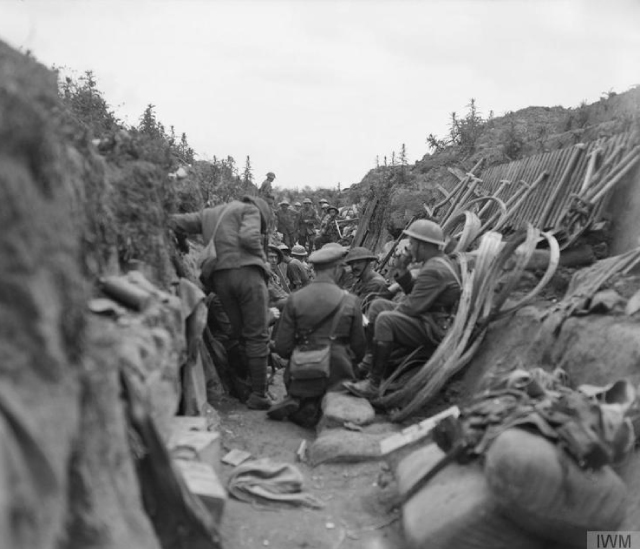
The amount of fortification of the trench network depended on time and location - an Entente communication trench on the Somme in 1916 would differ greatly from the Entente trenches around Verdun during the same period as trench construction would be adapted to the local geology.
The Entente and Central Powers also had differing levels of fortification and "comforts" - /u/DuxBelisarius offers an excellent explanation that you can read here
To a certain extent yes; it has to do, however, with the differing philosophies on the 'trenches'.
For the British and French, there was never any question, trenches were temporary. Behind the enemy lines was most of Belgium and the center of French industry, the Briey-Longwy Ore Field; these were territories that needed to be recovered, and so the trenches were always going to be never more than 'comfortable'. Nothing too elaborate, since they were little more than jumping off points for future offensives. Moreover, at least in the British case, the majority of a Battalion's time was spent out of the trenches, with most battalions spending an average of 4 to 7 days in the firing line. The rest of the time was spent in the reserve line, in billets far behind the front, or in transit to a different sector. A good illustration of this is Frederic Manning's 'War Book' Middling Parts of Fortune, in which much of the plot takes place away from the front.
The Germans were the defenders; they were situated on valuable ground, like the Messines-Wytschaete-Gheluvelt-Passechendaele-Staden Ridge complex east of Ypres, Vimy Ridge and the Notre Dame de Lorette Spur in Artois, the Picardy Plateau, and the Chemin Des Dames Ridge. They needed to economize their forces, and were also going to need to be able to hold their ground more easily, and so invested in more elaborate and complex bunkers and dug outs. However, this only got them so far; once driven out, German soldiers were vulnerable and felt almost naked, and this affected morale especially during the Battle of the Somme, where the dug-outs quickly became ready made tombs, forcing the German infantry to stick it out above ground, often with little to no overhead cover to protect them from Allied artillery and air superiority. By 1917, the 'trench stalemate' had already begun to break up, and the Germans moved towards elastic defense in depth as their new defensive method.
So to answer your question - it depends