Today:
You know the drill: this is the thread for all your history-related outpourings that are not necessarily questions. Minor questions that you feel don't need or merit their own threads are welcome too. Discovered a great new book, documentary, article or blog? Has your Ph.D. application been successful? Have you made an archaeological discovery in your back yard? Did you find an anecdote about the Doge of Venice telling a joke to Michel Foucault? Tell us all about it.
As usual, moderation in this thread will be relatively non-existent -- jokes, anecdotes and light-hearted banter are welcome.
Have you ever wondered what games did children play in the older times?
Here is a painting called Children games by Pieter Breugel the Elder from 1560 showing large number of children playing various different things. Source and a 6,567×4,770 large version
For all who are interested what exactly are the games played, this [wikipedia page](https://en.wikipedia.org/wiki/Children%27s_Games_(Bruegel)) attempts to give a list of what we are seeing with brief, occasinally amusing, descriptions.
The author Pieter Breugel has other works, many of which show various everyday actions and are nice way for us to visualize the 16th century.
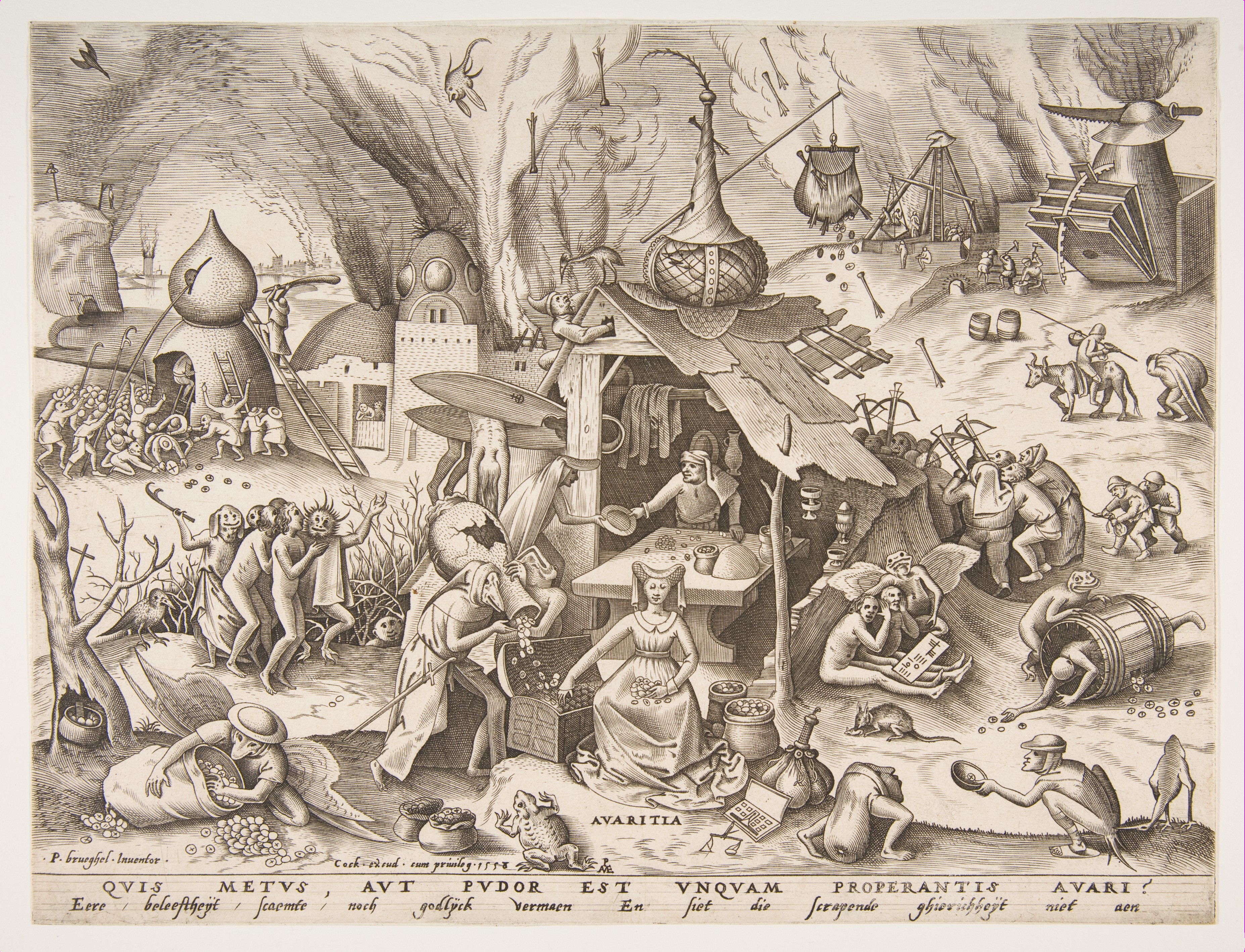
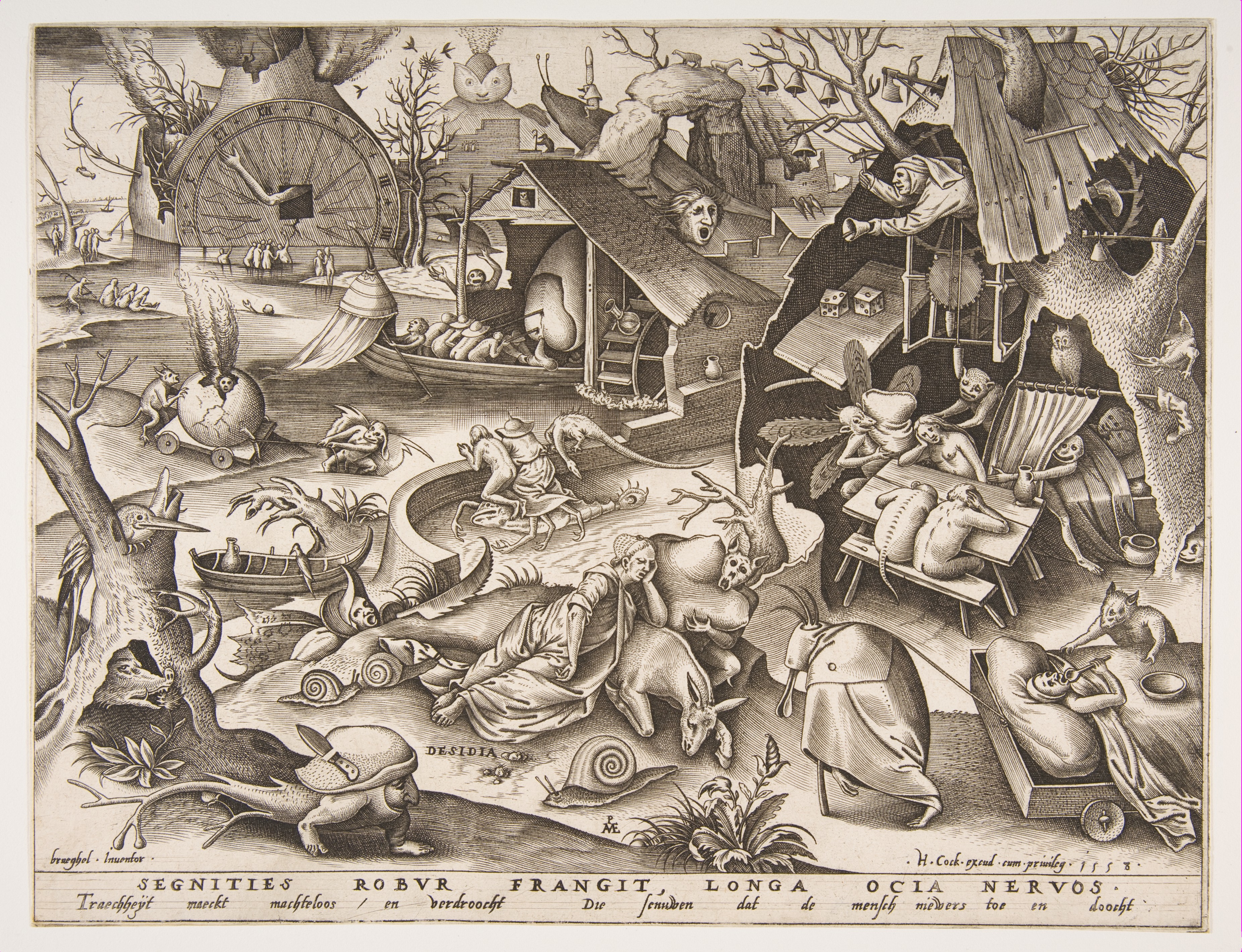
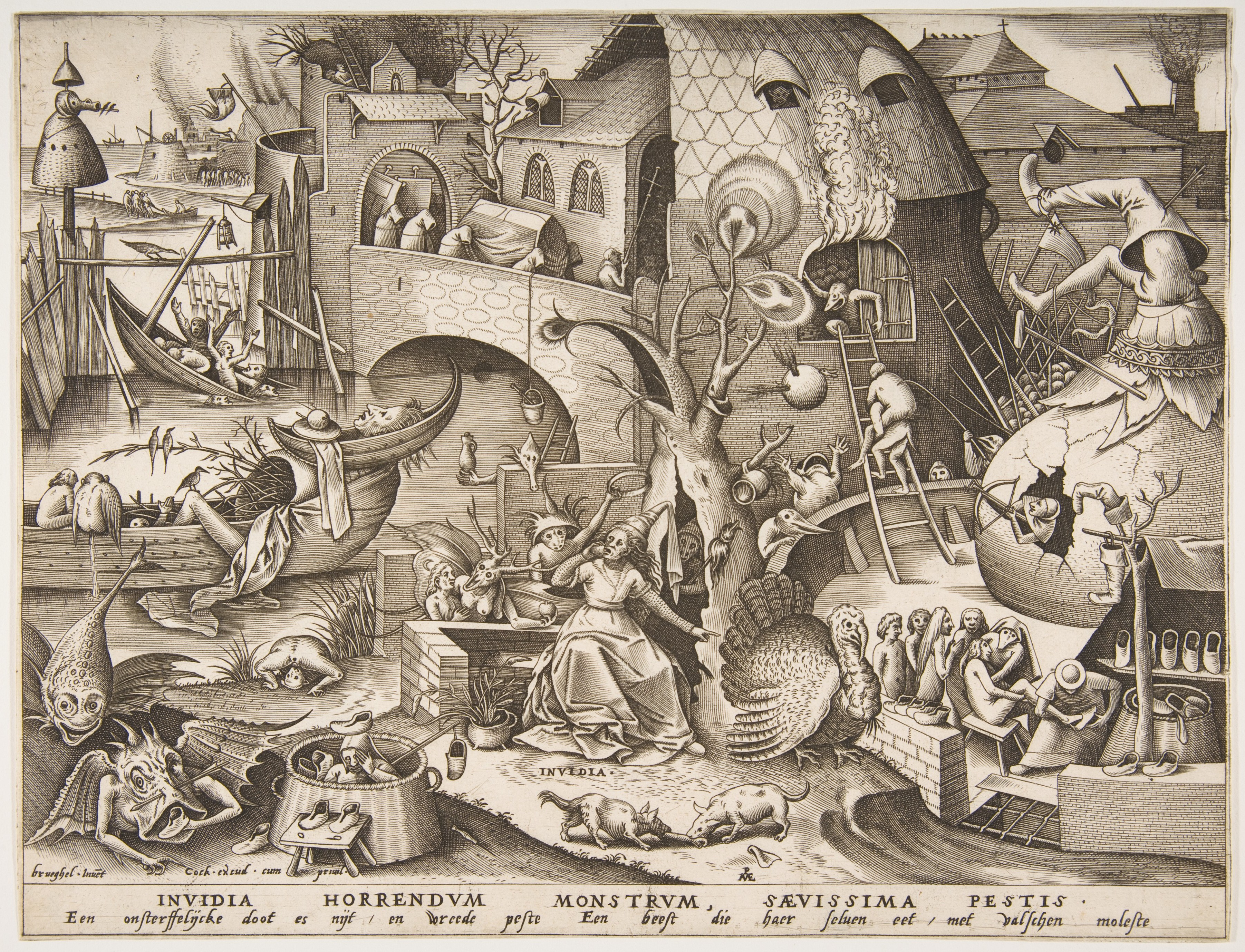
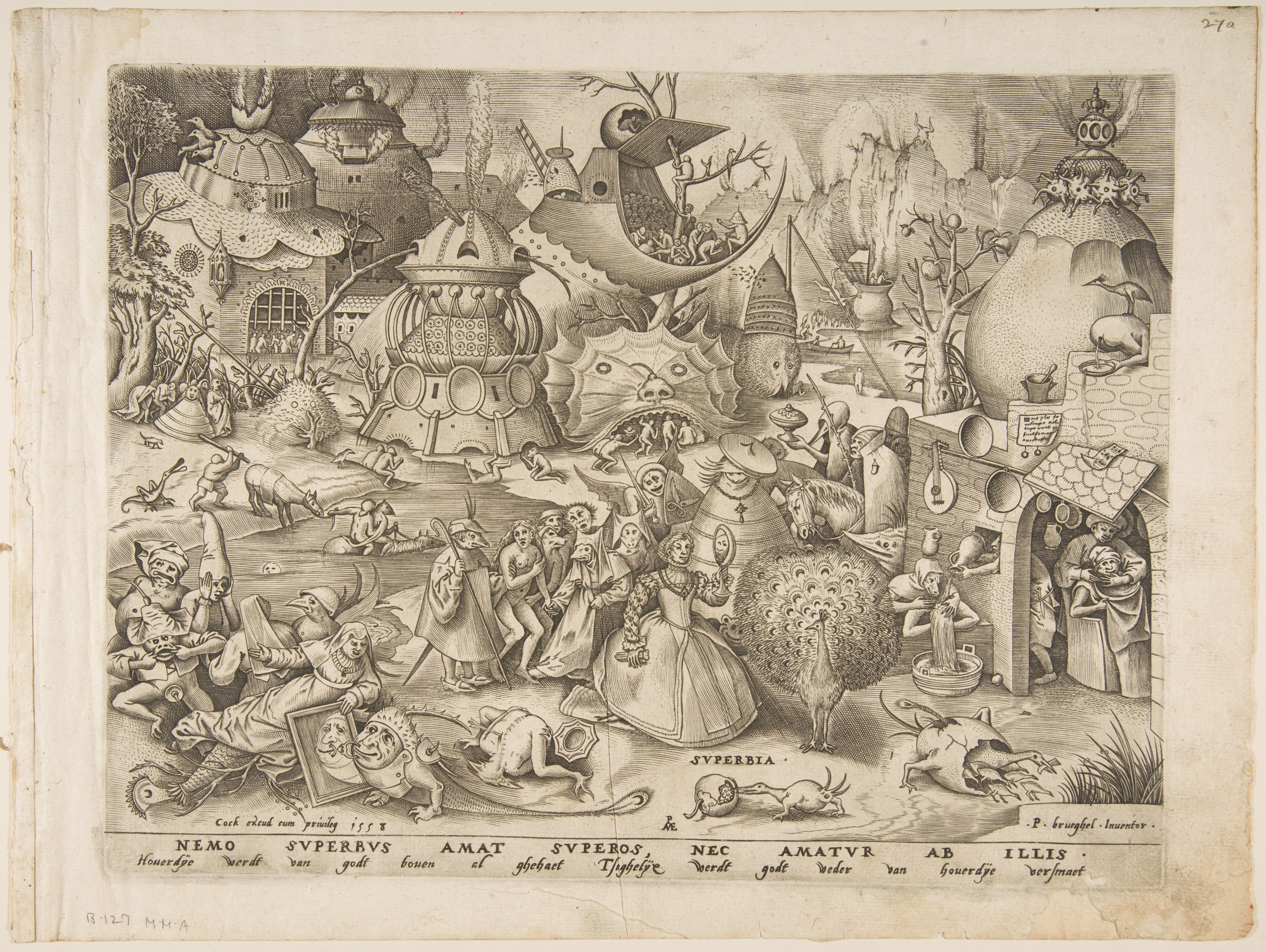
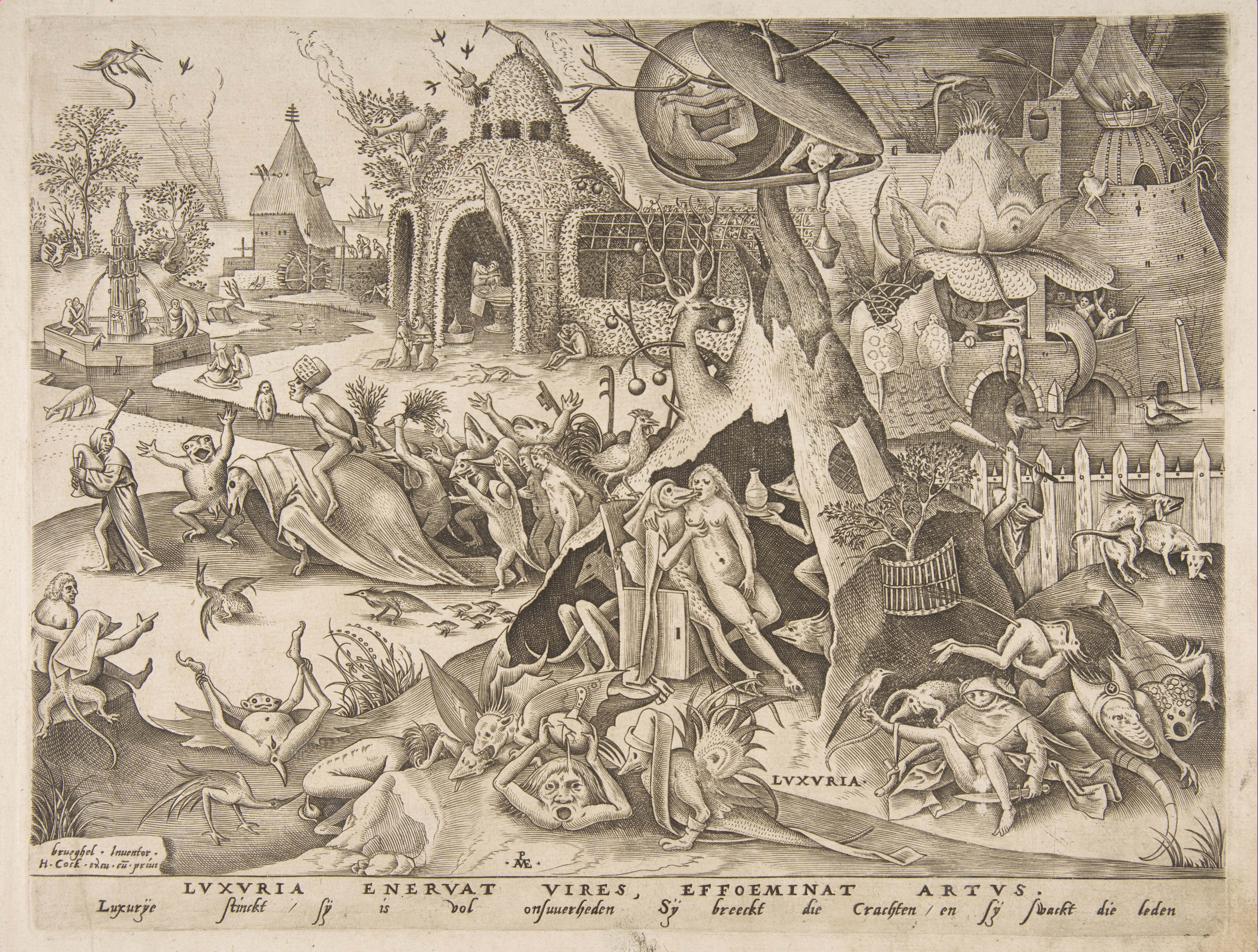
Special notice should def go to his two series of drawing turned to engravings 7 virtues and 7 deadly sins
Here are the 7 virtues, which are sober, realistic, showing everyday situation types:
Justice (Justicia) - little NSFL
And in constrast here are his 7 deadly sins, a surreal fantastic depiction of what I imagine is Hell:
Okay, okay, I know I've already talked about Handmaid's Tale here so I'm sorry to repeat, but for real:
Serena quoted medieval woman mystic Julian of Norwich at the end of this week's episode and I am not okay with this.
The whole episode revolves around all the ways women's autonomy can be violated (besides rape)--physically, intellectually, emotionally, spiritually. Julian was an anchoress, that is, a religious woman who actively chose to spend the rest of her life enclosed in a cell attached to a church to focus on God. Enclosure of anchorites is paralleled to burial in medieval religion. It's the ultimate declaration of your body being off-limits to the world. (While at the same time, anchorites including Julian often served as spiritual counselors to people in their community who would come visit seeking advice.) And then there is Serena, doing something horrific to June while quoting Julian's "alle shalle be wele, and alle shalle be wele, and alle maner of thinge shalle be wel." AGH GO AWAY STOP.
After a whirlwind end of the semester, and one long week (I was at UC Santa Barbara to give a lecture, and then took a red-eye back to NYC...), I was happy to see the exhibit I have been co-curating (for the last two years) at the Intrepid Museum in NYC finally open this week!
The exhibit is on the USS Growler, one of the first nuclear-armed submarines deployed by the US, and its Cold War context. The exhibit is free to the public, though going onto the submarine itself requires a museum ticket (the exhibit is in a separate structure next to the submarine). I wrote a blog post about my experience in working on the exhibit, but it was really wonderful to see it all put together yesterday for the press and veteran preview. (The last time I was at the museum was a week and a half ago, and it still was in the process of assembly and construction.) It's a little inappropriate for me to be so shocked at how good it looks (I mean, it's not that I didn't have faith in our work), but it's really wonderful — the historical content, the technical interactives (many many interactives), and the visual gestalt of the place just add up so well, I felt. And even better, the actual USS Growler veterans (and museum big-wigs) seemed to all agree.
Two small things of note from yesterday:
I was showing off one of the things I was very proud of (finding actual photographs of the warhead — only 20 W27 warheads were adapted to the Regulus missiles, and photos of them are very scarce), and one of the veterans said, "yep, I worked on that warhead, that's the warhead!" So satisfying. (And one of the trustees, who sounded like he had a Navy connection in the past, seemed genuinely shocked we found a photo of it, given its former classification level.)
One of our exhibits is a map showing the Growler's patrol area and its mission. This was super classified at the time (the 1950s-1960s) and there was almost something cathartic about watching the veterans show it to their families, sometimes exclaiming with surprise that it wasn't secret anymore ("I guess the secret's out!"). Secrecy rules and procedures are drilled into people who work in these jobs again and again and again, and they are never told when something is no longer secret, so they go through their lives not really knowing what they can and can't say about their service, and so tend to not say anything. Showing them that the secrecy's been lifted suddenly opens a floodgates of memories and pride for them. Again, very satisfying.
Anyway, if you're in NYC sometime in the next five years (which is the minimum run for the exhibit as it is currently planned), check it out! I am pleased with how it came together, as someone who is not really a museums person (this is my first full exhibit I saw from beginning to end).
Recently started A History of Japan by Conrad Totman and I am really frustrated with his environmentalist perspective. Not inasmuch as it's an invalid focus, but in how he takes geography and climate to be the only important environmental factors worth mentioning. There's nothing in the pre-history section about mountains, lakes, precious metals, or even forests which I know he wrote a whole separate book on. It seems to me to be a very incomplete overview of how agriculture and civilization would have formed on the island if that was his goal. It just seems that his thesis elevates climate above all else to explain all turmoil. Certainly that plays a large part in bad harvests but can you really just leave it at 'climate' and call it a day?
I've got a lot of history documentaries that I've been watching lately. Ken Burns' Vietnam and Baseball, The Great War, and WWII in HD. Woo boy. Where will I find the time.
On the theme of children's play through history, I recently read Nicholas Orme's "The Culture Of Children In Medieval England" and I found it both enlightening and fun. Orme surveys not only commercially-available toys and games but the toys and games invented by children themselves, and there's an impressive DIY spirit to it all.
Dolls, or poppets or puppets as they were called before 1700, are mentioned in literature by the early fifteenth century, the oldest references being to rag dolls made by children themselves. A text of 1413 compares idle knights and squires to "legges of clowtes, as childeren maken popetis for to pleyen with whyle hey ben yonge", and not long afterwards a Scottish writer noticed children making "a cumly lady of a clout". In 1583, the Puritan Philip Stubbes derided women's fashions as "mawmets" (another word for doll) "of rags and cloutes compact together". But dolls were also made by adults on a commercial basis. William Tyndale wrote in 1537 that "a chylde . . . yf he crye. . . men styll with a poppet", and William Turner's Herbal (1562) likens certain roots to "little puppettes and mammettes which come to be sold in England in boxes". In 1582, the crown set a duty of 6s. 8d. per gross of imported "puppets or babies for children". Many of these imported puppets were probably made of wood to withstand transport, like the simple painted truncheon-shaped dolls in the Museum of Childhood at Bethnal Green, London. Others may have been of wax. Small human images of wax were manufactured to be offered at shrines, and the makers could have supplied wax dolls without much difficulty.
Can anyone recommend academic treatments of Golden Age piracy? I have to admit, I got into it watching Starz' Black Sails and I'm dying to know more. I have a ton of books about piracy from when I was a kid, but I'm looking to break into some more academic discourse on the topic.
Does anyone have any suggestions for a research subject on the early modern period? I'm writing a paper for uni, and it has to be a subject where I can come with some new insights - I need to have something useful to contribute to the existing historiographical debate, so preferably a topic that doesn't have plenty of literature written about it already.
Does anyone know of a good English language source on medieval French taxation? I have a couple of articles that cover the first half of the 14th century and have found some scattered references to taxation in other periods, but nothing that goes into any great detail as yet.
Got another book review! It's another nice, positive review in a major journal for my specialization, so I'm chuffed. These things keep trickling in--but so far, all positive, although this one does take a bit of a thwack at my press for its outsourced graphics team, and that's fair. Next time, I think Chicago is my best bet.
And in minor teeny tiny little joys, I finally get to move next month to a bigger office on the side of our building that looks out at the woods and the mountains, and isn't adjacent to the tarred roof with afternoon sun like mine is now. It's shocking how productive one becomes with scenery that can soothe the eyes.
Question about British merchant sailors of the 1860s - how young a boy would they accept and what would his job typically be? Were there any rules or was it determined by the ship’s captain?
Is Adkins' "Nelson's Trafalgar" well regarded? I have found alot or discrepancies.
The two more recent are on page 101, " The very best that gun crews could achieve was one co-ordinated broadside a minute, but individual gun crews we're doing well if they could fire three rounds in five minutes or less".
These two lines completely contradict. Is it a full broadside a minute (which is absurd, at best crews could do 2 every 3 minutes from all the sources I've read, and that's just individual crews, not a full broadside", or the 3 shots in 5 minutes?
He also claims on page 106 that the shockwave of a slow moving cannoball could kill a man just by passing near him. This is medically impossible. Maybe is the sailor was in the ocean near a balls impact, but not standing in the open air.