Now and then, we like to host 'Floating Features', periodic threads intended to allow for more open discussion that allows a multitude of possible answers from people of all sorts of backgrounds and levels of expertise.
Today's feature focuses on history and young people. No doubt I'm hardly alone among the members of the community in finding my love of history at a very early age, and while perhaps slightly biased, it certainly is an interest that I think has been a great one to have, and which I like to pass along to the children in my life. Many of us are parents, aunts and uncles, or simply the family friend who is 'the history buff', and have many different suggestions to share here, no doubt, whether it might be activities well suited for kids, children's history books that you would particularly recommend, or perhaps a museum you visited with a really kid friendly exhibit! Any and all ideas are welcome here.
This thread is a place to share any and all forms of advice you have for engaging with children about history, and also for you to ask your own, more specific questions if you are looking for tailored advice based on your own circumstances!
As is the case with previous Floating Features, there is relaxed moderation here to allow more scope for speculation and general chat than there would be in a usual thread! But with that in mind, we of course expect that anyone who wishes to contribute will do so politely and in good faith.
(1) I really love the "You Wouldn't Want To" series of illustrated history books ("You Wouldn't Want to Be in a Medieval Dungeon" &c). They have a sense of humor and manage to convey some of the complexities of the past rather than falling into pop culture stereotypes. I've used them as an outline/topic guide to frame presentations to late elementary/early middle school, and it's always gone smashingly well.
(2) Historical fiction! There is SO MUCH historical fiction targeting the "intermediate" and "young adult" readership. Of course I have to mention the American Girl books (Team Felicity here; Addy is my #2), but there are so many little one-offs I fell in love with. And don't overlook the classics! Reading To Kill a Mockingbird back to back with Roll of Thunder Hear My Cry and Let the Circle Be Unbroken turns all three into stories of brilliant young girls navigating the Jim Crow South.
But importantly here, historical fiction aimed at younger audiences is one of the genres that actively courts a young male readership. Since it's generally considered easier to get girls to read than boys, this is a huge positive. Day of Glory (American Revolution), Fallen Angels (Vietnam), The Moves Make the Man (school desegregation in America)...
(3) Visiting historic sites, BUT with an important caveat: visit ones that have specific programs set up for children, like some of the "Junior Ranger" programs at various Western U.S. former forts. Following the scavenger hunts, getting stickers to put on your kiddie backpack, trying on recreated clothing--these make the past immediate in the moment. More importantly, they create better memories of the visit, which build up over time to an appreciation for the underlying factor.
Obviously all of these have their pitfalls and problems from race, gender, imperialist standpoints, but I maintain they are a good way to open conversations and interest. There are neat ways to move beyond some of the more problematic portrayals, like attending a public-invited powwow to accompany visiting U.S. frontier forts, or as I mentioned reading Mildred Taylor's books along with To Kill a Mockingbird.
...Of course the single best thing is to have an amazing history teacher in school. I don't know about you, but in the end that's why I'm here.
I used to love books like Horrible Histories which had a spin-off TV series. I also liked visiting open-air museums in the local area and exploring historical locations and reading all the information panels. I think a great way of engaging kids in history is exploring how life would have been for them. Look at food, drink, clothing, school, leisure... I always found it fascinating.
Hmm. I'm going to try and think a bit about where my interest comes from. As a child I was always more interested in natural sciences (probably why I'm in physics now), and history was rather tangential. I did grow up with very politically active parents, which instilled some indirect interest. I never had much interest in historical fiction that I can think of. I did read a few classic Swedish works, but they were quite dull. My history teachers were pretty much all mediocre to terrible. I did visit Egypt as a child, twice, but that never quite spawned the obsession one might have expected.
As far as I can think of, I think my history interest only really began to burgeon in my teens, and I'm pretty sure the cause was video games. Specifically in my case, Europa Universalis. (I never played Civilization until rather recently!) The EU series is pretty unique in that it in many cases prioritizes historicity before artificial gameplay balance (E.g. the Ottomans and Mughals are incredibly powerful because, well, they were). Particularly EUIV has taken a turn in trying to be less eurocentric, which is a very welcome change. That said, it is an incredibly complex series unlikely to appeal to younger children.
However, I think video games, which provide unique opportunities and limitations alike, can be incredibly useful tools, especially as video gaming begins to mature as a medium. They provide the opportunity to, at their best, assume completely different perspectives, interact critically with the way things are presented, and to explore the very notion of historical narratives.
Unfortunately, video games also come with the limitation of being incredibly complex and expensive to develop compared to other media. However, I really hope to see innovative solutions to this in the future in the use of video gaming as a pedagogical tool.
I have introduced some youngsters to metal detecting. They absolutely love it and want to know everything about an item found and the area it was found in.
I think a big problem is when history is taught at an early age, it’s all very bland and sanitized. “This person did this in xxxx.”
What really sparked my interest in history is the realization that it could be told as a story. “This person did this in xxxx because of this, which led to this.” You begin to find out that the stories throughout history have all the elements of fiction, but are often taught in an extremely boring manner.
I’m typing this on my phone in bed so I don’t know if I made any sense.
So I'm going to plug for some books that I loved when I was a kid.
The Cartoon History of the Universe / Cartoon History of the Modern World, by Larry Gonick. I'd caution that it isn't for very young children, as they decidedly don't censor the sex and violence, but I probably started reading them around age ten, and the tattered copy of volume one I still have - and occasionally peruse - attests to just how much I read and reread them. The books are thoroughly enjoyable, and just the kind of thing to get a kid to really enjoy reading history. The only real word of caution Ii would offer is that yes, they are at the core pop history, and especially the earlier volumes - the first one was published in 1990 I believe - can reflect some outdated scholarship - but especially for young, budding historians, I don't feel this is all that much of a drawback. The goal at this point in time is to make history fun and exciting, and these books absolutely do that - and they prime the pump for enjoying dry academic tomes ten years later to get the necessary corrections!
On the topic of cartoons, I'll also plug Asterix and Obelix, which we'll be charitable and call 'historical fiction'. You shouldn't be taking anything from these to be accurate and teaching tools, but looking back, they are another set of works that I was reading as a kid that decidedly made me enjoy reading about the past.
Tell real stories about individual people and their experiences. Especially if they were quirky or had strange or unusual experiences.
I hated history in school because it focused on memorizing dates and dry facts.
Sadly, in the US, teaching history in public school is political. Many people don't like to have their comfortable beliefs challenged. (For example, addressing the reality of slavery.). So instead, schools back off of "controversy" and just teach names, facts, and dates.
My son wrote a paper on the Terracotta Soldiers for a second grade project on China. Since then he has researched and reported on any historical event that catches his fancy. Some of his favorites are the Titanic, the Yorktown, the Edmund Fitzgerald, and the Dunkirk Evacuation. He taught me that the fourth smoke staff on the Titanic is fake. When I told him it was a stack, he said, no I think it looks more like a staff.
He also asks to go see history museums in the area. We have been to the Molly Brown House, the Denver Natural History Museum, and others. Lately he has been asking about a job as a historian.
How do I continue to encourage this interest?
What are good sources for historical information? His current sources are You Tube, Wikipedia, and the Library.
How do I teach him to vet his sources, and to be skeptical of dubious sources?
What kind of Jobs can you get as a historian?
Any other hints or insights you might have?
Thank You
I was really spoiled growing up -- my father and mother were both history buffs, and our house was totally saturated in that kind of material. I've also been kind of obsessive about one thing or another all my life, and in childhood historical topics were definitely among those things. As a result, I might not have the right perspective here.
I'll echo sunagainstgold in the importance of historical fiction -- I think it's a great way to introduce kids to historical topics and the reality of historical differences. I can remember stealing those Royal Diaries books from my sisters, with their beautiful covers, and I read every Horrible Histories book I could get my hands on. (The latter propagate some historical misunderstandings, I'm sure, but they made an impact on me.) All the historical fiction of my youth might be a little dated now but there's a lot of diverse and challenging historical fiction suitable for children out there. Leveling up from fiction to nonfiction might be the tough part, but the interest is there, and fiction can provoke a lot of good questions. Mythology and folklore can also be a great way into historical study and it seems to be more accessible to kids than, say, the nitty-gritty of military history. In my experience kids are already primed to be enthusiastic about certain things in history, and a big part of encouraging their interest in history is simply not discouraging them. Ask questions, recommend books, check out history museums and historical reenactors, but just don't make fun of them for managing to make every conversation come back to Hannibal Barca or Joan of Arc.
This again shows my own biases, but I think hands-on projects can be a cool way of encouraging historical interest -- building model castles, making your own longbow, learning to make chainmail, constructing garments, learning egg tempera painting or calligraphy, all this stuff can send you down a rabbit hole of source materials and also be a good introduction to researching across multiple sources. Art history also hooked me -- it's one way into the material-culture side of history ("what on earth are they wearing? where is this sculpture supposed to go? what's this object for?") but you can also talk about what's going on at a particular historical moment and in a particular place to make art look the way it does. It can be a way in to talk about encounters between cultures and some of the heavier topics in history in terms of their contemporary impact. My elementary school had an excellent program in conjunction with a local art museum that pulled double duty as art appreciation and a history lesson, and if you live in an area with easily accessible art museums it can be a great way in.
Honestly, just talking about history with the kids in your life. Talk about the history of the area you live in, talk about what you're studying, talk about a funny (but kid-appropriate) historical anecdote, talk about how people in the past dealt with certain obstacles or kept their customs alive or how they kept warm or how they kept food from going bad.
(Was I the only kid whose interest in history was piqued by musicals? Obviously musicals play even faster and looser with history than other media at times, but they're still useful.)
Make sure the kids know this: History isn’t just a list of facts and dates. It’s drama. It’s funny. It’s real life in the past tense.
History is a story of things that already happened. The words are basically the same, anyways, and they’re the exact same in some languages (‘la storia’ in Italian for example). Treat it like a story. Tell them the great romances, the aggressive rivalries, and terrible betrayals. History is fun.
I may be mistaken, but it seems that at 52 comments everyone is talking about particular material or activities (series of books, genres of books, types of media, and historical sites).
To be sure, I would say that considerations of this sort are good ways of framing my own interest in history. I remember, for example, stacks of hand-me-down magazines from the 1970s or 1980s - some interrogative word(s) like Why?, How?, What Where When? constituted the series title - which contained visualisations which stick with me decades later. Video games like Civilization and Age of Empires are a big part of my early experience of history too. Indeed, video games with good mechanics can teach people about any subject - I imagine America's Army taught many about guns and modern military organization. (This is also a problem because teaching history through video games is constrained by the ability to create engaging games. This is not easy and I do not find it surprising that most people commenting point to the same handful of games.)
I think one thing that the comments are so far missing is that enjoying history is not related merely to experiencing history, but also to ways of seeing history qua a discipline. At first glance this may look like too advanced a consideration for igniting passion in a child, but my first reflection on the question turns to my own experience of historical study itself being valuable. I find this difficult to explain, so I will give two examples:
I hope this offers a different avenue for enquiring into the question. :)
Make it come alive.
I was in the SCA as a teenager and loved it. It's as easygoing or intense as you want it to be, and there are things for all ages.
Even naked bonfire parties if you're into that sort of thing, but that's the exception, not the rule. Most of it is family oriented.
But there are weekly events around the country and weeklong annual events in specific locations. There are marketplaces, classes, battles, archery.... Everything.
I've never been to a renfair, but from what I hear about renfairs, they are full of really strange people, whereas the SCA is full of really enthusiastic, but mostly normal people.
I haven't done it in a while, but when I did, there were at least a few major time periods represented, though the middle ages have always been the most popular.
My dad told my brother and I bedtime stories that were historical battles; Thermopylae, Punic wars, Siege of Malta, Alfred the Great, etc. He also rewarded us for memorizing facts like the seven ancient wonders, writing on historical events, or reading books on individuals or events. Having this background knowledge from a young age put down a framework that served as a scaffolding for building knowledge as we got older. Today my brother and I are still students of history, and he is doing the same thing with his daughter. I think this is one of the best ways to do it. Children love this because it builds a framework in this their minds. Once this is in place, you can learn quickly and put info into context. Eventually you can't help but enjoy the subject because a huge amount of your intellect is built upon those fundamentals.
I always liked history as a kid, but didn't pick up a passionate interest in it until relatively late in high school and even more into college and young adulthood.
Things I liked as kid that helped spark a love of history:
In hindsight I wish my parents had pushed me more to read popular history books as a kid, especially in the 5th-10th grade period. I mostly read mass-market fantasy novels then, but I think with some encouragement I could have easily read a lot more history.
total war, civilization, age of empires etc
I really like old portraits, and I've found it makes them more interesting to other people of almost any age to talk about what we think the people in them would do or be like nowadays, or at other points in history. (With a kid you would obviously ask them first, and they might come up with some really funny answers.) I like to think this helps make people in history seem more real, and it could also be a jumping-off point for how things worked at different times.
I can't really help talking about what things were like in the past, whether it's what I remember - even in my teens, when a few of us would get sent to supervise kids at the junior school, I found this worked as a way of connecting with them - or that if I got asked "why" something, it would go into lots of detail, and where relevant, far in the past.
But if they're not interested in stuff, don't force it. There were a couple of major local museums (the ones that did kid-centred activities, to the extent those were even a thing in the 80s) centred around time-periods and themes I was less interested in. The school (and some parents) took us to those so often, to the extent that these places, one in particular, became associated with utter boredom, and it took me till about 35 until I was interested in the type of history it dealt with.
I think one of the most useful building blocks is to provide a way of marking things in time and when things happened, to which new knowledge can be attached later. I got this from staring at pages in books: a) a timeline of the different periods of prehistory before and after dinosaurs, and b) an illustrated chart of British monarchs from 1066, but if I were looking after a kid regularly, I would put up wall posters of similar things (and the bits in between I've always been a bit hazier about) with the most accurate illustrations I could find, along with maps, so they pretty much learn without active effort, because they see it all the time.
If this was a kid who was already as obsessed as I was, I would use their interest in history as a way to get them to learn other skills. To take two things I found very boring, and which could have been hijacked like that: crafts, and gardening (latter by growing the sorts of vegetables and herbs people used to grow at various times in the past.)
There are also so many more activities and things available and that kids would be aware of now - and they can get expensive: experience days, costumes... I can imagine managing expectations on a budget could get difficult (especially outside major cities where there are some free museums) e.g. trying to make replica stuff out of things from charity shops rather than pricey historically accurate materials a nerdy kid might hanker after.
British discussion threads on historical fiction people remember from childhood always seem to mention Rosemary Sutcliffe (books mostly about the Romans and post-Roman period). (A better measure than my own recommendations; I remember finding some 1950s school history textbooks from a jumble sale interesting, and even my very academically inclined mother thought they were dry.)
I can't speak to others. I can only say two things about myself and how I think they relate to others:
I don't like historical fiction. That's not because it isn't good, but because I end up mixing up fact and fiction later on. That's probably easier for others to deal with, but it always distracts me!
I do like narrative. I think the work of historians can be translated through teachers to be an engaging work. Too much history when I was young focused on simple dates, names, and events. Not enough was focused on themes, narratives, and the history itself. There's just so much to cover, and so little time as a student, that things inevitably end up crunched and taught to a test, which is not conducive. That's a wider issue, though, relating to how we measure students' levels of success.
Looking back to the earliest works I explored as a kid, there is a definitive connection to books focused on illustrations and reproductions and such. My fondest memory is of a collection of like a dozen or more books on various historic topics, just full of wonderful illustrations. Here is the only example I could find online that you can browse. Iironically, this was one of my least favorite books then, and now this very period is my main interest - Velika otkrića meaning Great Discoveries.
They were translated to my native language from similiar collection in French I think, but they also added some other works. The one I liked the most, which with my brother we read so often that it started falling apart, was this one about the Roman army, which I am pretty sure is originally this English book by Peter Connolly.
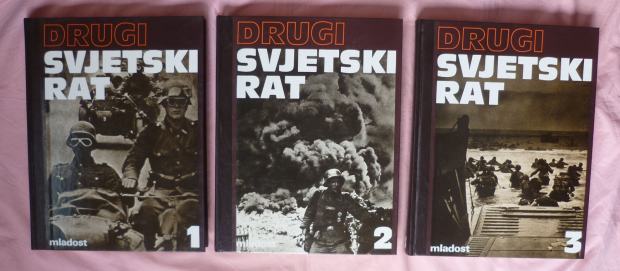
The other work I loved reading was a three volume book about WW2 which again was full of pictures and maps heavily accented on purely military operations. It was divided into smaller independent chapters about military actions, and you could simply pick what you want and read there.
Basically, what I can conclude from my own example, is that books most appealing to me at the young age were full of visual content, with text being secondary, but important nonetheless part. In particular I liked the accurate, "realistic" style of images, nothing too abstract. I also liked the option to simply browse the book and just read the chapter I want without the need to read all the "boring" chapters before.
My kids and I love to watch the Extra History youtube channel. https://www.youtube.com/playlist?list=PLhyKYa0YJ_5Aq7g4bil7bnGi0A8gTsawu. The videos are cartoons and good storytelling.
Ever since my boys were little, I've done a lot of "Isn't it cool that..." or "Can you imagine if you had to do this in [year/historic period]? They probably had to do x and y; I can't imagine how they did z." This starts conversations featuring problem solving, "research" (googling), and information they learned in school. I want this curiosity to be part of the background for them so that they are doing this internally, without my prompting.
The boys are older now (early teens), so lately I've been talking about how literature, art (including architecture), and historical events tie together &/or are all dependent upon one another: that understanding one informs the other. This has generated some interesting conversations, especially now that their Lit class reading is more sophisticated.
Both of them enjoy history.
To be quite honest, I became interested in the real history behind civilizations through playing computer games like age of empires and more recently crusader kings 2 (not really suitable for children I guess). In addition to that I had a lot of historical fiction books and these humorous "Be glad you are not a" Viking, Roman soldier, Gladiator etc. (might be called differently in English) book series. I feel like the combination of books and immersive computer games could also help with spreading interest among children.
Computer games.
Obviously, choose the games wisely... But I've found that computer games are capable of encouraging an incredible amount of interest in the details within the game world.
A few dozen hours playing COD, and a youngster becomes a mini-expert on modern age firearms. A few dozen hours playing Age of Empires... And before you know it, a child is going out of their way to learn more.
Well, I will put my piece here, though it will be short and maybe someone has already told it but nevertheless, I must try: Understanding historical actors as humans. When one understands classism, the fact that they have been bred and born with classism and therefore with goals to a greater legacy than the one is given to them, one understands the political actors and their driving motivations. I started to be fascinated with history when I started to understand the motivations behind Alexandros the Great and Philippos his father, their family situation, their expectations, the expectations others had of them, etc.
Forgive me in case this sounds very short and unproductive.
Introduce them to the magic treehouse books or audio books. Worked for our boys.
For me, it was learning/reading about weird historical tidbits that I thought would be cool to just be able to whip out/allude to in life. So I guess presenting kids with weird parts and facts about history would work. I personally just finished a course on witchcraft so that might interest kids to learn about
From a UK perspective, the Horrible Histories series of book and especially the various TV series is what got my children interested. It's basically got everything that makes children giggle (poo, gory bits, etc) with the TV series having some really catchy songs.
Video games is another one - we went on a family trip to the Bovington Tank Museum solely off the back of all of us playing World of Tanks for a while.
Re-enactment events are also good for a day out - the English Civil War is popular around these parts, and there's nothing like seeing whole companies of muskets and cannon batteries opening up on each other.
I think a lot of it has to be focused on the particular child at first, then the interest will grow. Don't be too focused on what you're interested in at first. Eventually it will tie together. History encompasses literally everything before now. If they're into sports teach them about the Indians and lacrosse, or the beginnings of sports in Europe. Or why certain sports are played in certain areas. If they like to cook, there's tons interesting stuff from domestication of plants, to cookbooks of the 70's. If they like video games, teach them the history of them and how computers were created. What they were used for. Etc. All those things can easily be tied into actual important historical events, plus it'll be something they'll be interested in.
EDIT: Also just some easy off the top of my head ideas for my three examples for what you can do with them to give them an hands on experience. Take them to a reenactment of the old sports games. I know there are baseball reenactments of how it was played in the 1800's. I also know that there's "Chumash" tournaments where they play lacrosse in a way much more similar to the original sport. Cook a recipe with them from a historical cookbook, or grow a plant that they used in the past but don't anymore. And lastly, take them to a retro arcade. They still do exist, and even though it's more recent, there is a lot of history in that kind of stuff. Especially if you include pinball machines and stuff.
My oldest loved the ‘Who was/is” and the ‘What was/is’ series of books. Great stories of ancient and modern people and places. Now Netflix has a show called the same with the same premise.
I found just plain exposure has helped my oldest enjoy history. She l lives historical fiction.
Our kids love The Story Of The World. Despite it being from a Christian store, they give a decent treatment (including things like using BCE for dates): https://www.christianbook.com/vol-1-ancient-times-story-world/susan-bauer/9781933339047/pd/339047?kw=21440761692&mt=b&dv=m&event=PPCSRC&p=1186432&gclid=CjwKCAjw8_nXBRAiEiwAXWe2yQK05a1QUlZBwzINyJG5C7VkEZXfli0oShU_OmGMslONlYf-dBUYOBoCf9cQAvD_BwE
Take them to historical sites that have interactive education such as camps. There's a park here that does a class on Victorian etiquette and tea. I think they tie it in with the American Girl doll Smamantha. There's another park where kids learn about living in colonial times. It's the hands on experience that drives the interest. It has to be more than just visiting a park.
My favorite professor would lecture by narrative. He told an engaging story. It was one of the few classes that I had significant out of class contact with the professor. I'd have what I considered simple questions and the response was incredibly more complex than I thought. Then I wanted to delve deeper.
Nearly changed majors but he said he was retiring.
I think the best way to teach is to make history relatable through narrative. Also leaving questions to ask and inspiring them to be asked. Hinting that there is more to know. Ultimately the question is one of psychology.
My son has become a history buff in the past few years and it really started at the dinner table. My wife and I were reading different books that happened to overlap briefly. Our conversations over dinner would draw him in as he saw history through our eyes.
After that, it was a matter of nurturing. He is interested in military history, so we explore it, but we also expand it into the social and political realms. It really isn't a formalized "lesson plan", we just remain sensitive to his interests and then build upon them and if he's getting bored by something, we back off and find something else.
A resource I haven't seen mentioned yet is YouTube. New episodes of "Extra History" are watched as a family, and we explore other series on a more haphazard basis.
Introduce them to Patrick O’Brian at, say, 12-13 or so.
I highly recommend Romance of the Three Kingdoms. Not the original, thousand-plus-page novel, of course: it took me two years to read that as an adult. There's as many kid-friendly adaptations as you can think of, as well as adaptations for older audiences. The old anime version from 1991-1992 ( https://en.wikipedia.org/wiki/Sangokushi_(manga) ) is a very kid-friendly version for someone in the, say, 10+ range that gets into how exciting the story is and how real the stakes are. The 2010 live-action Chinese TV series Three Kingdoms ( https://en.wikipedia.org/wiki/Three_Kingdoms_(TV_series) ) is absolutely excellent, though aimed at slightly older audiences. The John Woo movie Red Cliffs is great, although it's insanely long.
The Koei-Tecmo Romance of the Three Kingdoms video games are fantastic and encourage a lot of thought, and their Dynasty Warriors counterparts are...more exciting, even if they play fast and loose with a story that plays fast and loose with reality to begin with.
Romance of the Three Kingdoms has a similar appeal to stuff like Greco-Roman mythology and military (which I also heavily recommend for young people): lots of action, lots of very vivid characters with motivations, high stakes, and a winding narrative with dozens and hundreds of unique characters who all fit together.
I posted this in reply to a comment but thought I’d repeat it in case you missed it.
My son loves the I Survived books. They are written about a kid who (spoiler alert) survives a historical event. One is the Titanic but they go back to Pompeii and up to recent events like 9/11 and the Joplin tornado. I thought they might be too depressing but as far as we’ve read they’ve been fairly uplifting and accurate (not that I’m an expert.) We were standing in line at the store and he was going on and on and on about the Hindenburg and when we got to the front the cashier just shook his head and said I didn’t even know of the Hindenburg at his age(he’s seven.)
I think stories are probably the best way in with history. Humans thrive on stories. Very few people are going to be fascinated or care about a series of names, dates, and events in and of themselves. Stories, however, can make all those things interesting.
We used to read historical picture books when she was little. I also used to basically recap whatever biography or history book I was reading (in an age aporopriate eay) when she asked me to "tell her a story". When she's frustrated with something or complaining about a situation I often draw a parallel to a historical figure. The last couple years I've also been playing the History Chics podcast in the car, or when we're cleaning or cooking together.
I am by no means a historian, but I have always had a strong interest in the histories of things, and I believe I got into it because of the question my parents always had about my interests as a kid.
My parents probably weren't asking out of genuinue need for knowledge, but rather to engage me and get me thinking about things more critically. I learned to relate to my parents (and others) about my interests through exposition, and I found that most of the questions asked were about why things looked or were performed certain ways. I of course didn't have answers by myself, so I went and looked it up. I got used to hunting for answers about my own interests in order to answer others' questions, and that got me started looking into the histories of a lot if different things. I would say now my interests are broad and shallow as opposed to narrow and deep (which is why I like the opportunities to ping experts on this subreddit).
So, my advice for encouraging historical interest in kids is to start more broadly by encouraging critical thinking. Ask your kids about the things they like. As they start to think more about the things they are interested in, I think they will naturally delve into the histories of them.
As a young child I hated history. Then I got total war Rome 1, and history quickly became my favorite subject. Videogames are a wonderful way to get children engaged in history. It also teaches a fair bit of geography.
My passion for history came comparatively late in life (not really until during my undergrad). I think for me the thing that piqued my interest was the realization of how much analysis was involved in history; that history was not just the memorization and regurgitation of some Rankean historical record. The uncertainty of history intrigued me, I liked the possibilities that came with not truly knowing exactly what happened and why it happened.
I think a lot more can be done to expose younger people to this side of history.
I would pick any current or upcoming challenge they have, and link its solution to a historical event to prepare them to handle the challenge.
That should show them that learning history its like facing the future with a box of tricks in your hand.
My high school teacher would tell us to take historical events and make comics for it. It was fun and since I was a bit of a class clown it caused me to really do some extra research that I can base a funny comic around. Naturally I would pick light events in history, but other kids would make action comics or such and such. The only requirement was that all information presented must be factual or generally accepted.
Tell them History as a bedtime story. That's what my parents did. Focus less on the dates and more on the drama and personalities. It's okay to embellish a bit
From a young age I've played video games, I loved video games, and it gave me a fascination for the histories that they take their influences from.
They don't just rot your brain, though all that was in the days of single player.
My interest as a children began with the explorations, the one I remember better is reading about Cook and then reading about all the other explorers
Ctrl + f and then type "Video games" that should answer your question :).
I came here as well to say games like Total War helped me learn history and geography. Games like Civ show you difference in cultures as well as historical and cultural significant buildings. Also, they show in basic terms how our society developed as a whole.
The best advice I've ever heard on this matter is to just make it one big story. We all love stories; and history is just one big one, with the most useful lessons. :)
If a professor has good storytelling skills, they can make history lessons into story time, which everyone of every age loves. The professors that really got me excited about their history classes were great at telling history as a narrative. Listing off dates and names of treaties is incredibly boring. Talking about the characters and why they were motivated to do the things that they did makes history exciting.
Obviously to do this, the professor in question has to have a fairly deep knowledge of the subject matter.
History is the story of our world. It isn't a series of dates and treaties. History is about people.
I think there are two keys and they are related.
Focus on areas that are already of interest.
Cultivate the idea of learning more about the things they are interested in.
For me the second one was important. I would play Final Fantasy and even though the use of mythology is inaccurate window dressing, I wanted to learn more about the real Shiva etc... I would read Tintin and want to learn more about the cultures he visited.
So if your child is into horses, have learning adventures about how horses and human development intersected. Learn about what horses meant in different cultures and the effects they had.
I’ve used table top gaming, video games, Ted-ed videos and just YouTube videos in general. It’s such an awesome tool.
The main thing is to pick interesting topics and find the coolest things possible. Link them to modern life and how it affects them.
I taught year threes a little bit of bride mythology today, it was a few minutes into lunch time, it was voluntary, they loved it and how Thor and Loki were so different yet recognisable from the marvel films they saw.
I think whether you are an educator or a parent, the best place to start kids off is with local history. As boring as that might seem at first.
I think our instinct is to 'wow' children with history as a means of getting them hooked, so we rely on the flashier parts of history: big pyramids, shiny gold objects, daring adventurers. Take your pick. Not that these AREN'T exciting for kids, but for most kids they are also abstractions. Unless you live in those places, that history isn't personal.
So instead, I say start them with local museums, drives around town to old buildings, bed time stories of local lore. Let history give them context for their own lives, and hopefully that gives them a foundation to appreciate any history as they grow older.
As an archaeologist I'd love to say cool material culture is the gateway into history, but you can't sit a kindergartner down to talk about ceramic assemblages. I've tried.
The first thing to get me into history in general was a video game. I was only about 7 or so, but Age of Empires 2 was the only game my older brother would play with me that allowed us to be on the same team and face other people in multiplayer stuff. I started churning through the campaigns, all of them, 1 by 1, and the game had these biography sections about the different cultures you could play as, I read them all. The campaigns were semi historical and that gave me a jumping off in terms of knowledge to start with while I learned more. I started wanting to read about the real events surrounding what I was playing, queue my dad taking me the library to check out books on the crusades, joan of arc, and the mongol empire. I was admittedly a little young in hindsight to be reading those books, but an enjoyment of history had been started and would continue on.
They Might Be Giants, obviously!
This is going to sound dumb as heck but TotalWar and Mount and Blade Warband got me into reading about the Napileonic wars and learning tactics of the time to crush my vurtual foe..
When I was a kid I used to ask my dad to tell me the stories of different countries. He'd do his level best to give me a broad overview of that country's history and if I had questions he didn't know the answer to we'd go look them up together. Once I started thinking of history as a story that never ends I was hooked.
talk about some of the more ridiculous sides of history and how dumb and weird, or play historically accurate city builder type games, and it will be made more clear how complex other civilizations were
Tell a good, engaging story. Don't bother with names and years, save that for later. Say "500 years ago" and "The king of the Orient", and instead paint a picture of what they wore, what they ate, the climate, the kinds of weapons, the sorts of problems...
Less formalia, more intrigue. Telling a story well is a hard thing, I absolutely suck at it but I am so optimistic and engaged that the kids stick with it because they get the sense that "boy, this is going to be goood!".
Tell it like a podcast rather than as a lecture. Tell a story, don't lecture, and let your own fascination shine through and it will rub off.
I echo the idea of historical fiction and "blurb books" (non narrative, full of short facts). It has worked for my kids, my friends' kids, and it worked for me as well.
I know that for me personally, coffee table books (like the Life series Our American Century) would keep my attention for hours, reading all the photo captions.
The Laura Ingalls Wilder series brought American history to life most vividly for me. I know they are controversial now due to the racist overtones of several passages, but to me the understanding of what was involved in daily life then is invaluable and definitely worth having some tough side conversations with my kids.
seconding Horrible Histories and the You Wouldn't Want to.... series. The gross out / train wreck effect gets views, and the kids realize there is more to history than the santized version in textbooks.
When I got older (as far as the post goes, relevant for catching teens who never got engaged with history when they were little), historical mysteries and novel-ized history made me actually care about the events that seemed so dry. eg, I couldn't care less about the Magna Carta until I read Sharon Kay Penman's book Here Be Dragons, where she dramatized the struggle Joanna faced being both King John's daughter and Llewellyn's wife as those two men fought and backstabbed.
I work in land surveying and served on the board of a cultural center, so I tend to collect knowledge about the history of a place easily.
When I go on a hike, especially with kids, I try to get e general details and history of a place. I like to show the old mill foundation on a river bank, talk about how this area was settled. Show some of the earth markings of what was there before.
To me, it is meaningful to be in the place. In the words of Robert Penn Warren: "history is all explained by geography"
I worked as a camp counselor for years many different ages, I also played dm in alot of campaigns. I would simply tell stories then encourage them to look the people in the stories up.
Historical recreation and re-enactment is a fantastic way of introducing children and youth to history. Not all groups organize activities that are family-friendly, but those who do often create a life-long interest in history for a new generation. I have friends in their 30s and 40s who were introduced to the *Society for Creative Anachronism* when they were young teens, and have continued to be interested in history for decades. Many have cultivated varied interests in history and history-adjacent disciplines, some as amateur historians doing interesting research, and some even entered academia. But it all started with them being able to appreciate a time in history with practical and fun activities, crafts, games, pageantry. I love it when I see children in garb interacting with other children and adults, getting an idea of what someone their age would have been like, what they would have been doing in another time and place.
This might not be the direction you're all thinking but I read history trivia (mostly on Wikipedia) and my entire interest was sparked by Age of Empires. Not that it's an accurate source, but it's why I love history.
I was forever addicted after watching the ken burns (I know I know) docu on the Civil War as a tot.
Ended up double majoring in physical anthropology and euro history focusing on medieval russia and kievan rus in particular
My parents will attest to me always loving history - I remember having books about castles etc, and I played AoE and Total War games a lot. A lot of it was primarily boy-ish, "knights and battles" kind of interests - what would people recommend to get children interested in cultural and social history? Or would that be too complex at that age?
Regardless of material, I found that the more interested the person presenting it is (wether a teacher or just a parent) the more interesting it will be for students or kids. My favorite high school class was a history class where the teacher performed in reenactments and had full uniforms and decommissioned weapons to bring in and show everyone. Mr. Thorsen is the best.
I would certainly say that educational video games need to be further explored this day and age. Technology has come so far since Oregon Trail, but there is no game as culturally relevant and popular in schools today. I would love an Assassin's Creed without the assassins/animus BS, but with all the beautiful historic settings and figureheads.
Dreaming big aside, something as simple as writing history books more like story books and less like text books would go a long way. Suddenly museum pieces would feel like celebrity sitings.
Computer games cannot be understated. I was hooked partially by AoK. Rome total war solidified tits. Today the assassin's creed games spend a lot of time on their history titbits
My interest was sparked by good history teachers in my youth. I thought history was just as interesting as any fictional story and it had the added benefit of actually being true and teaching many lessons about the present and future.
I haven't tried this but when they grow up, I plan on using video games to spark an interest. I play the Civilization video game series and it really has a lot of historical insight and gives a pretty good way to engage with the concept of a Civilization for young people.
Reading to kids and being engaged yourself are also great options.
The show horrible histories is amazing- search up some of their song covers!
My interest in history has to come my father, who studied anthropology in college. For as long as I can remember any history question I asked was answered in an age appropriate way or let's find out. He would also share little facts about the surrounding area, things like a small battle happened here or this is where a certain native American tribe lived.
From my experience the best way to have childern interested in history is to respect thier questions and show them living history.
When I was a kid, I didn't like history because I couldn't relate to it. I thought it was just the rote memorization of facts.
But over time, I learned that to learn history is to further your understanding of human nature since people don't really change. Furthermore, I learned that history is fluid in that you interpret it.
Push those facets of it (ok maybe just the first one as the second might be too advanced) and you start something
Middle school history teacher here wave when my students leave my class in two weeks, its not the content I want them to remember as much as the fact that they enjoyed the subject in my class and found relevance in the history they were studying. Connecting history to current events creates relevance that is often lacking in history education. I teach my curriculum thematically as well. That means we go over the same time line multiple times during the year, but with a different lens each time. We start with the theme of "rebels" for instance and see how rebels and rebellion have always been, and continue to be, a part of America.
It's going to sound strange, but teach your kids how to play Dungeons and Dragons.
Not only will it spark their interest in history and mythology, it will also teach them valuable skills such as teamwork, mathematics, research, and how to socially interact with others.
Another suggestion is to treat children as intelligent human beings, don't dumb things down for them, treat them as you would want someone to treat you.
Mandatory "I'm not a historian but" : I became interested in History, along with many friends, by playing Historical Grand Strategy games. Not only does it directly make you an actor of the time period of your choice, it also encourages you to search about pretty much everything you encounter. When I started playing Europa Universalis, I didn't even know about about the HRE ; now, I know a lot about the reasons and consequences of the death of Kasimierz III of Poland. I learned all of that by playing these games. Moreover, I have an academic study, that is sadly in french (I could translate it) showing an increased interest and knowledge in history among people who play this type of games.
The question connotes a more encompassing one; how might we awaken general intellectual curiosity in children. And of course, the theoretical musings are at least as old as the pragmatism of John Dewey and his philosophy of education. The 'simple' answer is by having the good fortune to have parents and teachers who model their own love of learning as an example for children to see. In modern society, it's all about learning to love learning by seeing that it is an incredibly pleasurable and valuable activity to undertake. Teaching historicism, and the absurdity of religious belief are also very helpful.