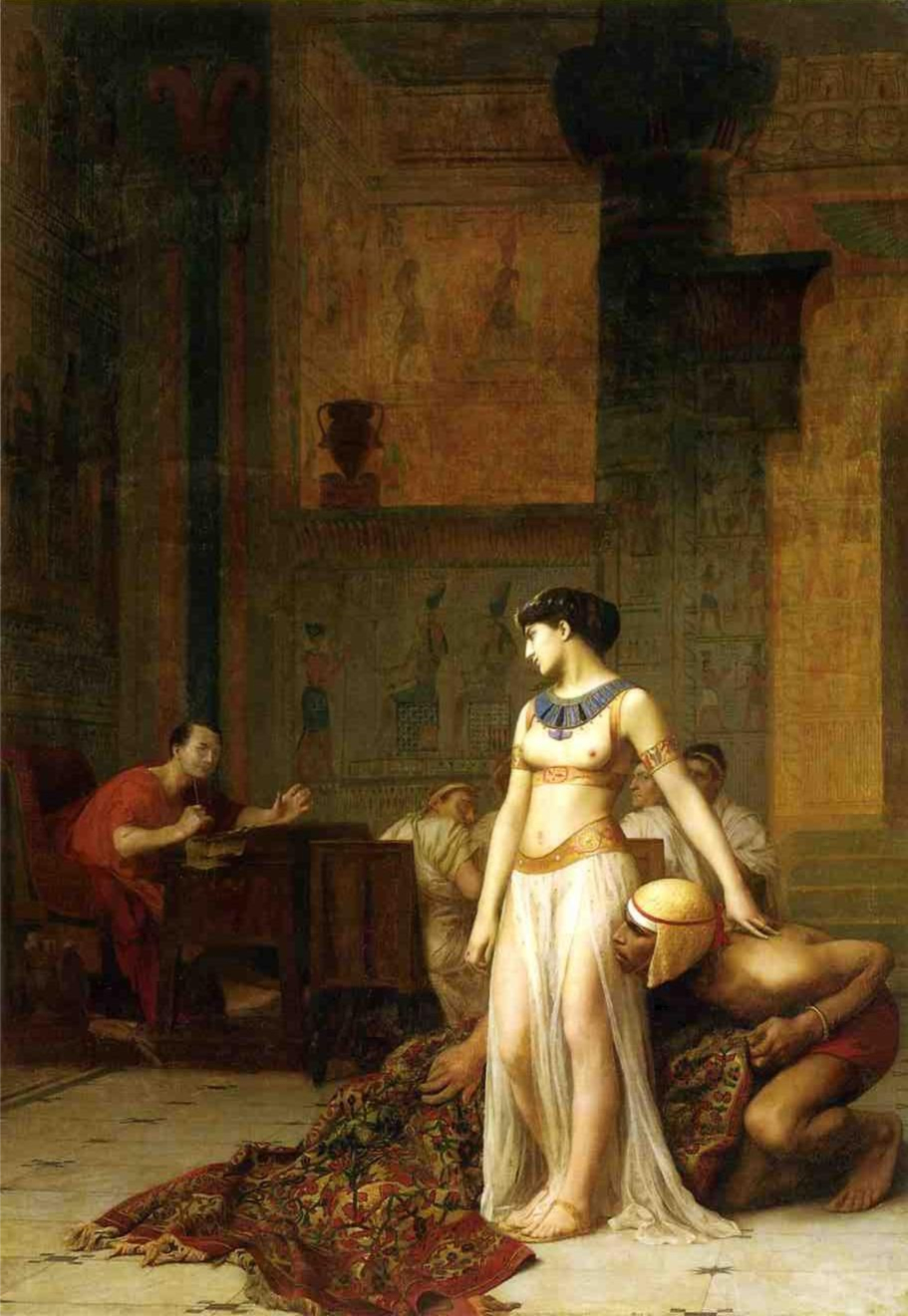
Apologies if I misused usekh collar, it was the first result when I searched for 'ancient egyptian collar thing'.
This is the sort of depiction I'm talking about.
Short Answer: Yes, they were worn in Ptolemaic Egypt.
Long Answer/Background: Prior to Alexander's conquest, the Persians were never popular rulers in Egypt, as evidenced by several rebellions that took place throughout the Late Period, some of which were successful for a time. These rebellions were often sparked by Persian intolerance for native culture and religion - for example, they desecrated the tomb of Pharoah Ahmose II (the last indigenous ruler prior to the Persian conquest), destroyed temples and at one point even killed the sacred calf.
The Greeks, however, were much more tolerant of Egyptian culture. When Alexander the Great conquered Egypt, he visited the Oracle of Amun and was respectful of local religion, which greatly pleased the local population and made the change from Persian to Greek rule fairly straightforward and quick.
That being said, the Ptolemies were still foreigners and sought to legitimize themselves in the eyes of the Egyptian people. They built temples for the Egyptian gods, adopted the title of Pharaoh (and the claim to divinity that went with it) and even started marrying their siblings as the Pharoahs of old had always done. After a certain point, it's hard to distinguish them from native rulers. For example, take a look at these images 1 2 3 - none of these are actually Egyptian, they all depict Ptolemaic rulers. The first two actually depict Cleopatra's father. The usekh was definitely still worn (example of one during the period), alongside other garments/ornaments such as the pschent, the nemes (depicted in the third image) and other types of crowns.
Sources and Further Reading
Klotz, D. (2015). Persian Period. UCLA Encyclopedia of Egyptology Link
Portraits of the Ptolemies: Greek Kings as Egyptian Pharoahs by Paul Edmund Stanwick
A History of Egypt Under the Ptolemaic Dynasty by Edwyn Bevan