The Dark Ages are often talked about as if they spanned the entire Medieval era, but the High to Late Middle Ages seem to have had a thriving artistic, philosophical and literary culture. The only epoch in European history I can think of that seems to have lacked this entirely would be the period from the fall of the Western Roman Empire to the coronation of Charlemagne. "Dark Ages" is a bit of a loaded term, but might it be applicable to this period? Or is even that either too simplistic or too restrictive?
Absolutely not. In what is now France, for example, he 5th century saw the establishment of the Merovingian dynasty in Gaul, which lasted clear through the 8th century, saw expansions in techniques for masonry (including the the opus gallicum which was, essentially, using wooden rebar in large-scale stoneworks,) expertise in glass-blowing (which was then re-introduced to England by imported experts,) and the development of the Merovingian or Gallo-Roman Script, which was in use until the advent of Carolingian script in the late 7th/early 8th c.
Insofar as physical buildings are concerned, Merovingian architecture became the basis for the Romanesque style of the 10th-13th centuries, and Gregory of Tours considered the Basilica of St. Martin in Tours to be one of the most beautiful buildings, having described it as having 120 marble columns and a number of mosaics.
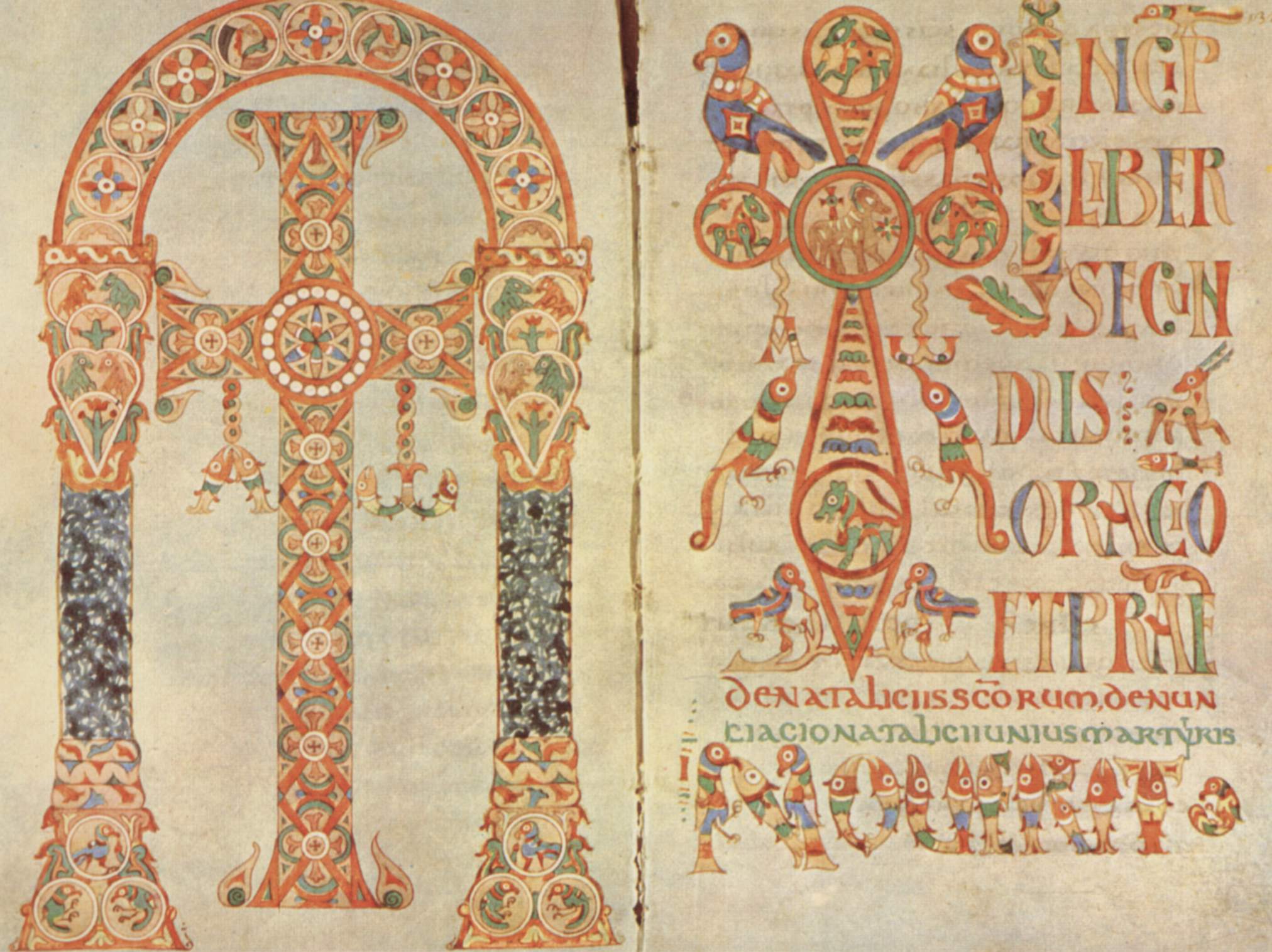
The Sacramentarium Gelasianum MS Reginensis 316 is a gorgeously illuminated manuscript from the Merovingian period that is currently in the Vatican library, and is the second oldest remaining Western liturgical book.
If you're interested in the Merovingian period (which is phenomenally interesting!) I highly recommend Geary's Before France and Germany: The Creation and Transformation of the Merovingian World as a jumping off point. It's older, but it does help to put aside some of the misconceptions of the period as a 'dark age.'