I’ve been madly curious about how Native American languages seem so much more diverse than Old World languages, even though the Old World has a much larger population. Is it due to greater interconnection of the Old World? Is it due to how there’s many more writing systems in the Old World?
This is a bit of a misconception. Larger-scale Paleoamerican language families absolutely do exist, but I can see what you're getting at. In my answer here, I'll try to explain the various points.
Firstly, there are widespread language families indigenous to the Americas. I call these "Paleoamerican" to group together the Native Americans and the Inuit peoples, who are not related to one another by geography and are classified as legally distinct categories by the United States government.
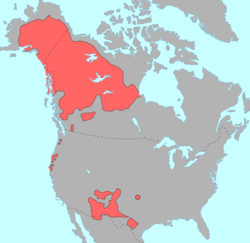
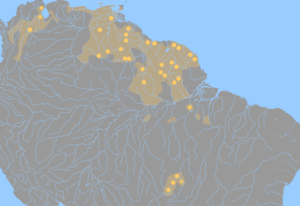
Examples of widespread Native American language families would be the Algic, Na-Dene and Uto-Aztecan families, if I had to summon ones immediately from memory relevant to North America. In South America, there exists the Arawakan, Cariban, Tupian, and Macro-Je language families, with a fairly disputed possible connection between these, sans Arawak, into a macro-family. The languages of the indigenous Caribbean typically were Arawak or Carib as well, though the links do not show these. These are all fairly geographically widespread language families, and would be comparable to Indo-European, Afro-Asiatic, or Sino-Tibetan in scope.
There are also language families that have many bits and pieces within them despite not covering a particularly large area. The key example of all the ones I could pick for this would have to be the Mayan languages, which overall cover an area traditionally about the size of the Yucatan, Guatemala, Belize, and a bit further beyond the borders, with the exception of the more distant Huastec who have their own later establishment in history. The Mayan languages are incredibly plentiful given the size of the area they occupy, and this is what I would call the Papua Effect. Essentially, when a group is highly isolated, such as the Mayans being separated into competing city-states surrounded by dense jungle and rocky highlands, they will split into a great many small pieces. As you can see here, the Mayan languages are most diverse where communities are most likely to be isolated- where the jungles and mountains are thickest. Remember this habit, because it becomes important in the next paragraph.
So, why are there so many small, independent language families across the New World? It's that Papua effect in action again. In a world that tended to lack long-lasting empires the likes of Rome or Britain, it was particularly difficult for one group to surpass another to such a degree it might cause total extinction. You might be able to pin this on the (generally) stone age conditions of indigenous America, where although the Andes might've been copper-and-bronze, and the Pacific Northwest might cold-hammer iron tools, the urban centers are largely using Neolithic technology, and some tribes live in Meso- and Paleolithic conditions. The sort of technological stagnation, though I hesitate to call it such since indigenous ingenuity meant it never properly stagnated, contributed greatly to the preservation of massive diversity, as it did in many other tribal, underdeveloped, or otherwise isolated parts of the world to this day.
The Old World likely once had this same level of diversity in times never recorded. By the time writing reaches Europe, things are already in the bronze age, and statehood is invented. Furthermore, the Indo-Europeans, once a group of horse nomads, manage to assimilate much of the prehistoric European population into their ranks by the time writing rolls around. What we're left with are Finns, Basques, Minoans, and Etruscans as far as the written record is concerned.
To finalize the point I'm making- in summary, Native America was so incredibly diverse because that is, generally speaking, the natural state of humanity. Many tribes of many languages and cultures grouped together tends to create regional similarities, but when analyzed on the individual level can be incredibly diverse. They retain this diversity perhaps because they often cannot sustain a large enough population for the scale of conflicts, empires, and organization we see in places like Europe and the Middle East. They are instead small, but stable, and because so many are in this situation it ultimately means none of them can dominate over the others. Without this domination, diversity will generally fail to disappear.
This is not to say that Native Americans were "primitive", and indeed the population of the precolumbian Americas was actually very comparable and fair given its relative size to the rest of the world. No, it was not so much the total population that was the reason- but instead, it was the decentralized nature of the population. Where population is centralized and urban, you see flourishing civilizations- the kingdoms of Mesoamerica, the Andean empires, both of which have absolutely led to the decline of other cultures and the creation of larger blocs as we see in the Old World. Along the Mississippi, the trade hubs formed large urban settlements that, despite being city-states of various ethnic origins, came to absolutely dominate the regional culture to such a degree that, when unforeseen disaster collapsed their system, the Mississippian cultural and religious legacy was never abandoned. Things like the Yaupon Tea are still present in many cultures, and the old Mississippian burial mounds are considered particularly holy by contemporary relatives. Some Mississippian cultures turned to nomadism after their collapse, becoming groups like the Lakota, who, as is the nature of nomads, claim a large geographical space for a relatively limited number of cultures, much as city-states and isolation breed massive internal diversity in a small area.