While 'Greater Romania' encompasses seemingly all Romanian nationalist territorial claims, I've seen a few references to other areas throughout history and was curious as to the origin of the Romanian claim on these places;-
"For us the mountains and plains of Bukowina, where Stephen the Great has slept for centuries. In our moral energy and our valour lie the means of giving him back his birthright of a great and free Rumania from the Tisza to the Black Sea"
I was curious about the origins of these claims, and also whether there were ever any greater Romanian territorial aspirations beyond the interwar Greater Romania?
Indeed some Romanian politicans had aims greater than what was realized after WW1. As you mentionned some envisioned a border that stretched from the Tisza River deep into what is Serbian and today's Ukrainian territory. This map in particular represents the extreme version of "Greater Romania". I should note the title "Historical Romanian territories" is very, very questionable and with little doubt put there by the author with political and nationalist intents.
The main basis of these borders seems to come from the borders of ancient Dacian Kingdom. Now while the reverance of pre-roman people as ancestor population is (was) common in Europe, the case of Romania and Dacia is especially strong, which I don't want go into lengths here, but you might want to look up Protochronism, state-sponsored revisionism under Ceucescu. Whetever Romanians are really connected to Dacians or not, claiming ancient borders just because your ancestors ruled it 2000 years ago hardly has any real weight in the modern world, If other people started to apply this we'd be in WW3 no time. Also there are several more points which make these claims questionable: I'm no expert at antique ethnography, but I know you can't just apply modern concepts of state and nations 2 millenniais back. Such a state like the Dacian Kingdom was hardly a centralised rulership based on a common ethnicity. For example the Iazyges that inhabited the pannonian plains were Sarmatian people and not directly related to Thracians. Even the notion of borders was fuzzy and don't represent a strict divide between our vs not-our land (there are exceptions of course, such as the Roman Empire itself having a well-defined border).
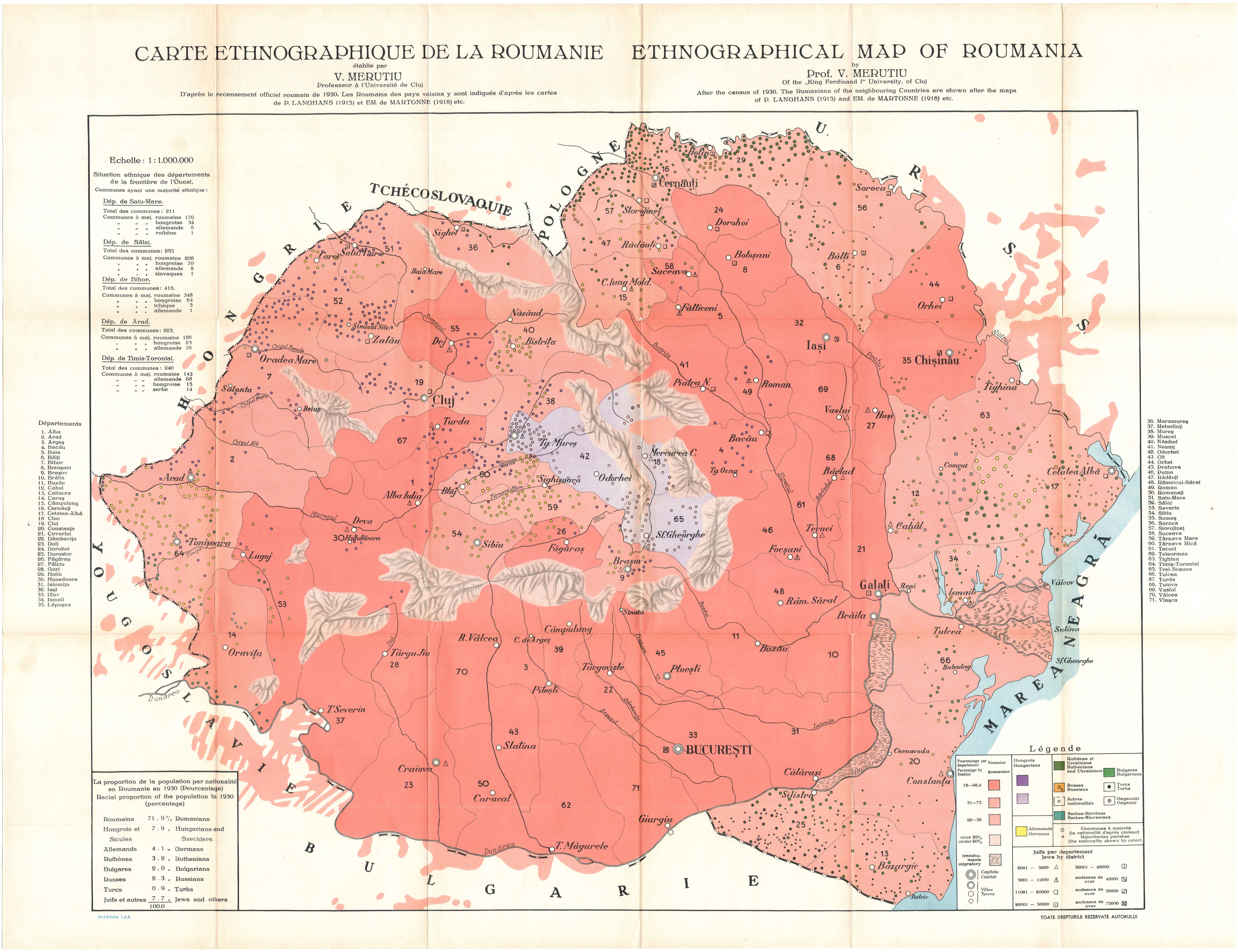
The other part of the claim comes from basically wanting to encompass all territory where even a single Romanian village could be found, regardless if they had majority in said regions. This and this Romanian-made ethnic map give some pointers. I've read a detailed critique of the second map regarding it's methodology. While technically most of the map is correct, in the sense of trying to establish territorial aims it's inherently biased towards Romanians. In my opinion, since they (correctly saw) they aree in a unique historical situation they tried to "grab" as much land as possible. But the extremest of attempts (namely to have a border at Tisza) were rejected by the Entente.