(Save for a pack of vikings) no-one reached the americas before columbus. Navigationally, i'd image it would be easier than many other routes. Go west until you hit land. Why was it so difficult that no-one managed?
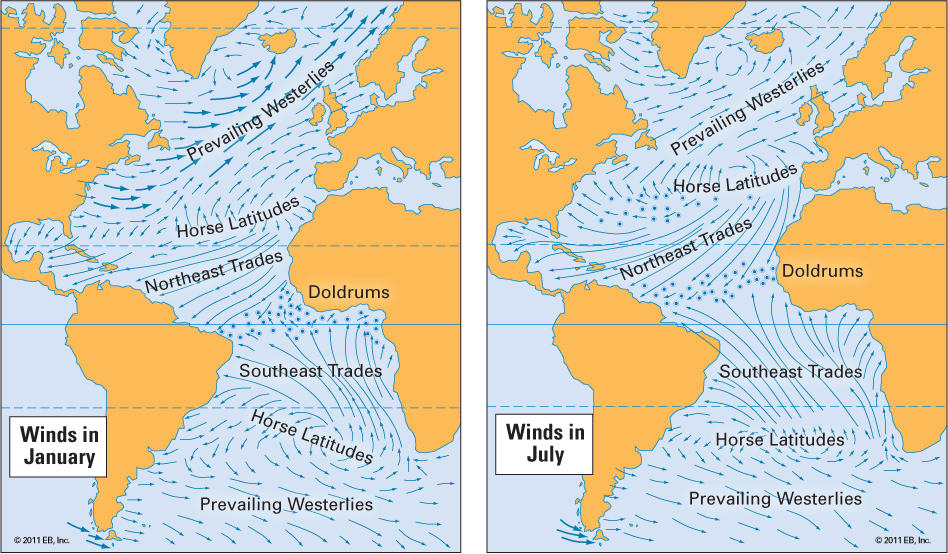
The biggest hurdle was the wind and current patterns of the Atlantic directly off the coast of Europe, which you can see in these two images. The second image especially shows that the ships sailing west from Europe would be met with contrary winds preventing them from sailing that direction.
And as we in fact can see from the images, if one wanted to sail to Americas, your best bet would be to either head north and go around Iceland and Greenland, like the Vikings did, or head south to latitudes of the Canary islands and from then west, like Columbus did.
I can't really talk about vikings and the northern route (other maybe to remind you that those waters were less traveled and weather at those latitudes was colder) but for the southern route I can simply say that Europeans rarely, if ever, sailed down south to Canaries before the start of 15th century, and only since then did they frequently enough travel south to gather necessary experience and skills.
Not to forget, there were also technological changes in ship construction and navigation. Compass was introduced around 12th - 13th century. 14th century was a time of fusion of Mediterranean and northern (Baltic) style of shipbuilding (e.g. stern rudders and square sails were (re)introduced from the north, multiple masts, clinker planking and frame first construction from the south). And 15th century brought forward changes in navigation particularly with introducing celestial measurement of latitude allowing for the first time navigating for longer periods of time out of the view of the coast.
Still, we shouldn't look at these technological changes as overly decisive. Determined attempts from earlier eras would most probably eventually succeed in reaching America and going back, however it would be more difficult and dangerous.
Which leads to the last point and that is that acquiring a ship and equipping it with provisions for sailing at least 30 days in one direction (that's how much it took Columbus) and then return and on top of that hiring and paying wages of crew for that period would be incredibly expensive. If you would be even able to find crew that would accept sailing for longer periods of time without sight of land in a totally unknown direction. Basically someone wanting to find out is there anything west would have to put up a huge amount of money, with little belief that investment will be returned