I've read that one of the main reasons he had done so much work on the gasses is that he had been working extensively for the crown. I'm reading an introductory text of epistemology and the study of sciences (like, really introductory level but it's very cool) and the main concept through the text is that science isn't "led" by singular illuminated subjects but it's a product of social relations and the relations of production. Thus in a rising capitalist society science follows certain capitalist necessities in which augmenting production and reducing costs is important, military investigation was needed for colonialism, etc (very summed up version of what I remember from the text).
It also talks a lot about Kuhn and his paradigms theory.
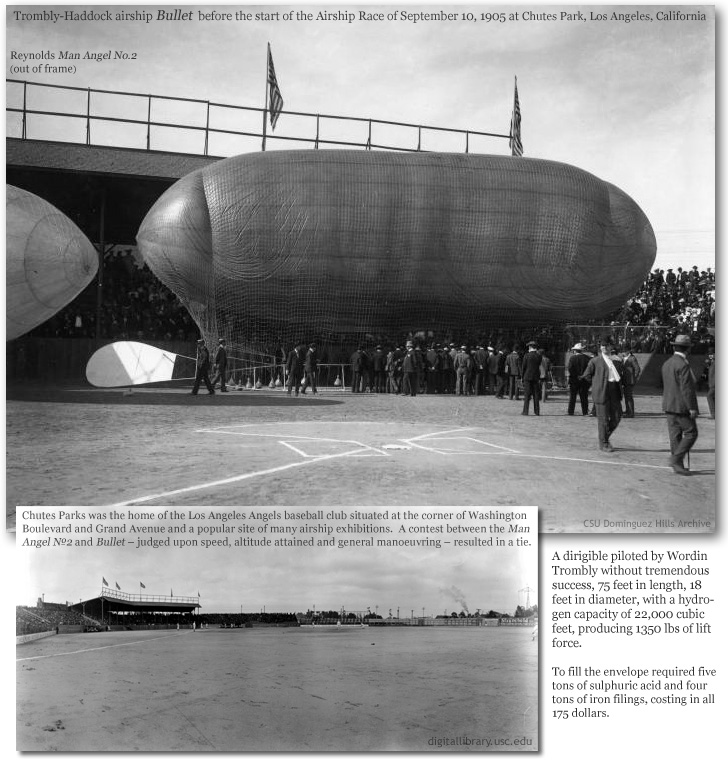
Short answer would be 'not much influence'. The main discoveries of Lavoisier - of oxygen, conservation of mass and the invalidity of phlogiston theory, had already been made before the fall of 1783 when the Montgolfiers flew the first hot air balloons, and Charles and the Robert brothers the first hydrogen ones, using hydrogen produced from tons of scrap iron and sulfuric acid.
As a member of the Academy of Sciencies, Lavoisier was put on the quickly formed Montgolfier commission and it successor Aerostat commission, tasked with improving the technology, as they saw the possible uses at the time and not only by the inventors. So when the Academy got busy with that, Lavoisier and Bertholet proposed to the academy (Procès-verbaux, Académie royale des sciences, Dec 6 1783) that that finding new ways of producing hydrogen was an important key here, and that lead up to their famous experiment decomposing water into hydrogen and oxygen in April 1784. That's about the extent of his direct involvement in aerostats, but if you look at those facts alone, it might appear that the goal of Lavoisier's investigations was to improve Aerostats for practical use to serve the government. However, that's not really supported by the surrounding circumstances.
To back up a bit, Cavendish had discovered in the spring of 1783 that burning 'inflammable air' (hydrogen) seemed to produce more water than could be accounted for by the water content of the gases alone. Cavendish tried to explain this in terms of phlogiston theory. When Lavoisier found out about it in June, he immediately set to work on carefully repeating the experiment, and accounted for it in terms of conservation of mass and concluded water was not an element but a compound substance, and dashed off a memo on it (Mémoire dans lequel on a pour objet de prouver que l'eau n'est pas une substance simple). The composition, decomposition and recomposition of water was already at the front his mind and lab work that year.
When it came to the reverse reaction itself, Lavoisier would start from the work of Bergman (who he corresponded with) who'd observed in 1781 that iron filings in water would produce hydrogen slowly. Lavoisier tried doing it in hot water, finding it produced more hydrogen, and this lead up to April experiment of decomposing steam by passing it through a red-hot gun barrel.
Also, Lavoisier himself considered the Montgolfier's hot-air technology as more practically useful, while Charles' hydrogen balloon would be more useful for scientific tasks like meteorological observations. (Oeuvres, vol. III, p734)
In summary it'd be fairer to say that Lavoisier saw the areostats as a way to apply his extant research programme on water composition, and perhaps also get attention and funding. As famous as his experiment was, it did not lead to an efficient way of producing hydrogen. (In fact, iron filings and sulphuric acid was still being used to fill balloons into the 20th century)
Now, Lavoisier did in fact do a lot of work towards practical matters perceived to be in the national interest. In that vein he did work on mineralogy and agriculture, advocated tax reforms and a number of liberal causes. No science is done in a vacuum, but Lavoisier's chemical investigations do not seem to have been motivated by practical concerns.
There's an amount of 'presentism' in the assumption that people in that era would've thought that investing in what we now call 'basic research' would lead to practical benefits. In 1780 Newcomen and Watt's steam engines had started to revolutionize industry in Britain, yet it would be another 70 years, with he industrial revolution in full swing, before there was a proper theoretical understanding of them. Not because the mathematics or intelligence was lacking, but because few mathematicians and physicists of the era concerned themselves with that kind of subject; that was for engineers. Biot's massive four volume textbook Traité de physique in 1816 still only had a short chapter on steam engines. (and most of the theory was plain wrong)
Anyway, Jean-Pierre Poirier's Lavoisier: Chemist, Biologist, Economist is a good overall view of the man, in addition to the primary sources I mentioned.