Just finished watching Band of Brothers on Amazon video, and near the end I had this lingering thought. In the last few episodes the Germans were with the Americans in Austria I believe directing citizens, and then later one of the captain's meets with a German general who addresses his troops.
I'm just thinking, these guys just fought each other for 5 years, how would the allies be able to trust the Germans to not shoot them when their backs were turned, or go rogue and what not. Same thing in the Pacific, how would they be able to trust any of the former enemies after WW2 knowing they'd been trying to kill them for years?
Broadly speaking there was some guarded sentiments and distrust of rogue elements not abiding by the surrender terms. American newspaper accounts of Japan's surrender do sometimes speak of isolated Japanese kamikaze attacks. There was also some distrust that the Axis forces would abide by the surrender agreements. As the US Army's official study of demobilization of Japan put it:
In the over-all picture, enormous military risks were involved in landing {on the Home Islands} initially with "token" United States forces. The Japanese mainland was still potentially a colossal armed camp, and there was an obvious military gamble in landing with only two and a half divisions, then confronted by fifty-nine Japanese divisions, thirty-six brigades, and forty-five-odd regiments plus naval and air forces. The terrific psychological tension was dissolved by the relatively simple formula of preserving the existing Japanese Government, and utilizing its normal agencies to effect the complicated processes of disarmament and demobilization.
The Army study shows some of the elements in place that would guarantee against backsliding as well as some of the logistical challenges. This would be emblematic of the demobilization process as a whole.
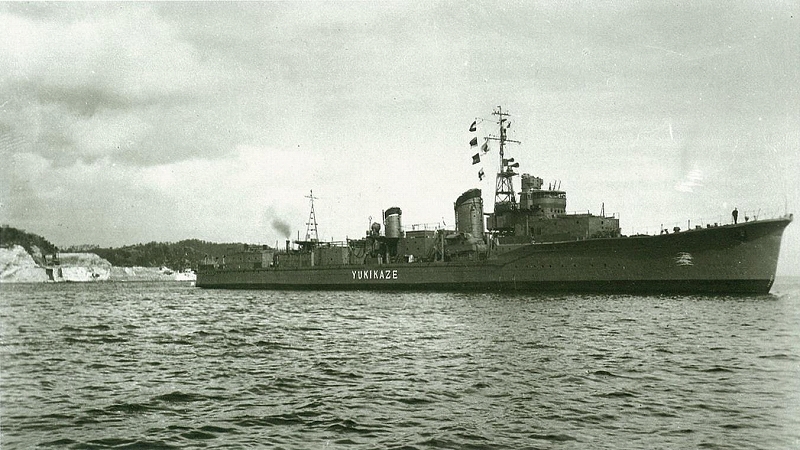
One of these measures was that surrendering troops had to destroy, render inoperable, or surrender all war-making equipment. This video of the German surrender at Czechoslovakia shows some of the piles of German arms at around 30 minutes in. Notice too that none of the marching German soldiers carry any arms. Japanese troops and the public also had to surrender all weapons, including swords. There were many pictures of US GIs standing over these piles, such as this one and a good deal of Japanese militarily comes from these postwar confiscations, not as battlefield trophies. The famous Honjō Masamune may have ended up in one of these piles and has disappeared. Surrendered troops who were usually of immediate use to the Allied occupation were invariably disarmed. Japanese aircraft were instructed to be disarmed and painted white with green crosses, such as this A6M and G4M. This was because the Japanese needed aircraft to convey surrender orders to out-flung garrisons. If any Japanese pilot tried to pull a fast one, the distinctive markings would not camouflage the aircraft. Some Japanese warships like the destroyer Yukikaze had all armament removed under Allied supervision and were converted into troop transports to repatriate Japanese garrisons back to the Home Islands.
Part of the rationale behind retaining the military structure of defeated forces in the immediate postwar period was that it was a means to keep order prior to demobilization. Preserving something close to a military chain of command allowed troops to gather en masse and not overburden an already frail civilian economy. In some cases such as in East Asia, Axis troops were necessary to preserve the peace and to prevent chaos and looting. A large number of German troops ended up in various PoW camps for both an orderly processing and a screening process to find potential war criminals.
It also needs to be stressed that memories of wartime antagonism did not cast that long of a shadow. The needs of the Cold War meant that the two superpowers, especially the US, were more than willing to utilize the military expertise of their former enemies. One of the founding leaders of the postwar JASDF was Genda Minoru, one of the chief architects of the Pearl Harbor attack. This answer of mine delves into the career and context of Adolf Heusinger, a Wehrmacht general and one of the FRG's leading generals for the Bundeswehr. The Soviets tended to be more leery of using Axis military expertise; the first generation of the GDR's military, the NVA, used a number of veterans, but retired a lot of them when new cadres of postwar recruits were available. Part of this was the wartime legacy of distrust between former enemies, but also reflected the smaller pool of potential veteran recruits available within the Warsaw Pact area. So in the end, while distrust caused by wartime experience was a factor in demobilization, it suited the Allies to keep some semblance of military organization among their defeated enemies. This helped to facilitate their postwar rehabilitation in some quarters and allowed former military enemies to become military allies.