My understanding is that the Cherokee lived in part of Georgia prior to the Louisiana Purchase. What parts were they in? And were there other Native American tribes in areas that were claimed by the USA? If so, which ones and where? What was the relationship between the fledgling USA and those tribes?
What parts of the United States were the Native American tribes in prior to the Louisiana Purchase?
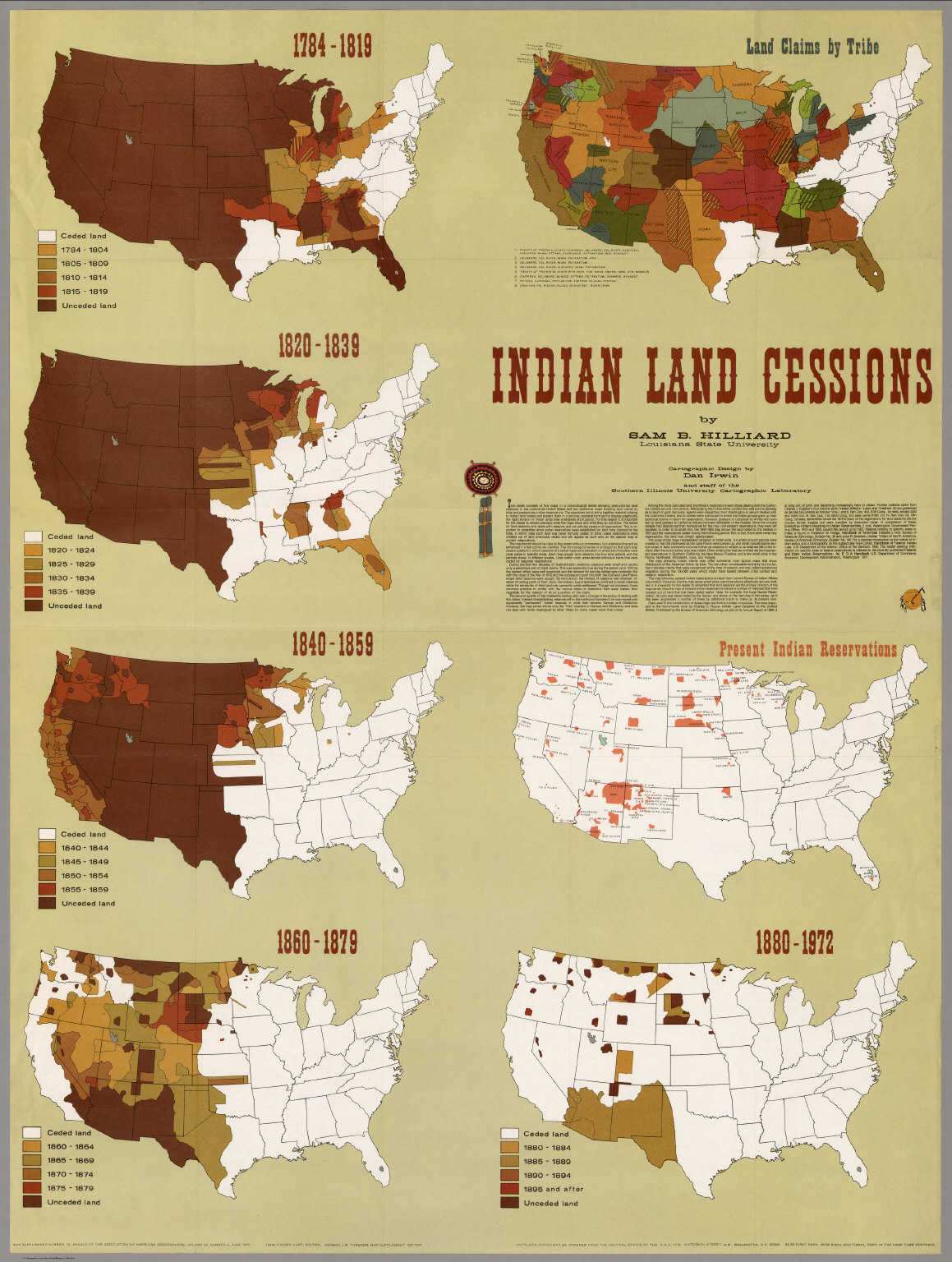
The map in the top left of this graphic will help illustrate the situation at the time of the Louisiana Purchase. On that map, the white areas represent land ceded to the United States by the time of the American Revolution. The golden brown areas (most notbaly seen in western New York, northwestern Pennsylvania, and eastern and southern Ohio) are areas ceded between the Revolutionary War and the Louisiana Purchase. Some other areas ceded to the States at this time include southern Indiana, scattered parts of Illinois, central Georgia, and the area north of the Tennessee River.
That leaves all of Michigan; most of Wisconsin, Mississippi, Alabama, and Georgia; a few parts of Ohio, Illinois, and Tennessee; and a handful of small reserves in New York, all still in the possession of various Native nations. You'll noticed that Florida is also marked as unceded here. In 1803, it was a possession of Spain, with a significant Seminole presence in northern Florida. By the time of Indian Removal, the Seminoles had been pushed further south into central Florida. The Seminoles never formally ceded there land, and there are a few scattered Miccosukee settlements in southern Florida that will proudly boast that you're no longer in United States territory when you enter their boundaries.
My understanding is that the Cherokee lived in part of Georgia prior to the Louisiana Purchase. What parts were they in?
This is correct. In pre-colonial times, the Cherokee homeland was in the Great Smoky Mountains. During the early 1700s, they expanded their territory considerably, mostly north and west, but also a bit to the south and east as well. This map shows the greatest extent of their territory as the blue border. By the American Revolution, their borders were shrinking again (red line). The area bounded in green is the final cession during the Indian Removal of the 1830s; by this point Cherokee territory had contracted mostly to the northwest corner of Georgia.
And were there other Native American tribes in areas that were claimed by the USA?
Prior to Andrew Jackson's Indian Removal policies in the 1830s, there were still many Native nations occupying territory east of the Mississippi. This includes the Cherokees, Creeks, Choctaws, Chickasaws, and Seminoles in the south. In the north, there were the Shawnee, Wyandot, Anishinaabe (Odawa, Potawatomi, and Ojibwe / Chippewa), the Miami (unrelated to the city in Florida), the Sauk and Fox, and the Ho-Chunk. Further east, other Native communities remained active, though they didn't have the same level of formal independence as those to the west. Still they many retained their cultural identity (and continue to do so today). So you have situations like the Penobscots in Maine electing Attean Elmut as governor (as they had come to call their "chiefs") in 1806, despite Massachusetts (which Maine was still part of at the time) having a governor of its own.
What was the relationship between the fledgling USA and those tribes?
This can vary considerably, both between nations and within them. Prior to the shift toward Indian Removal (which Jackson enacted, but van Buren got the ball rolling on it), the US's official stance was to attempt to "civilize" the Native nations (read: "westernize"). This is were we get the phrase "Five Civilized Tribes" from, referring to the big five in the South who had been quick to adopt and adapt many aspects of Euroamerican culture into their own society, for better or worse. Unofficially, however, there was a policy of overextending credit to Native nations in order to allow them to purchase materials necessary for westernization, then cancelling the unpayable debt in exchange for land. President Jefferson himself encouraged such schemes in 1803.
Within each nation, you'd find proponents of complete westernization, you'd find opponents resistant to any westernization, and you'd find plenty of people willing the find some middle ground, picking some aspects of Euroamerican culture to adopt and rejecting others. Among the opponents of westernization, you'd find people who wanted to fight back against the Euroamericans, to fight back against their own leaders who they saw as selling out the nation in the name of personal profit, to seek a new home far from Euroamerican influences, or any combination of the above. Separating themselves from further Euroamerican influences is what lead many Seminoles to break off from the Creeks and migrate into Florida; likewise, some Cherokee bands where already heading west of the Mississippi before Indian Removal forced the Trail of Tears upon their friends and family back home. Probably the most extreme example of this is the migration of a few Kickapoo bands from Michigan all the way into modern-day Mexico.