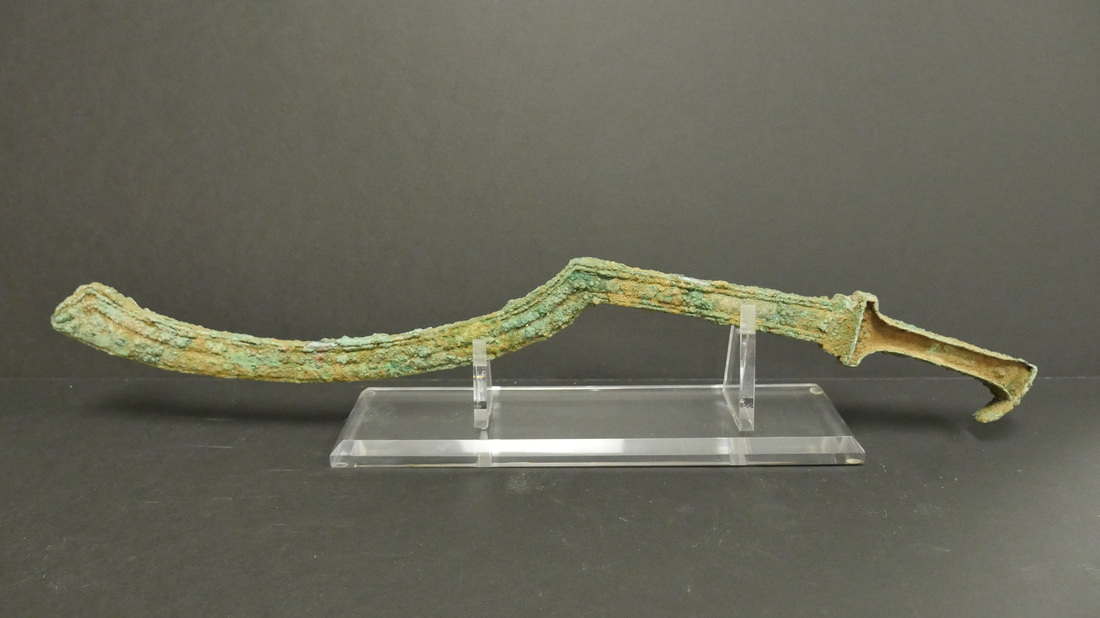
Axes were invented long ago with the discovery of metal, but were axes used in ancient warfare by elite soldiers (Greece, Rome, Persia etc.) and not barbarians (Gauls and the other Germanic and Slavic tribes)? Because armor wasn't as advanced as in medieval ages, I believe there wasn't any need for battle-axes and "tomahawks".
There is always more to be said, but you may be interested in this recent question, with answers by /u/rittermeister and /u/noble_devil_baruta:
I'm not sure how you are defining the distinction between "elite soldiers" and "barbarians". In Greek usage, anyone who didn't speak Greek was a barbarian, even if the Greeks themselves acknowledged that their civilizations were far older and more advanced than their own (as they did in the case of the Egyptians, Babylonians and Persians). If we're using these words with their modern connotations, the Greeks of the Archaic and Classical periods should really count among the "barbarians" - their untrained citizen militias certainly cannot be called "elite soldiers" in any sense of the term.
In any case, as was mentioned in the linked older thread, the notion of the axe as a weapon of savage and uncultured peoples is mostly modern. In Antiquity there was certainly no distinction between civilised, disciplined spear users and wild, violent axemen. The axe was an important status symbol in Ancient Egypt, shown by the many ceremonial open-work axeheads found in burials there; it's likely that the famous bronze kopesh developed from earlier axe designs. Similarly, the double-headed axe was an important symbol of status in Mycenaean Greece. Persian elites tended to be armed primarily with bows and spears, but their sidearms included the short sword called akenakes as well as the axe, a sleek and pointed design, sometimes seen with a double head. Many other peoples under the sway of the Persians, such as the Sakai, also wielded axes on horseback.
The use of axes wasn't generally justified by greater armour penetration, like in computer games. Their advantage was largely in ease of use, especially when mounted; the downward chopping motion of an axe was more effective than the thrust when attacking enemies on the ground below. This was why the Greek author Xenophon advocated the use of the machaira, an axe-like recurve sabre, for cavalry (a practice he had himself learned from the Persians). In infantry combat, too, axes had a brutal effectiveness that swords struggled to match, although the greater ubiquity of metal gradually decreased their use as status symbols.