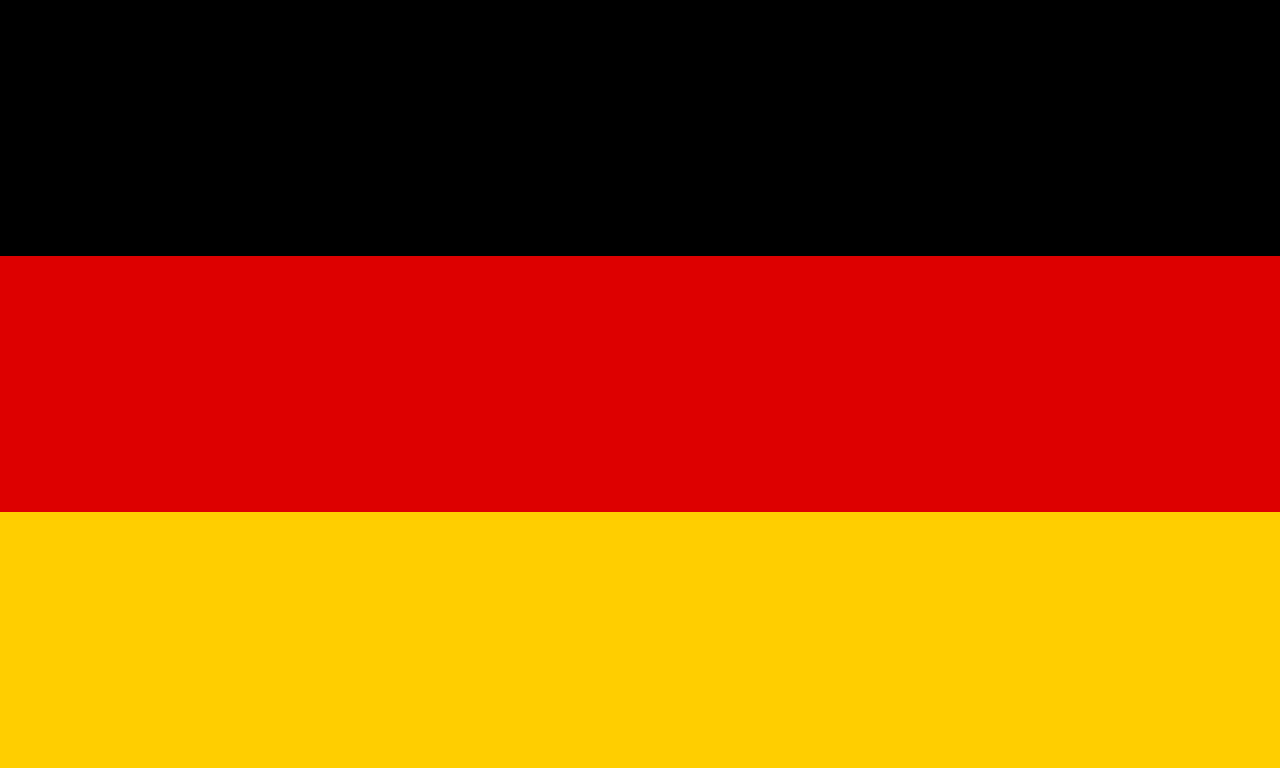
There really is not much of a concrete relationship between the modern Belgian and German flags. The Belgian colors come from the historical colors of the Duchy of Brabant, a polity that dates back to the medieval period. The German national colors of black-gold-red have a much more recent pedigree. These were the colors of the Königlich Preußisches Freikorps von Lützow. This was a group of volunteer soldiers during the 1813 campaign to liberate Germany from French rule during the tail-end of the Napoleonic Wars. The dominant color of the Volunteers' uniforms were black, with red and gold facings. This contemporaneous painting of the Volunteers illustrate not only the uniforms, but the Romantic imagery that surrounded the Volunteers in the wake of Waterloo. While historians in the last decades have significantly questioned the validity of notions of a national uprising against Napoleon, the Volunteers were a symbol of national unity in the period between 1815-1871. The Volunteers were nationalistic, but also owed their loyalty to the nation, not the various crowned German kings and princes. The latter reason was why the Volunteers' colors were subversive to the largely conservative post-Napoleonic order in Central Europe.
The antipathy of the Hohenzollerns and other German princely houses to the German tricolor though does illustrate one area where the Belgian flag and the German tricolor overlapped. Both the design and overall symbolism owed much to the experience of the French Revolution and the Napoleonic Wars. The brief period of French hegemony on the continent popularized the connection of tricolor national flags as modern symbols of a republican national order. The Belgian Revolution adapted a revolutionary flag related to the ensign of the earlier eighteenth-century revolution. The Paulskirche parliament during the abortive revolution of 1848 adapted the tricolor as the symbol of a new, united Germany based on constitutional principles. The 1848 Revolution failed, but the German tricolor remained the symbol of republicanism within Germany.