It seems that thin swords like rapiers were lighter and could still slash through flesh by their sharpness.
Broad thin blades typically cut better than narrow thick blades, for similarly sharp edges. A broad thick blade can cut better than a narrow thick blade (this depends on the details of the blade geometry, and weight), but broad-bladed swords usually have thin blades, unless they are very short (since a long broad thick blade will often be too heavy).
Thrusting swords like rapiers, smallswords, and needle-pointed longswords need thick blades, including thick tips, for sufficient stiffness to be able to penetrate clothing etc. when thrusting. For some discussion of this, see https://www.reddit.com/r/AskHistorians/comments/8vgy66/carolingian_sword_and_gladius/
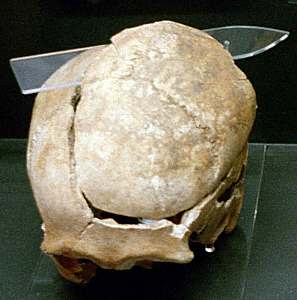
Thus, the proper comparison is broad thin blade vs narrow thick blade. A narrow thick blade can be capable of cutting through skin and flesh, but a broad thin blade will typically do it better. This can be the difference between a superficial cut to a forearm, and an amputating cut to a forearm. The former might be merely an annoyance (at the time - there is still a risk of infection), and the latter will be immediately incapacitating, as far as the use of that arm is concerned. A sword with a broad thin blade can slice through a skull, as seen from skeletal evidence (image from here, where there is further discussion of the wounds possible; further gruesome details to be found in the references below).
There are two further considerations that can make better cutting capability more useful. First, battle is very stressful, and this can significantly reduce the effectiveness of fighting, resulting in less effective use of technique. Under such stressful conditions, a sword that can cut usefully when used with good technique might not cut effectively when used with poor technique. A sword that cuts superbly when used with good technique is more likely to cut effectively when used with poor technique.
Second, soldiers often wear clothing, and a cutting weapon must cut through clothing before it can cut the soldier. A sword that is a relatively poor cutter might not be able to cut through that clothing, and therefore might do minimal harm, even if it could cut a naked soldier effectively.
It's worth noting that rapiers are often heavier than cutting swords. Three examples of rapiers from the Wallace Collection: 1.34kg, 1.24kg, and 1.3kg (the Wallace Collection rapiers average just over 1.2kg (some graphs and discussion are available at https://www.reddit.com/r/SWORDS/comments/5cb9a4/rapiers_wallace_collection_vs_repros/ )). Some broad-bladed Medieval cutting swords from the Wallace Collection: 1.14kg, 1.195kg, and 0.68kg. Where the rapier excels is length, not lightness of weight. Of course, one can use an even narrower blade, and make the blade shorter, and obtain a light and nimble sword, such as a smallsword: 0.365kg; such swords are very poor cutters.
References:
MacInnes, I., 2018. “One man slashes, one slays, one warns, one wounds”: Injury and Death in Anglo-Scottish Combat, c. 1296-c. 1403. Mainz Historical Cultural Sciences, Volume 38, p.61-77.
Mitchell, P. D., Medicine in the Crusades: Warfare, Wounds and the Medieval Surgeon, Cambridge University Press, 2004. https://books.google.com/books?id=1GwIDzFxmkEC
You might find this post relevant: