The life insurance market in the United States was under $1 million in 1830, but had skyrocketed to over $14 million in 1845. (Except where noted, I'm not using inflation-adjusted constant dollars.) The main impetus behind this leap was the organization of mutual life insurance companies. This type of company paid claims out of the revenues from new premiums, not a pool of capital provided by stockholders. (Due to the Panic of 1837, there was little investment capital around.) These companies were much cheaper to start, but they needed a large and growing pool of customers to pay off their premiums, so they offered low rates and advertised heavily.
In 1860, the US life insurance market had nearly $200 million in policies. This tripled over the course of the Civil War, since several major companies offered coverage to soldiers in return for slightly higher premiums. This was partly out of patriotism, but it worked out in a business sense for the companies because the market was still far from saturated - the cost of paying out death claims was balanced by the free publicity and new customers they took in.
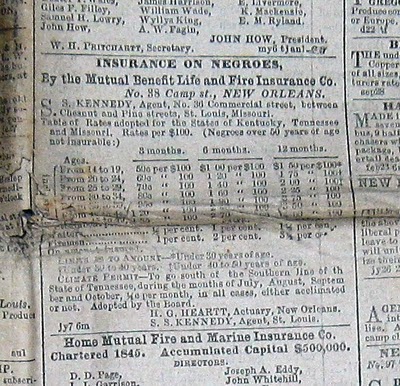
(And in any case, they had to replace the collapsing market for slave insurance.)
Policies in force rose from $600 million to over $2 billion in 1870, but the post-Civil War economic slump stalled the insurance market's growth; the market didn't pass that milestone again until 1890, when fraternal insurance policies (provided through fraternal societies like the Knights of Pythias or the Freemasons) became popular.
When the United States entered World War I in 1917, life insurance coverage had grown steadily to $35 billion in policies. The War Risk Insurance Act of 1917 was meant to steady the market as the draft began to call up a massive army. The US government provided a $4,500 life insurance policy (over $85,000 in modern dollars) to all US soldiers and allowed them to purchase additional life and disability coverage at a low cost. This program had over $40 billion in policies in force at the war's end.
Government assumption of war risk allowed insurance companies to maintain business as usual - an important consideration, given the massive losses insurance companies had taken due to the war's toll on overseas policy subscriptions, shipping losses, and all the other ways wars distort economies. After the war, coverage skyrocketed again; millions of Americans had been introduced to the concept of life insurance and putting money into a whole life insurance policy, which allowed you to keep a percentage of paid premiums as an investment, was a way for the growing middle class to invest their savings. By the time of the Great Depression, the life insurance market had about $80 billion in premiums.
More shortly.