I will preface this answer by saying that, as today, fashions in the medieval world could, and did, change and so what a knight wore in the early medieval period could be dramatically different to the 15th century.
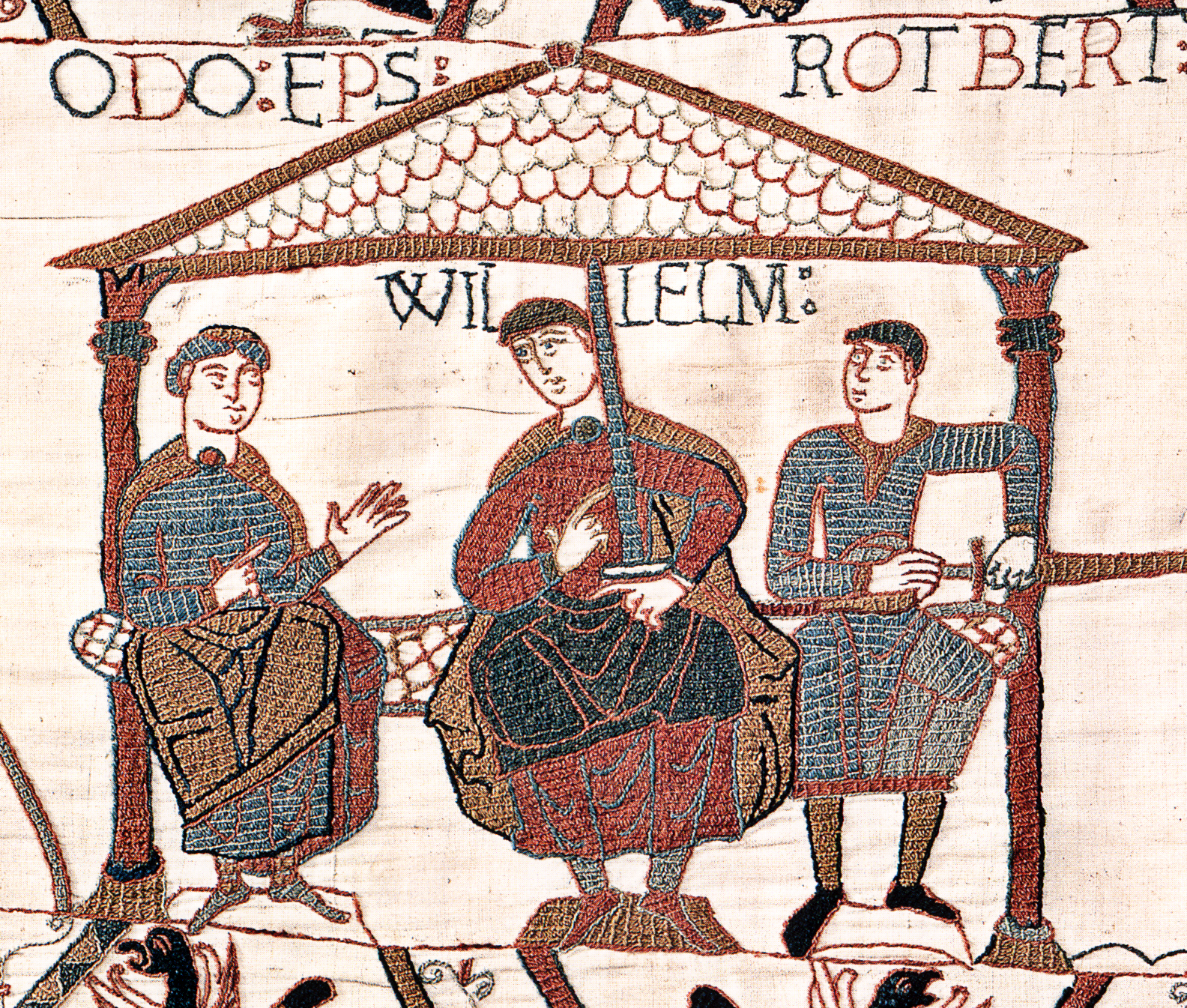
Some of our sources for everyday wear come from useful items like illustrated manuscripts. We can also use significant contemporary sources like the Bayeux Tapestry and even textual sources. Orderic Vitalis' history of the Battle of Hastings, for example, makes comment on the differences in fashion between the English - who favoured long tunics, long hair and long beards - and the Normans - who favoured trousers, the distinctive Norman cropped haircut and clean shaven faces. Indeed, in the decades immediately after the conquest, it may even have been possible to distinguish a knight in England from any nearby peasant by the simple fact that he was wearing trousers. English fashions, both peasant and noble, had long eschewed trousers outside of winter in favour of long, roughly knee-length tunics. Trousers, which made the cavalry-centred strategy of the Normans much easier, were therefore somewhat of a hallmark of the new elites.
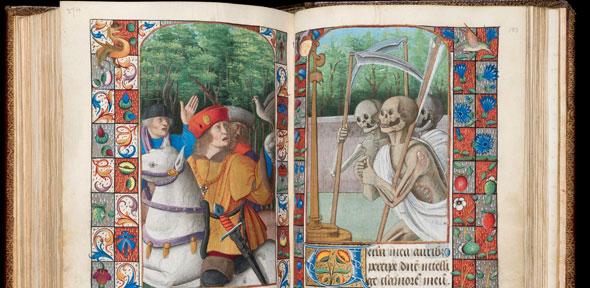
Knights in most contemporary illustrations are, as might be expected, often depicted in combat. One window into more everyday fashion, however, comes from illustrations of hunting and feasting and courtly life. This book of hours from the Fitzwilliam Museum for example is illustrated with a hunting scene which shows us the fashion for trousers, boots and mid-length tunics. As with fashion throughout history, rank can then be displayed both through the cut and colour of the garments, and through the adoption of accessories and outer garments: here, a jeweled hat, tooled swordbelt and gold chain, in Merovingian France or Anglo-Saxon England perhaps a large jeweled brooch, embroidered cape, or detailed silver strap-ends.
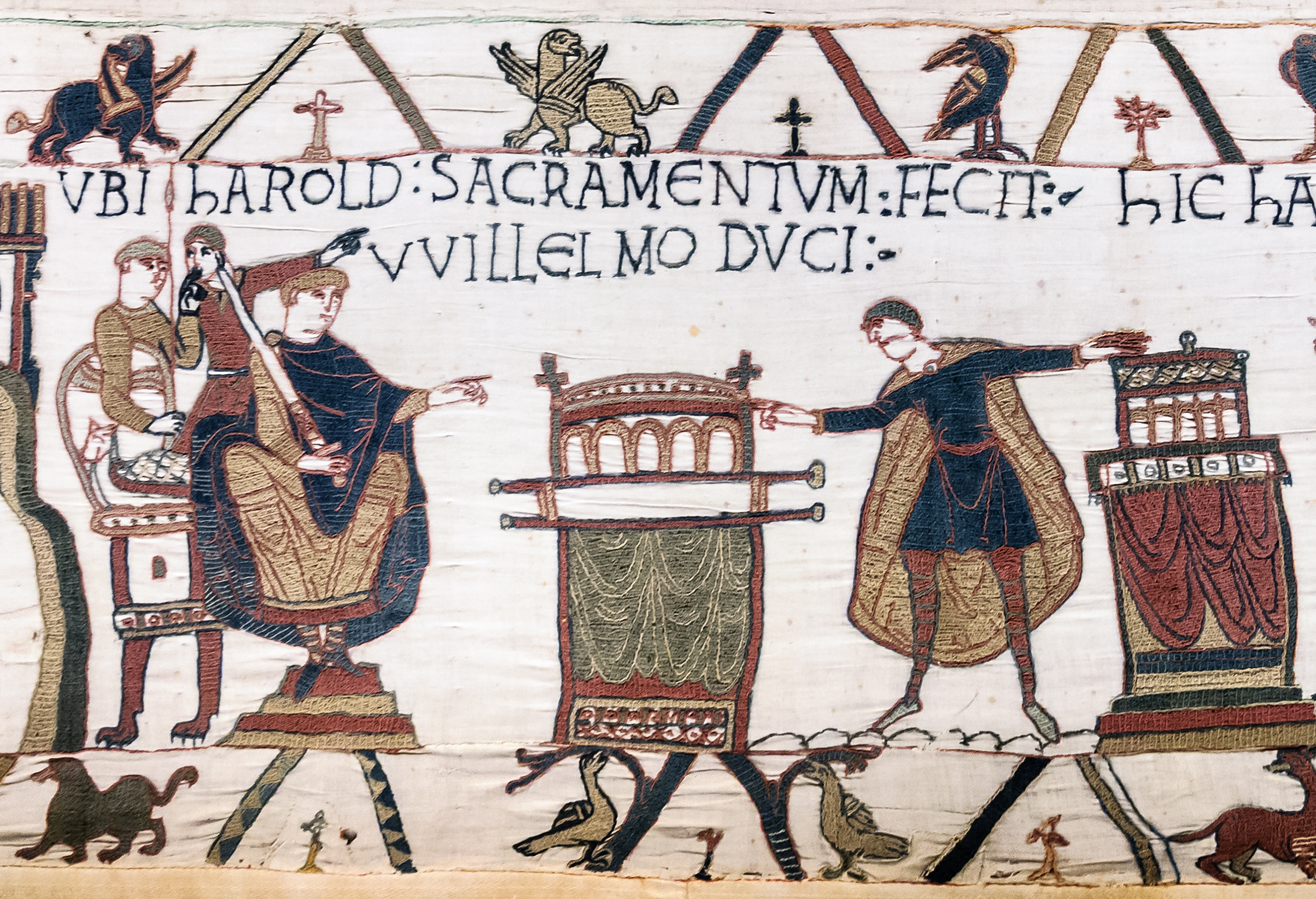
This panel of the Bayeux Tapestry shows us both William and Harold in 'casual' dress. As we can see, Harold favours the English fashion of a long tunic, here teamed with leg-wraps, or perhaps he has adopted riding trousers while in Normandy. His status is displayed in the large, gaudy brooch fastening his large cloak and tasselled belt, which may have been decorated with strap ends like this. William is distinguished by his longer robes, over which is draped a mantle, likely richly embroidered. Compare this to the more simple tunic of the messenger in the background of the frame.