During antiquity, javelins and war darts were widely used, with Numidian cavalry, Roman legionaries and greek/thracian pelasts among the soldiers using them. When we approach the Early Middle Ages, I have personally seen almost no mention of javelins used by any soldiers (excluding indigenous warriors) despite the weapon's presumably lower skill requirement compared to bows, it's lethality, and effect versus armor and shields. Other mentions of javelins during the Medieval period I have found are the Iberian Jinetes and other regional light troops, plus use in Eastern Europe. Spears were still thrown, but the use of javelins/war darts declined. Why?
To add: Javelins seem like an effective sidearm and cheap weapon to arm peasants with. Did the crossbow replace it or did warfare evolve in a way making it no longer practical?
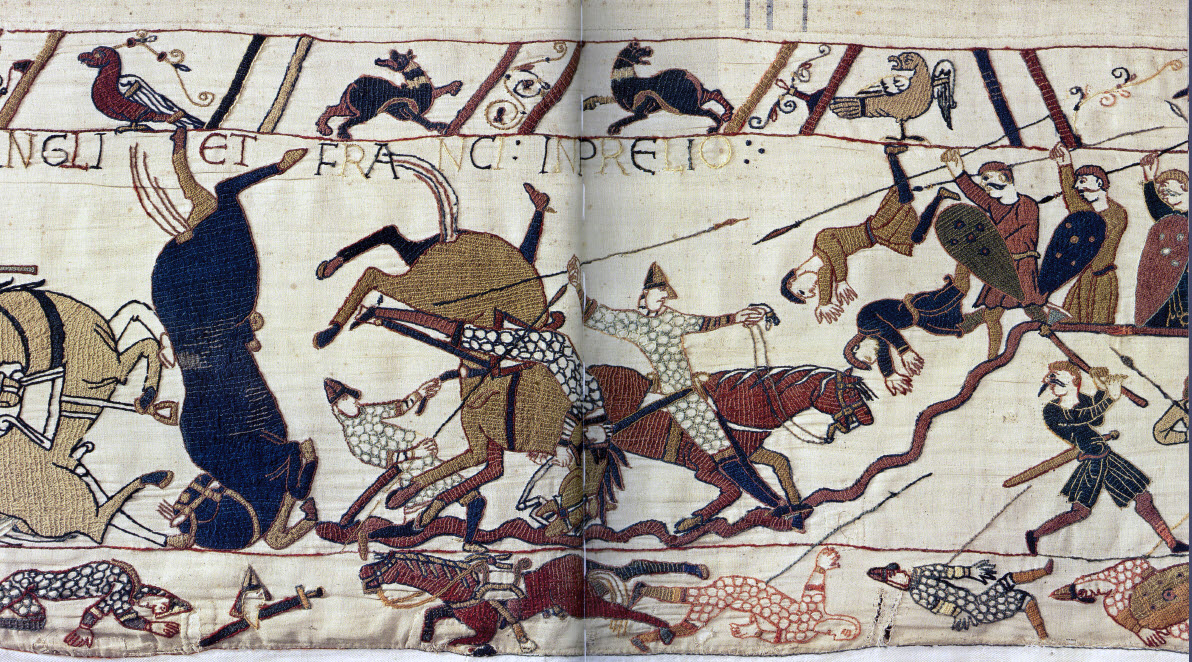
Hello. I've answered a question very similar to yours here. The TL/DR of that answer is that javelins remained an important part of early medieval warfare for some time. In Anglo-Saxon England, for example, the javelin was a common weapon of war in part because of its effectiveness at disrupting the shield walls which were the baseline tactic of Anglo-Saxon warfare. We can even see the javelin in use at the Battle of Hastings in scenes like this one or this one in the Bayeux Tapestry. In England at least, javelins decline because while they are useful against a tightly packed shield wall, they are far less effective against a heavy cavalry charge, especially when compared to the longbow, which can also be fired far more safely and in greater mass from behind the safety of a shield wall, as is seen to great advantage at the Battle of the Standard in 1148.