I'm completely out of my depth in this sub so please excuse the question if it's a repeat.
This question is in the context of the current top post on r/news, https://reddit.app.link/tNxK89XpkP
I found this q&a in the wiki but it doesn't touch on the nuance I'm interested in:
The top answer in that thread discusses the memorialization of the war itself.
However, what I'm interested in is how and why was post WW2 Germany (and really maybe just post reunification Germany) able to openly and nearly ubiquitously denounce Nazi Germany behavior while the US South, 150 years later is still battling public demonstrations with the Confederate flag.
For example, the first 2 paragraphs from this post on "denazification" in post WW2 Germany could nearly be describing the US South exactly with respect to the devestation caused to the land, infrastructure, and people.
https://www.reddit.com/r/AskHistorians/comments/490r3x/why_was_denazification_and_the_equivalent_in/
That is until this sentence, "And then you have to work in the horrors of the Holocaust, and how the Jewish extermination affected the German people".
Why weren't the "horrors of slavery", eventually more fully recognized by the US South in a similar manner. (I'm speaking very broadly here, please don't criticize me too much for generalizing). I understand that you can argue slavery was the cornerstone of much of the economy of the South, but you may be able to make a similar comparison for the pariahs that Jews were sold as in 1930s Germany.
Sorry for the ramble.
From an earlier answer of mine.
Neither Reconstruction nor denazification are really all that comparable from a historical perspective. The historical contexts of both periods are so different to make comparisons quite difficult beyond the broadest strokes. Even worse, comparing the "Lost Cause" to Germany's "reform" actually distorts what occurred in Germany in the postwar decades.
The question of what do to with so many Nazis was one that vexed a number of Allied planners once it became clear Germany was going to lose the war and the Allies were to occupy Germany. The Americans spearheaded a move to try German war criminals in a series of postwar trials. The Moscow Declaration of 1943 included a section on atrocities and assured
those German officers and men and members of the Nazi party who have been responsible for or have taken a consenting part in the above atrocities, massacres and executions will be sent back to the countries in which their abominable deeds were done in order that they may be judged and punished according to the laws of these liberated countries and of free governments which will be erected therein.
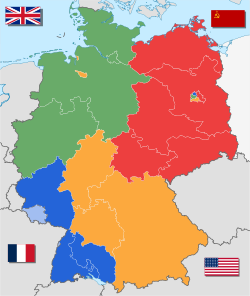
But this still left a large number of Germans who either were party members or fellow travelers within the country. The American educational film Your Job in Germany stressed that ordinary Germans could not "cannot come back into the civilized world by sticking out their hand and saying 'I'm sorry." Your Job in Germany exemplified one crucial aspect of Allied policy to defeated Germany: that reeducation from Nazism was to be a structured process. Although it varied by occupation zone- see this map- each of the Allied military governments ran their own form of denazification tribunals that allegedly would separate out real Nazis from the larger German population. Denazification, by its own standards, had largely failed by ca. 1950 in all the occupation zones.
The US often set the tone for denazification and other German policies as the Americans had characteristically paid the most attention to this issue of "reforming" Germany. The American plan for occupied Germany JCS 1067 of April 1945 held that denazification was to be a thorough process that would break the social base of authoritarianism within Germany. John H. Herz, a political scientist and emigre, pushed for the denazification process to be a staged process, first with special American groups leading a preliminary process which included questionnaires- called Fragebogen- followed by German-led tribunals- Spruchkammer- defining Germans into five categories (Major Offenders, Offenders, Lesser Offenders, Fellow Travelers, and Exonerated Persons). The penalties for classes I-IV could range from prison sentences, fines and confiscation of property, loss of voting rights, and restrictions of occupations. The denazification process would gradually relax once the major offenders had been winnowed out and lesser offenders could appeal their status. The other occupation zones' denazification procedures were not as structured as the AmZone's, but tended to follow the US lead.
The whole process satisfied next to no one. The various Spruchkammer were often overwhelmed with a heavy workload and both corruption and incompetence was endemic within the whole process. Nor was the process homogeneous; some denazification courts could be thorough while its neighbors were very lax and cosmetic. One of the widespread sentiments in the occupied zones was that the Spruchkammer let the big fish go while the small fish (ie those without the resources or connections to sail through the process) twist in the wind. The lack of homogeneity for these amnesty exemptions created a degree of chaos for the Spruchkammer, and there was widespread grumbling that some received “Persilschein” (a sarcastic reference to the laundry detergent Persil, suggesting a cosmetic washing out of the brown) without really proving their cases. Fines meant little in the pre-1948 period when the value of German currency fluctuated a great deal. The occupation governments also soon discovered that the immediate need to have German collaborators overrode fidelity to the principles of denazication.
Other efforts to denazify the public fell flat. Although notions of showing Germans the results of German atrocities by tours of camps loom large in Allied public memory, such as this scene in Band of Brothers, these efforts were not very successful. Allied reports on the reception of educational events in German PoW camps and other areas showed their audiences universally treated them with disdain. Likewise, the recipients of American public opinion surveys conducted within the AmZone registered a good deal of skepticism about Allied motivations and a wide-spread sense that the Allies were just rubbing Germans' noses in the misdeeds of a criminal few. Even the Allied tribunals of war criminals failed in their pedagogic function of informing and educating the German public. The famous German diarist Victor Klemperer, a German Jew who miraculously survived the war, felt the main Nuremberg tribunal went on too long:
Reingruber {a fellow professor} said, it was a mistake on the Allies' part, to spin out the Nuremberg trial for so long on the wireless. It made people numb and indifferent. That was also my opinion exactly.
Klemperer was no friend of the Nazis, but his indifference to the tribunals was telling. There were also notable clemency drives for convicted war criminals. A good many German clergymen such as Bishop Theophil Wurm were advocates for men like Joachim Peiper and argued that the trials were a form of victors' justice. Some of these appeals directed among Germans stressed that such retribution was due to the influence of emigre German Jews within the occupation.
The novel solution for all parties- military governments and their German partners- in the late 1940s was to simply to declare victory on denazification. This led to a larger process of backpedaling on the restructuring of German society that occupation documents like JCS 1067 contended were necessary a transformation of postwar German society.
The German governments may have consistently stated their opposition to Nazism, but in practice, this amounted to relatively little. The FRG began a process of "amnesty fever" around 1950 as it sought to gain clemency for those German war criminals sentenced in Allied tribunals and ended a good many restrictions on the civil rights of convicted Nazis. The GDR's nascent security services likewise tended to look on its citizens' wartime past as an asset and would use threat of exposure as a lever for individuals to become IMs. The net result of this was that while the successor German states formally repudiated the NSDAP and openly unrepentant Nazis were ostracized from the mainstream, many former Nazis and other regime loyalists did creep back into positions of authority. This was readily apparent in professions like the law, medicine, the civil service, or professoriate where there were a strong continuity of personnel despite assertions to the contrary. Former Wehrmacht officers like Hans Speidel made up the core of the reconstituted Bundeswehr and Hans Globke, one of the authors of the Nuremberg Codes, was one of Adenauer's chief civil servants. These lines of continuity were less obvious in the GDR, especially since the SED relied upon both existing cadres from KPD exiles in the charter generation and later upon a younger generational cohort that straddled the Third Reich and the postwar years, but was still visible in professions the SED needed to fill to make the state functional like the railways and medicine.
The treatment of the Third Reich by both German states in the 1950s and 60s has a number of parallels to the Japanese case. It became a major article of faith in the FRG that the war and its associated crimes was the responsibility of a very narrow clique of NSDAP figures and a few bad seeds within the establishment. The GDR's Marxist-Leninist interpretation of the past likewise promoted a sort of selective amnesia in which the bulk of "true" Germans had been misled and abused by a criminal few. Notions of a clean Wehrmacht were common on both sides of the Iron Curtain, albeit with different forms of ideological window-dressing such as GDR war films stressing how ordinary German soldiers learned class solidarity from the Soviets while their FRG counterparts stressed German heroism undone by criminal incompetence in the Wolf's Lair. The largely conservative FRG professoriate had a strong tendency to see national development and unification as a natural course for German history. This relegated the Third Reich and the war as an aberrant interlude that mirrored what Thomas Havens and other scholars of Japan have termed the "dark valley" paradigm in which the war and its terrors was something the Japanese endured rather than participated in. Istvan Deak in his recent survey of postwar reconciliation noted that both Germanys were arguably the safest places in Europe to avoid prosecution for wartime activities. Cracks only began to appear in this edifice in the 1960s as generational revolts and new blood in the establishment started to challenge the status quo about the past.