I've noticed how noble houses often don't represent the surname of the noble family. In the House of Bourbon in France, for example, when King Louis XVI was imprisoned and on trial, he was referred to as Louis Capet rather than Louis Bourbon. However, a few years later, when the French Empire was established, the House of Bonaparte was created by Napoleon Bonaparte.
How exactly were noble houses named if they didn't reflect the surname of the family?
In the French nobility, the names for the noble houses represent the seat of the family, that is the original fiefdom where the family's nobility was established. When the title was passed to other families or branches through inheritance, the title could be merged and/or become vacant. In some cases, extinct titles were reattributed by the king, acting as fons honorum (fount of honours), that is, as the source of legitimacy for nobility titles.
In the case of the Bourbons, they derive the name from the first (non capetian) House of Bourbons, attested as early as 913, whose fiefdom was centered on the village of Bourbon (modern day Bourbon l'Archambault, in central France, department of Allier) : see Grand cartulaire de Cluny A, fol. 82, publié par dom Jean Mabillon, Annalecta ordinis Sancti Benedicti, vol. III, p. 85 for instance.
In 1171, the male line of the first Bourbons went extinct. The title went to the Dampierre family (Dampierre is a village on the Loire in the Loiret department, close of Gien, there is a nuclear power plant there now), creating the "Bourbon-Dampierre", through marriage of a Dampierre male heir with the female heiress of the Bourbons.
This Bourbon-Dampierre branch went extinct by the males in 1249 and by the females in 1287 : the last female heiress of the family, Agnès de Bourbon-Dampierre (morte vers 1287), was married to a capetian, Jean de Bourgogne (of a capetian collateral branch) : their daughter then married Robert de Clermont, son of the famous king Louis IXth (Saint Louis). The distant descendant of Robert de Clermont, Henry of Navarre, became the first king of the Bourbon dynasty in the late XVIth century.
Other examples of noble houses named after places can be found : as an example, one of the most illustrious families in French nobility, the Rohan, derive their name from their original seat in Rohan (Morbihan department, region of Britanny).
This slightly differs from the common practice in the German speaking world where noble families have names derived from places where the family seat was established, with the common name form being von X zu Y : X is the family's seat of origin, while Y indicates the family's continued possession of the estate from which the surname is drawn.
Here in Scandinavia we had a patronymic tradition. If you were Erik and your father named Anders, you were Erik Andersson, and your children would be named Eriksson or Eriksdotter. That tradition doesn't go as far back as the Viking Age, it's only in the later Middle Ages that they started compounding names However runic inscriptions are invariably full of references to who people were related with. (The family of Jarlabanke from Täby in Sweden were so prolific in putting up runestones, large parts of their family tree have been reconstructed - see p22-23 here) So people were still using patronymics in a way even if it wasn't formalized into a surname.
Since this resulted in a lot of similar names, nicknames were very common and effectively used as last names, despite often being a bit derogatory! Even kings had them, and those are some of the more well known-ones internationally - Sven Forkbeard, Harald Bluetooth and so on. But this applied to commoners too - a couple medieval examples dug up by Swedish celebrity linguist Fredrik Lindström are Olof Gravlax (cured salmon) and Torsten Flottskalle ('Fathead').
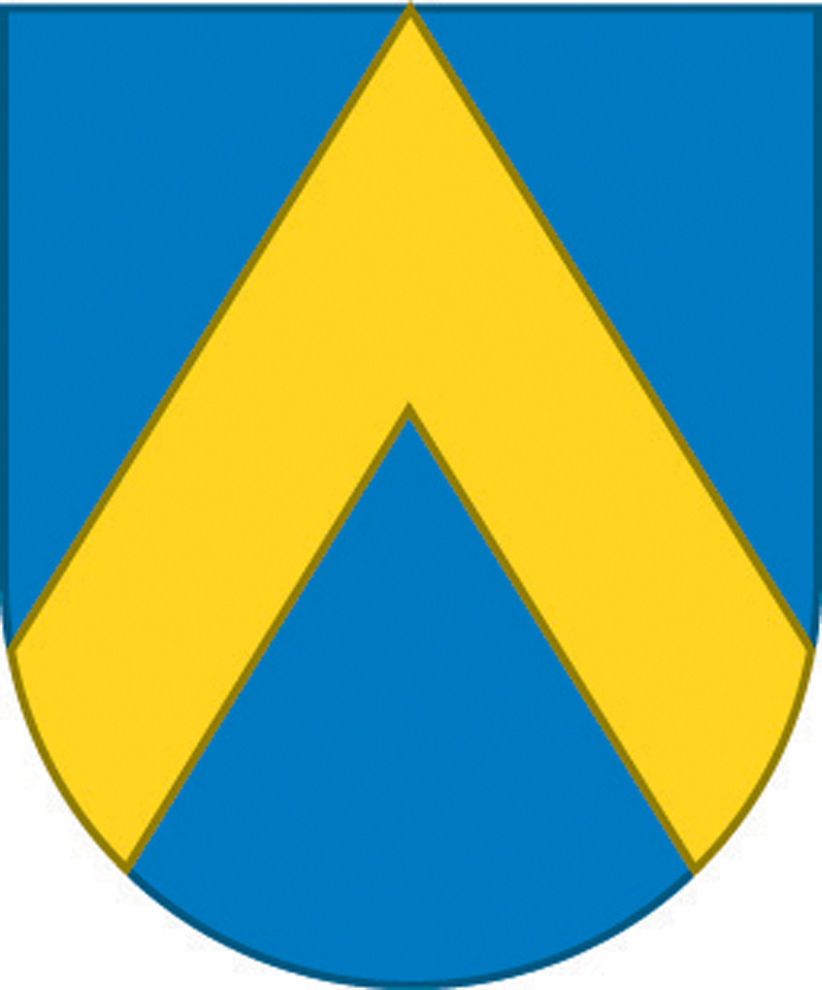
Crazy as it might sound, the oldest houses ('uradel') have names that likely originated in that manner - Bonde ('peasant'), Trolle ('troll'), Posse ('bag'), Bagge ('ram'). Most commonly though, noble names in the Scandinavian tradition are simply a description of their coat of arms. e.g. Gyllenstierna - 'goldenstar', Marsvin - 'dolphin' and Sparre - 'chevron'. With others, some, like Trolle, the arms were fitted to the name, and some like Bonde and Posse have unrelated arms.
During the middle ages they continued to use patronymics like everyone else though, so in medieval Scandinavian history the family name is often tacked on in later descriptions like "Birger Birgersson Trolle" to specify the house, even if they didn't write their names like that. It's only in the renaissance, the 1500s, that the nobles started using their house names as surnames. (in some cases in Sweden quite a bit later though) In Denmark the nobles were required to adopt a name by law in 1526, although almost all of them had already done so by then.
The sole exceptions here are the royal families of Denmark, Sweden and Norway, which have houses but still do not have surnames. (It's a popular trivia question - What's the king's last name?) The Swedish Tax Agency just has an asterisk in the 'last name' field for them in their databases.
Edit: Another thing worth noting is that there's a considerable amount of foreign noble names in Scandinavia, as immigrated noblemen largely kept theirs. e.g. Struensee, de Geer, von Holstein, Hamilton, Krusenstierna (from German Krusenstern, also Russian Крузенштерн) and Fleming."von Wright" is a funny one, a Swedish-Finnish family of Scottish origins, combining the German preposition with an English name, and they pronounce it as 'Fon Vrickt'