I'm looking for examples of monumental architecture during the Dark Ages, specifically from the completion of Theodoric's mausoleum in 520 to the consecration of Aachen in 805. Monumental building appears to have been quite rare, as I cannot find any actual architectural monuments dating from this period (and this excludes buildings started during that period, as they were rebuilt over and over again and continuously enlarged). Was there any monumental building in Europe during the Dark Ages?
The Merovingians occupied much of western Europe for around 300 years and they don't appear to have constructed anything of monumental significance; most Merovingian architecture was built using perishable materials which is why very little of it survives. Is this an accurate assessment?
How common was the use of stone in building during the Dark Ages? Or was knowledge of how to build using stone and/or brick and mortar lost?
It's not really a question of knowledge of how to build large monumental buildings, rather the capacity to do so. Medieval states did not have the kind of resources at their disposal that the Roman Empire did, or even the same resources as the contemporaneous Byzantine Empire. And in Italy, my own area of expertise, the second Kingdom of Italy was locked in systemic conflict with the Byzantine Empire, which itself had devastated Italy during a brief occupation following the defeat of the first post-Roman Kingdom of Italy. The Kingdom of Italy, like the Kingdom of the Franks, was also in the early phases of state-building and beset by instability (you'll be hard-pressed to find monumental architecture from the Roman's Social Wars too!). This left scant resources and manpower to dedicate to the construction of monumental architecture. However, depending on how you define Western Europe, there most certainly were polities with the resources to construct monumental architecture, like the Emirate of Cordoba (pictures is the former mosque of Cordoba) and the aforementioned Byzantine Empire (pictured is the Hagia Irene).
But that doesn't mean there wasn't anything at all getting built. In Milan, the Lombards' largest city, the modern square called Piazza Cordusio (now home to a Starbucks!) traces the outline of a circular palace or fortress. The name "Cordusio" is an abbreviation of the Latin phrase "Curia Ducis," meaning "Ruler's Court." The Lombards also constructed religious architecture, with the the Basilica of San Vincenzo in Prato serving as one of the most important places of worship during Lombard rule in Milan (Prato here refers to the word for "Field," not the eponymous town near Florence noted for its handbags, as the church was located outside the walls of the city). In total, seven UNESCO World Heritage Sites in Italy were constructed by Lombards monarchs or aristocrats (and many more are not on UNESCO's list). You can look at images on the UNESCO website here, which also has a short description under the eponymous tab.
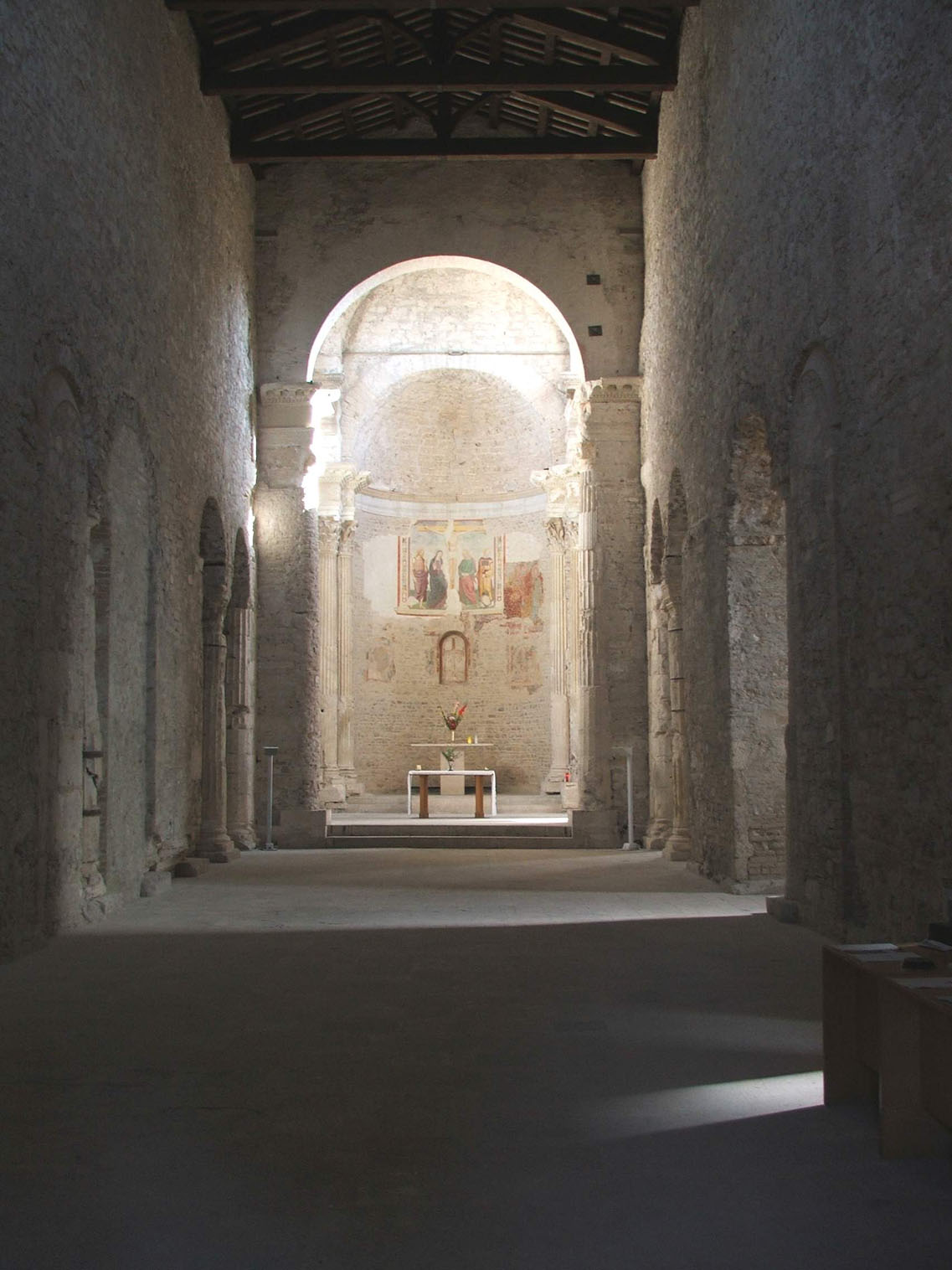
Compared to monuments constructed during the Roman Empire, Lombard architecture can be underwhelming. However, I believe it is fairly consistent with Carolingian architecture in size and technical complexity. Stylistically, I also believe it is not very far removed from Roman architecture (for example, look at the Basilica of San Salvatore in Spoleto) and it is merely at a scale that the capacity of the smaller Lombard Kingdom allowed. While it certainly might not live up to the Italian architecture of the Renaissance, in the Renaissance rulers and their architects had the benefit of some seven hundred years of economic and political growth both in Italy and the rest of Europe, as well as nearly three hundred years without a devastating occupation by a foreign power.