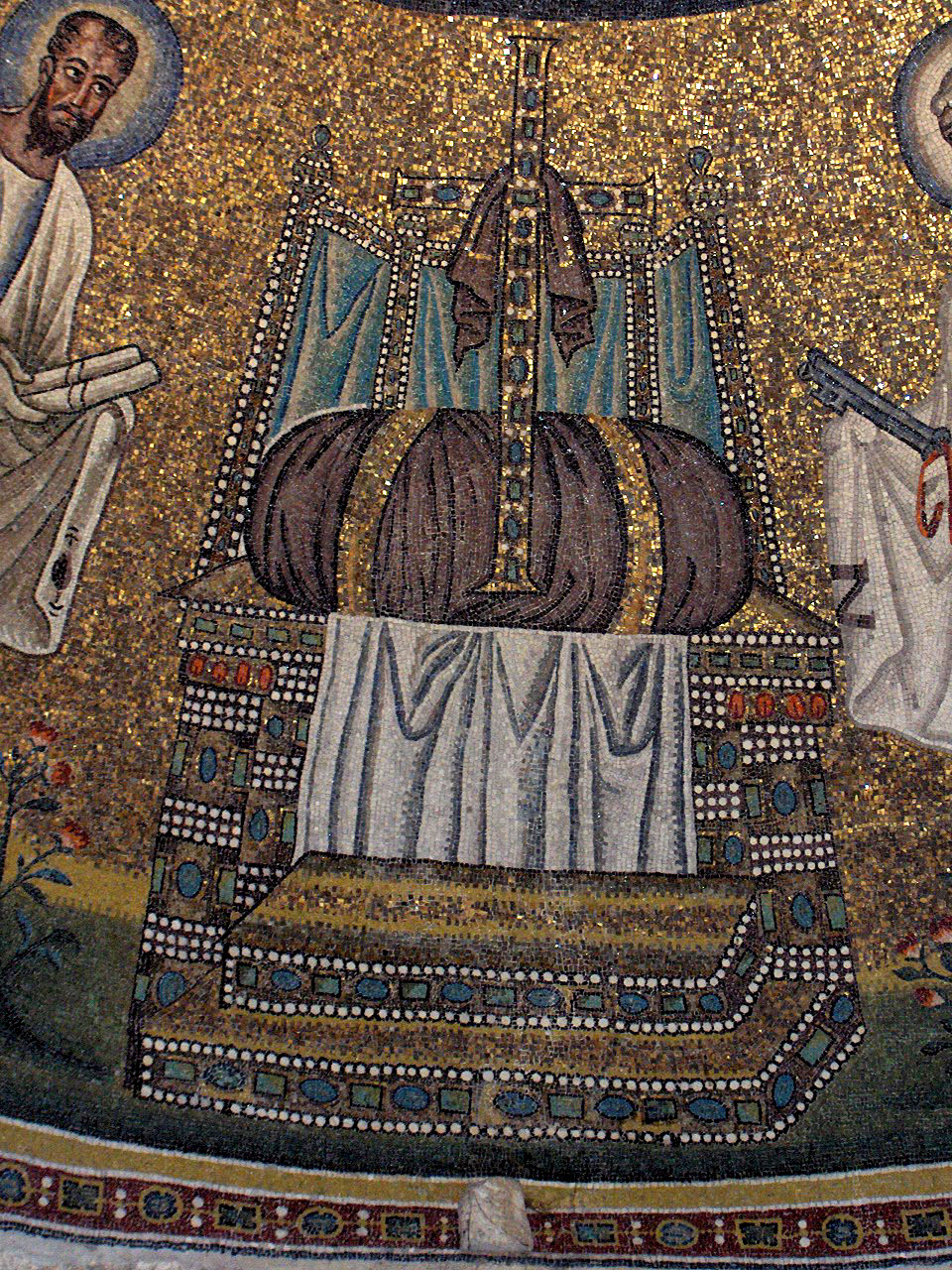
Let us begin with the fact that the earliest buddhist sculptures were aniconic : as an example, in Paris's Musée Guimet there is a very famous 1st century AD buddhist bas-relief where the Buddha is represented as an empty throne, which you can see here. The most ancient depictions of the (historic, Siddharta) Buddha in general strictly avoid representation of his physical form, and use such allegories. Interestingly, this metaphor is also known to early christianity (it is called hétimasie : see here such a depiction in the baptistery of the Arians in Ravenna. Other such symbols are the footprint of the Buddha (Buddhapada) or the wheel of Dharma (sometimes in combination).
As is famously known, following Alexander's conquests, there were Greek kingdoms that settled in Bactria and generally speaking modern-day souther Uzbekistan, Afghanistan, and parts of the Indus valley. After the gradual downfall of the Seleucids, those kingdoms, with a thin "greek" (or at least partially greek-cultured) elite and a local population were gradually isolated from the western Hellenistic world, while maintaining greek sculptural traditions (in particular in the treatment of drapés which are often very hellenistic).
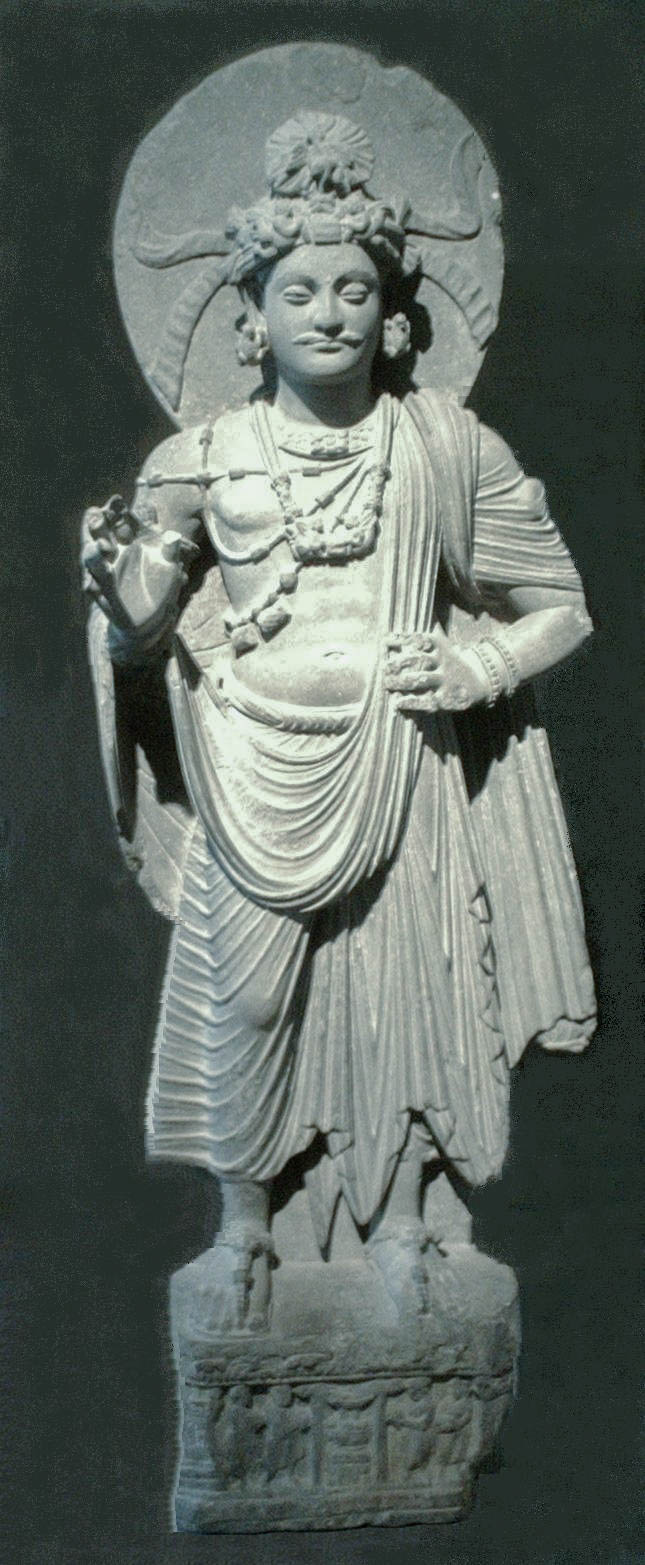
History of the greek presence in India can be decomposed in 3 periods : a first "Greco-Bactrian" period (centered on Bactrian and Sogdian, that is modern-day Afghanistan) with Euthydeme Ist (fought the Seleucids, was probably born in Greece), Demetrios Ist (who is quite famous from coinage where he is depicted with an elephant headdress ) , Eucratides Ist (dies around 150BC). Then a second "Indo-greek" period with deeper assimilation to Indian cultural elements and where it is plausible that kings, while retaining Greek surnames and some knowledge of the Greek culture and philosophy (and still emitted Greek-style coinage and built relatively Greek style monuments that would surprise travellers in the Ist-IInd century AD, for example mentionned in the Périple de la Mer Erythrée^3) were probably Buddhists. The most famous ruler of that period is Menander Ist, who is also the main protagonist of a buddhist "dialogue" called the Milindapañha, where he is recurrently called a Greek (yona / yonaka^1) and has a philosophical debate with a buddhist teacher called Nagasena^2. It would be mistaken to describe the Milindapañha as a buddhist version of a Socratic dialogue as references extensively Buddhist lore and does not have the dialectic approach familiar to Greek philosophy but is rather an exposé of Buddhist teachings. This gradual cultural exchange and buddhization of greek-originated elites led to the emergence of a greco-buddhic art. There are indeed undeniable greek influences in such depictions of the Buddha (see for example this one also from the Musée Guimet), with the flowing robes, Apollo-like faces and proportions, acanth leaves. This one is also interesting as you can see Zeus with his (arguable) bolt of lightning (assimilated to the indian vajra) aside the buddha. So Greek forms were important in the first known depictions of the Buddha, to a point that baffled the early discoverers of greco-buddhist art (such as A. Malraux, who wrote extensively about it in the Musée Imaginaire)
Yet, to say that the Greeks were instrumental in bringing the idea of a sculpture depiction of Buddha would not be entirely accurate. By the time the Greco-buddhic art emerged, Greek artists had began working in India and suffused Indus valley and Gandhara artistic traditions, but the various kingdoms had a very loose relationship to "greekness", and were in the process of being overwhelmed by Kushan (northern) invaders and later the Scythians (leading to an end to identifiably Greek-named rulers around 10-20AD, with some later written mentions of yona or yavana indicating that some people still identified as Greeks possibly until the end of the Ist century AD). If you are interested in history of these people from the very few sources we have (where numismatic study has an important role), W. W. Tarn is a reference author (The Greeks in Bactria and India).
From a purely historiographic standpoint, the idea that you describe, i.e. that "the Greeks brought to buddhism the idea that the buddha could be represented in a statue" comes from the earliest discoverers of Greco-buddhic art, and in particular the founder of the French school in that matter, A. Foucher^4. It is now partly discredited by modern authors who emphasize the relevance of Maurya-era indian productions in early buddhist depictions^5, ^6 ; not to say that A. Foucher may have had some "Western-Centric" prejudices (i.e. "Great art must be Greek somehow"). In particular when you see the extremely interesting Lahore Museum Buddha you can see that such a representation of an extremely ascetic buddha would not have been typical to Greek artists with a sensibility for perfect proportions. The expression of quietude and the inner burning of hunger is, in my sensibility (artistically speaking) very ungreek, and may indicate a local, Northern Indian sensibility here, as would several symbolic details in the buddha's representation. Do note that while extremely rare such depictions of an ascetic buddha are found all the way up to Meiji Japan (two small figures are kept in the d'Ennery Museum annex to the Guimet Museum).
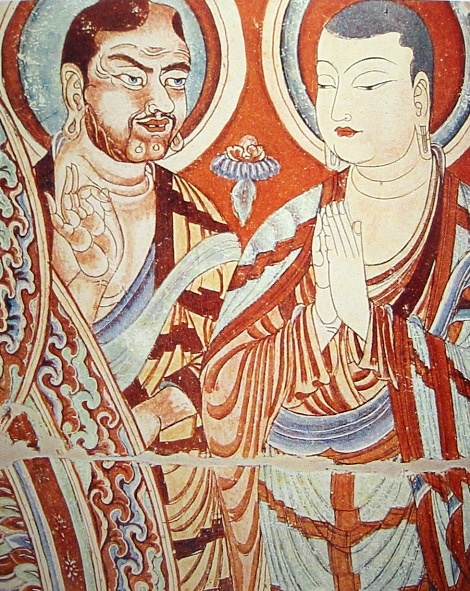
Nonetheless, while Foucher should not have overemphasized to this extent the importance of Greek ideas in the depiction of the Buddha, it remains exact that Buddhist depictions from the Gandhara area with Greek influences were key in the "northern road of propagation" of Buddhism via the silk road up into China via modern day Uzbekistan and Xinjiang (a moving token of those cultural exchanges is this fresco in the Bezeklik Thousand Buddha Caves, in modern day Xinjiang, where you can see an east asian monk and a blue-eyed monk, whom we can imagine is from the western parts of the buddhic world -- as those frescoes are dated of the IXth century, it would be erroneous to call him a Greek, but for him to be some kind of western is hard to discuss).
^1 : The existence of a people called the Yona which was not originated from the Indian subcontinent but foreign, and which had converted in significant numbers to buddhism is also accredited in South Indian literature : they are in particular mentioned in the Mahavamsa.
^2 : Les questions de Milinda, Trad. L. Finot, 1923
^3 : Which can be read here and is a IInd or IIIrd century AD depiction of the most famous places known to Hellenistic navigators in the Red Sea and Indian Ocean, up to India.
^4 : Alfred Foucher, L'art gréco-bouddhique du Gandhara (1st ed. 1905)
^5 : Pierre Cambon (dir.) (préf. Jacques Giès), Pakistan : terre de rencontre Ier-VIe siècle : les arts du Gandhara : exposition, Paris, Musée Guimet, 21 avril-16 août 2010, Paris, Réunion des musées nationaux, 2010
^6 : Gilles Béguin, L'art bouddhique, Paris, CNRS éditions, 2009
Follow up question: This Wikipedia page mentions that Vajrapani was modeled after Hercules in the same manner. Is there any truth to it?