Today:
You know the drill: this is the thread for all your history-related outpourings that are not necessarily questions. Minor questions that you feel don't need or merit their own threads are welcome too. Discovered a great new book, documentary, article or blog? Has your Ph.D. application been successful? Have you made an archaeological discovery in your back yard? Did you find an anecdote about the Doge of Venice telling a joke to Michel Foucault? Tell us all about it.
As usual, moderation in this thread will be relatively non-existent -- jokes, anecdotes and light-hearted banter are welcome.
My big article on Truman and the Kyoto decision is finally through peer-review, copy-editing, etc., and ready to enter the printing process. Which will only take another... year or so. But it feels good to have it finally done! I'm pretty pleased with it — I really never expected to make what feels like a genuinely new interpretative contribution to the old Hiroshima/Nagasaki debate (it just feels so gone-over as a topic), and I feel I've done that (through something I just sort of stumbled across). Whether anyone will care is a separate question!
If anyone would like to read the final version, PM me and I'll send you a not-for-broad-distribution link.
Also, I just now — right now! — finished my final chapter of my book. Now I just need to throw the intro and conclusion together and I am golden.
I am preparing to turn part of my Master's thesis into an article for a peer reviewed journal, and I took my first steps towards it this week. I defended it in April, and then enjoyed all my free time in post-graduate life. However, I am ready to start doing something with it. I have an appointment next week to meet with the Dean of the college of liberal arts (his Ph.D. is in the field of history) and he served on my thesis committee and he was super supportive towards helping me come up with a plan. So I've been preparing for this meeting by trying to isolate the most important parts of my thesis and then figuring out how to turn a 90 page thesis into a 25 page article... May the fun begin!
For anyone interested, TIL that the Hong Kong public records system has an online archive of old newspapers.
Shoutout to /u/hinghenry for linking to this on /r/HongKong.
Well I came across an article this week about the unpublished 17th century journal of the sailor Edward Barlow which contains a hidden rape confession.
This journal is frequently cited in works about sailors during this period but I've never been able to get my hands on it to read it because it was never published at the time and the only transcription of it is from 1934 and is long out of print and may still be copyrighted. Copies of it online seem to go for at least $600, however, using wordcat I think I will be able to get a copy from the library to make photocopies of. It should be interesting.
History afficionados, what are your favorite video games set in the historical past, without regard for their historical realism?
I wrote a bit about New Sweden the other day which was fun since I've been translating Holm's book on-and-off in my spare time. Since I'm thinking most American historians don't know much 17th century Swedish and the one translation that exists, is from 1834 (republished several times since) and rather awful. In that it randomly omits whole sentences, translates away interesting language traits (i.e. the writer using English or Dutch words or idioms) and bowdlerizes it by e.g. translating to 'indian' where it actually says 'barbarian', and has no notes or explanations for cultural references and such.
But anyhow, what I wanted to ramble on about was something I just grazed in my post, which is how the view of early colonists in present-day US is so dominated by the perspective of the English colonist majority. And by extension, it came to shape Americans' views of themselves. So searching for freedom and religious freedom becomes a key point, not material wealth; on the contrary they endured great hardships. But those were not really because it was intrinsically difficult to inhabit the country - he native Americans were doing so just fine after all. It was rather that the lifestyle they knew and skills they had was difficult to adapt to this environment.
The Swedish/Finnish settlers on the other hand, had a radically different situation. In particular a lot of them were Forest Finns, who lived in deep wilderness in the forest, because they practiced slash-and-burn agriculture (sw: svedjebruk) They'd burn forest and plant rye in the ashes, which produced good crops, but for only a few years, and so they'd have to move every decade or so and build a new house. (contemporary Swedes noted the Finns would actually built the sauna before building the main house. Priorities!) Since this form of subsistence required massive amounts of forest-per-person, they were forced to live deep in the forest, in wilderness. They settled areas (north Värmland, southwest Dalarna) that'd previously been entirely uninhabited (even by Sami). So.. for this group of colonists, moving to the New World meant life getting much easier in many ways! They could to a much larger extent than British, continue their existing lifestyle, but in a more fertile place with a much milder climate. One might wonder if it also endeared them to their Lenape neighbors, who also utilized slash-and-burn. Relations with them are mainly described as quite good, and the Lenape would fight for the Swedes against the Dutch.
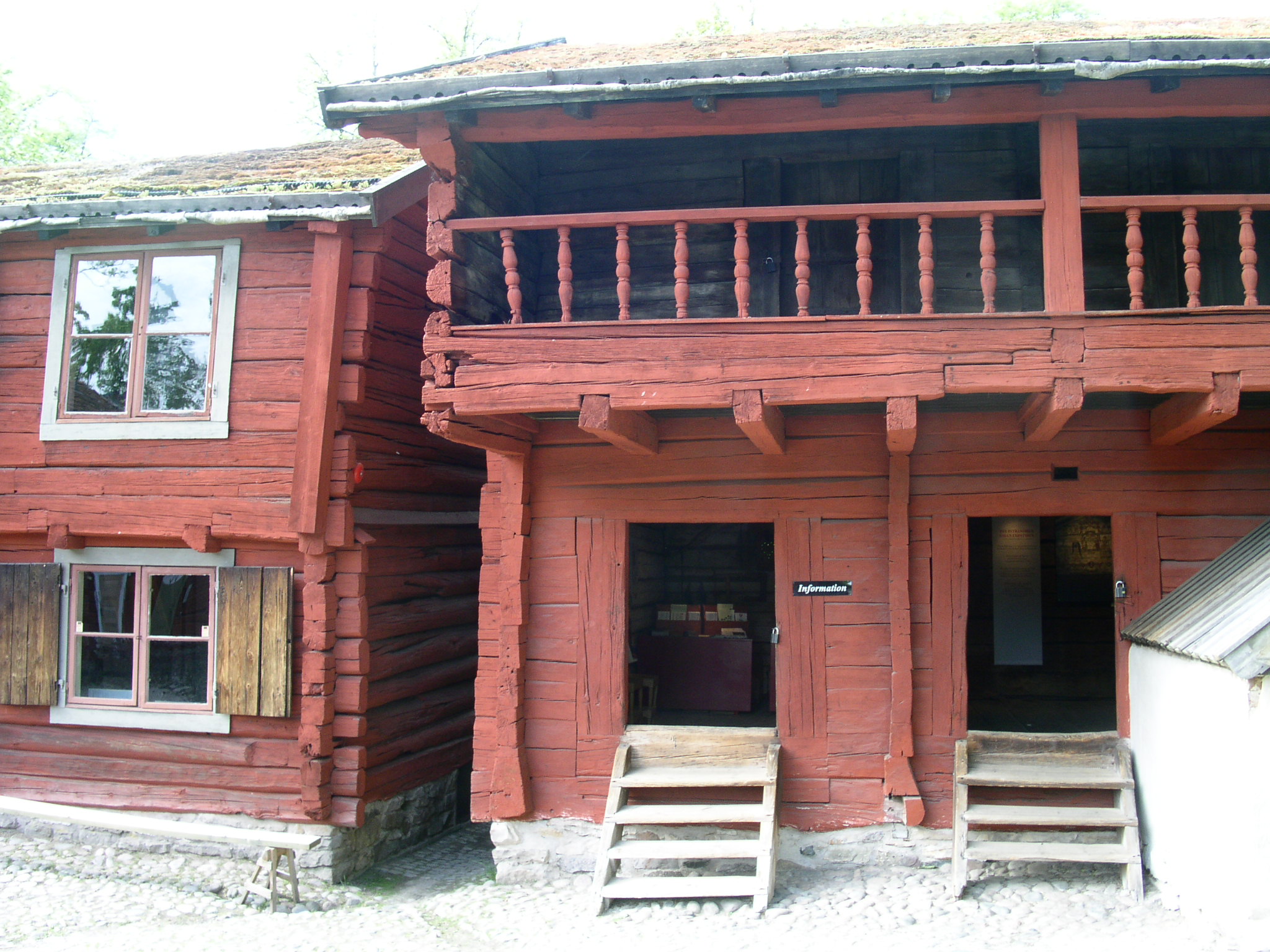
Their house-building methods were the same as the Swedes and Norwegian (who didn't practice svedjebruk in that era), namely what we call 'timber houses' or what Americans tend to call 'log cabins'. Now that's an example again of an Anglo perspective. To Swedes, Norwegians and Finns it's a general construction technique used for homes to storehouses to multi-story warehouses. Even in urban areas it was the dominant construction form. Although it requires some skill, it does not require any special tools - mainly axes, knives and augers, tools the peasantry was quite skilled with and nothing you wouldn't find in the Viking Age toolchest from Mästermyr. Here's a video w/ English subs showing how it's done. (although multiple styles/techniques exist)
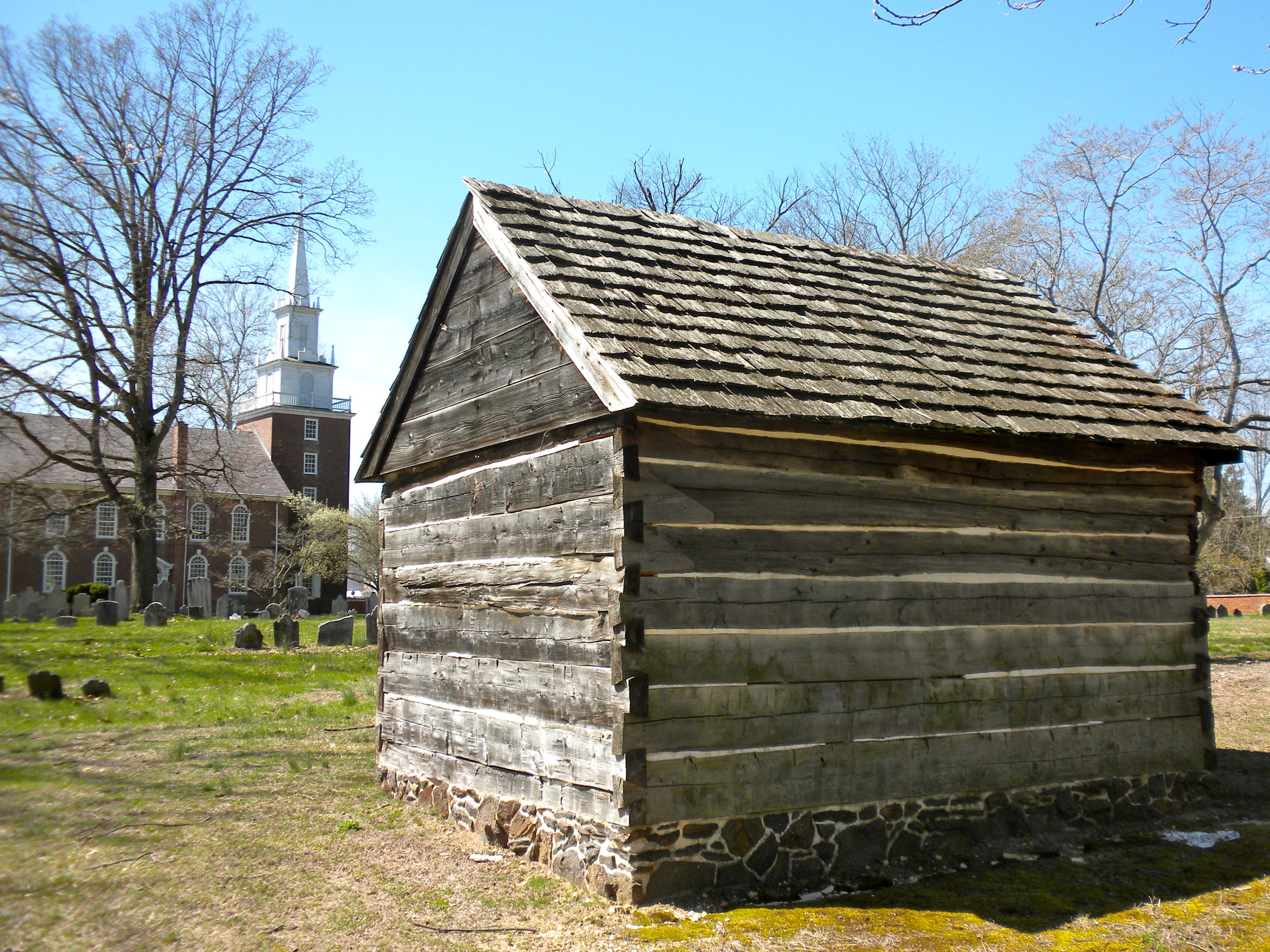
Whereas, as 'log cabin' implies it's for cabins. Frontier structures, provisional dwellings for those 'roughing it', until you can build a 'proper' house. Settlers of other origins adopted the Nordic log-building style, but these values are reflected in how they modified it. In the original styles, the walls are almost always flattened with a broadaxe or adze, while American ones retain rounded shapes. The Nordic style has logs lying flush against each other, a U-shaped groove in each log which the rounded top of the one below it fits into, and moss (or later, oakum) is put in-between as insulation. In the American style, the logs aren't worked to fit each other and don't touch, other than at the corners. The sizable gap between the logs is instead filled with clay chinking. Chinking doesn't exist in the Nordic traditions; the weight of the roof and logs themselves create a tight fit as long as the work is competently done. Chinking was used in Czechia, but I'm not sure if Americans got the idea from there or it was independent.
So it says something again about the knowledge and perspective, that the few surviving timber structures from New Sweden have in fact been 'fixed' by adding chinking that is very very unlikely to have been there originally. This one doesn't use the u-shaped grooves described; nor does it have windows or a chimney - i.e. it probably was a storehouse and not living quarters and thus didn't need total windproofing. Nice dovetailing though! That style is called a laxknut , meaning 'salmon corner', because dovetails are salmon tails in Swedish.
Anyway, so if any American building-conservationists are out there; what's up with that?
I want to hear from historians about their relationship with reading, focus & concentration. I never read books growing up, and now with social media I think my ability to read dense material at length is practically zero.
What are your thoughts, experiences and advice regarding reading and concentration? Did you grow up a voracious reader? Do you struggle with concentration issues? In this area, what would you advise in order to 'become' a historian?
What are trends (politically, economically, culturally etc) that precede war? How often do these trends appear but don't evolve into war?
My intuition is that these signs are correlational but not causal.
(Hi! never been on this subreddit but this thread seems appropriate.)
Teaching my students about the Causes of the American Revolution. They felt the colonists were ungrateful and were actually breaking the law by wanting to smuggle goods instead of paying the Sugar Tax. They felt it was ludicrous that the colonists stated the tax went against their rights as British citizens. What are your thought?