I was trying to figure out how to write stuff in runic and stumbled upon younger futhark runes that have a lower number of characters (16) compared to elder futhark (24).
"The Younger Futhark, also called Scandinavian Futhark, is a reduced form of the Elder Futhark, consisting of only 16 characters. The reduction correlates with phonetic changes when Proto-Norse evolved into Old Norse."
One of the words I was trying to figure out was Valkyrie which is apparently "Valkyrja" in old norse.
Here is my problem, how would "Valkyrja" be written in younger futhark, which was used when old norse was spoken, if the characters for V, J and Y are not there?
Were runes used in some other way than an actual alphabet, or were the missing letters replaced with something else?
I apologise if this is a dumb question, I just need help umderstanding how runes were used.
These are not absolutes; there were many variants of runes and the alphabets, and there were dialectal variations, Old Norse diverged into East and West Norse during the Viking Age, and even in the same area in the same time period, there was lots of spelling variation. Just look at this list of variants for the word 'this'. The writing also only gives a rough approximation of the pronunciation. The script changed with pronunciation changes but was by no means a perfect representation of it and there was no authority telling people how to spell anyway.
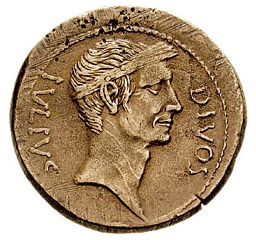
It's not unique to runes but there are therefore three forms for every inscription; the original runes, the transliteration of them to Latin letters, and the 'normalized' form. So for instance 'v' only occurs in the normalized forms since it doesn't occur in the actual inscriptions. As with the Latin alphabet of the time, 'v' and 'u' were considered the same, as was 'i' and 'j'. A Roman would (and did) write 'Julius' as 'IVLIVS'. So an 11-th century inscription could read 'Suæin uaR' normalized to 'Svein vaR' (Sven was). 'G' was generally written as 'k'. 'Y' is less consistent, it could be an 'i', or a 'u', but sporadically in the 11th century there was also a stung 'u' used for 'y', meaning a 'u' rune with a dot in it. (Likewise a stung 'k' would mean 'g')
Runic writing had other quirks too; letters were never doubled even if they are in the normalized form (e.g. 'þana' for 'þenna'). That includes neighboring words if word-separators were not used (which they weren't, always). That is, "Hello Olaf" would become "HELOLAF".
Anywya, so 'valkyrja' could've been written 'UALKUrIA' or 'UALKIrIA' or 'UALKYrIA' (with a stung rune). There are no concrete examples; the word does not occur in any runic inscription. (although a few specific Valkyries like Gunn are mentioned)