This exact question was asked six months ago. Unfortunately the post I was responding to has been deleted, so a lot of what I wrote there won't make a lot of sense the way it's structured.
The short answer, which I finally got around to at the end of the other post, is that the sources called it "The Roman Empire."
A brief glance at the OLD for imperium - from where we derive empire - provides imperium nostri - our empire [where "we" are Romans]; imperium Romanorum - the empire of the Romans; Romanum imperium - the Roman empire. The Roman Empire, or some related term was their name for their own state, so we use the same term in translation.
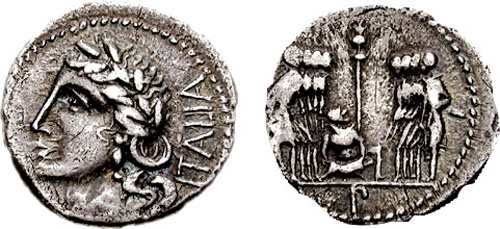
It is a curiosity that especially in the 1st century BCE and 1st CE an Italian name didn't come to replace the Roman one for the state. During the Social War of 91-88 BCE, the Italian rebels indeed named their state Italia (and struck coins with that legend - on this example Italia is clear on the obverse), and named their capital city Italica. We can't say establishing a common Italian state was the goal of all the rebels, but it was the tool or threat of at least some (those that named cities and struck coins), and that ideology had some penetration to the rank-and-file, as we have a sling bolt inscribed with Italia (which I couldn't find a link to). And indeed to some extent this ideology stuck beyond the Social War. In the years leading up to the war at Actium, Augustus advertised that he had the fealty of tota Italia, not omnis Romanorum or something like that. In 48 CE, when discussing admitting Gauls to the senate, Claudius discussed Italy, not Rome, in geographic terms, and addressed the senate as Italians, not Romans. In fact, as I argued in my linked post above, by the 1st century BCE Italy had come to be seen as a single political community that ruled an empire, not a community distinct from Rome and part of its empire.
I think there are two things going on that preserved the "romanness" of the name "The Roman Empire." The name, in the form of imperium nostri, where "we" are Romans, goes back to the earliest Latin prose - it's found in Cato the Elder. That is long before the Italians were incorporated into a shared Italian state. The name of the state was Roman before Italians were part of it.
The second is that the nature of what it meant to be Roman was complicated and changed over time. So the settlement of the Social War included giving all Italians Roman citizenship, but it didn't change anyone's ethnicity. So Marsi were still Marsi, but had Roman citizenship. Etruscans were still Etruscans, but had Roman citizenship, etc. and so forth. Roman was an ethnicity, but it also became a legal category. In effect, Rome became what we now recognize as a multi-ethnic state with a single shared citizenship called "Roman." Farney's book Ethnic Identity and Aristocratic Competition in Republican Rome (link goes to a BMCR review) does a great job of demonstrating how different ethnicities could be leveraged for different purposes inside the system of the Roman citizenship. This of course got more complicated after 48 CE and now Gauls were members of the ruling aristocracy, and it just got worse from there. The Roman citizenship was the structure these different ethnic groups used to jointly rule their empire. So not only was "Roman" the name of the empire before any of these Italian or other people got involved in the imperial project, but the Roman citizenship was the means they used to distinguish the rulers from the ruled, and so in that sense it very much remained the "Roman" empire.