Not to discourage other excellent answers, but /u/Jaaxter has an answer specifically for "English longbowmen in the high Middle Ages."
Speaking only about Classical Greece - archers were absolutely defenseless in melee. This is primarily because the bow requires both hands to be used, meaning that it was all but impossible for archers to carry a shield for personal protection. Instead of compensating for this with elaborate body armour, Greek archers went the alternative route: they made sure they were not weighed down by any heavy equipment (including helmets), so that heavy infantry would never be able to catch them. Greek archers wore no body armour, had only large sun hats on their heads, and carried no more than a small bronze or hide shield at best, to protect them against enemy missiles. Their purpose was to shoot at the enemy from a distance, or from ships or the battlements of city walls, and to run away if anyone came after them. They were never supposed to be caught in hand-to-hand combat. If they were, it meant that things had gone very badly wrong. The archers would much more likely try to surrender than fight.
Not all archers of Antiquity followed this approach, though. On Greek cases from the Archaic period, we find men in heavy armour carrying bows; it seems that in earlier periods of Greek history the bow and arrow was still an elite weapon that could be combined with heavy Corinthian helmets, cuirasses, and even large shields. How exactly this was done is unclear, but the find of both spearheads, swords and arrowheads in elite graves suggests that a combination of weapons was used in combat. In the confused and fluid conditions of Archaic battle, a man could pick off an enemy with a quick arrow and engage the next with his sword. These high-status warriors would presumably not have been helpless in melee.
However, in the course of the Archaic period, heavy infantry combat came to dominate in the elite's approach to battle, and the equipment of heavy-armed fighters became more uniform. The bow is no longer seen among the heavy-armed, and wealthy Greeks started to conform to the roll of what we now call hoplites. The loss of status of archery presumably went easily hand-in-hand with its changing tactical function. As the bow became a weapon of less wealthy men, and the wealthy monopolised close combat with shield and spear, it was both convenient and understandable for archers (who likely couldn't afford much armour) to leave the hoplites to it, and to focus instead on light equipment and skirmishing tactics.
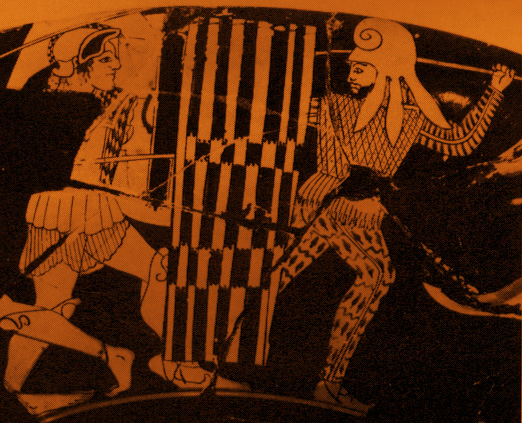
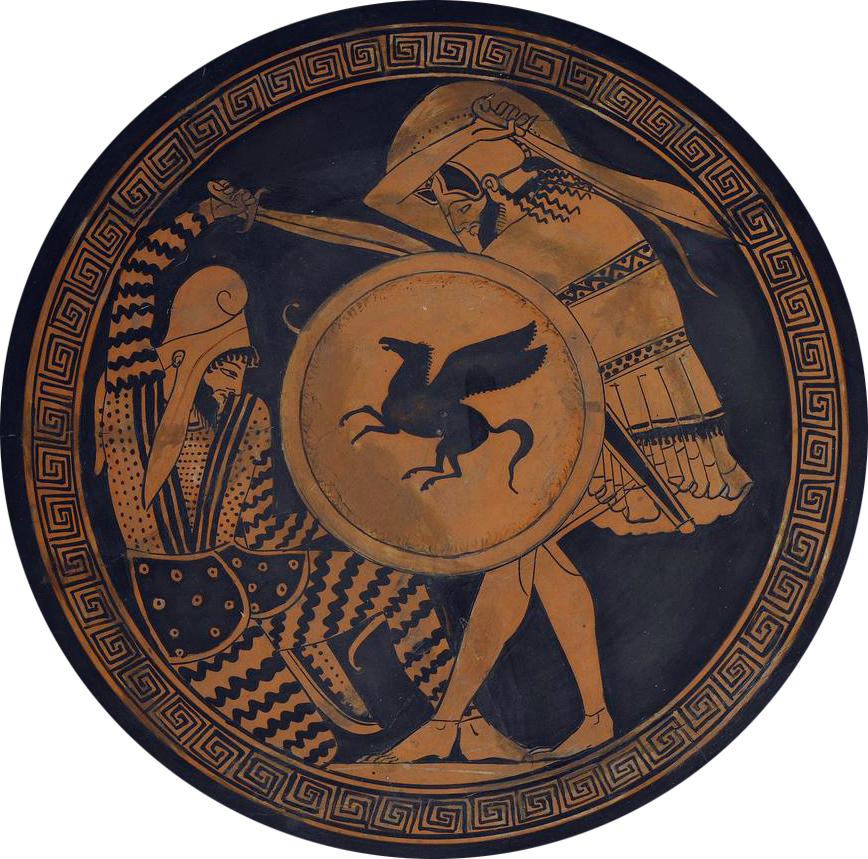
A better example of "heavy archers" that could hold their own in close combat would be the Persians. According to Herodotos, they were armed with bows, spears and short swords, and wore iron scale armour for protection. Their initial role was to shower the enemy with arrows, but if their opponents got too close, they would drop their bows and fight them hand-to-hand. To absorb the initial shock of an enemy charge, the front rank of a Persian infantry formation had no bows, but carried large wicker tower shields instead, fighting as heavy spearmen. The men behind them, however, were constrained by their bows to go shieldless, and in close combat they relied entirely on their spears and other melee weapons. In combat against dedicated heavy infantry, this put them at a famous disadvantage, but in most cases it was enough, in combination with their powerful cavalry, to allow the Persians to carry the day.
Follow-up question. In civilization iii (I think) bowmen use their bows as melee weapons when attacked by melee, is this accurate?