This really depends on how you define what you're talking about (and not just because of the "what is anime?" debate) and unfortunately difficult to pin down.
In anime, the origins of this are probably with either Gangor or Pook/Bobo/Buck from the 1963 series, Astroboy. This was one of the first animated series in Japan and both these villains demonstrated having different forms with different capabilities, though these capabilities tended to be physical, rather than some mystical power boost. Pook/Bobo/Buck could shape shift into various animals, so his new ability to fly came from him being a hawk, rather than being in his ubermegadecahyper form. It's also interesting to note that very few anime at the time had a focus on combat, though this would change a lot in later years.
Another candidate is surprising from Disney, being Maleficent from Sleeping Beauty in 1959. The already formidable witch, transforms into a dragon after lightning bolts and a conjured forest of thorns fail to stop the protagonist. Early anime was super heavily influenced by western culture and with this coming out just at the time when animated series in Japan were juuuuuuust starting to gain a little bit of traction, it seems logical that this would have influenced anime creators, though this is never actually confirmed by any creator, to my knowledge. However, it's worthy of note that this seems to be the first ever clear instance of "Hey, I changed shape and got more powerful because the old one wasn't cutting it" in motion picture.
However if we look back before the creation of animated media, transcendence is a major theme in Japanese and much of Asian mythology, with a lot of myths and legends involving someone or something transcending and becoming something else, such as the tale of koi fish jumping up a waterfall and one finally succeeding and becoming a dragon. Also, the 16th century Chinese story "Journey to the West", features Sun Wukong, who's main trick is being able to transform into anything he desires, includes a bunch of characters who also transform at various points. Those are just a couple of examples, but trust me, they are everywhere in eastern mythology. The transformations in anime are very likely to be an extension of this trope.
You might get a more definitive answer from r/anime, who through the sequential stabbing of people who think they have the answer, by people who have an earlier example will eventually get you there. Think of it like an anime history battle royale.
Well, in terms of general multi-form antagonists to defeat, the concept is far older than the likes of Astro Boy or Dragon Ball. Gods and creatures of many mythologies are able to take multiple forms, though usually if they are to be defeated in multiple forms it wouldn't be physically each time, as you are likely referring to. Typically such a god or creature would take a more mortal form to impose a task on the protagonist to prove their worth in some form other than sheer combat potential, and often would reveal their true form upon completion of the task to grant a reward. There are instances where a proud being would become enraged at the ability to perform the task as described, and, going back on their word, would need to be defeated physically. Turning from an attractive to a bestial/destructive being is quite popular in Aztec and Hindu mythology.
However, I take it this is not what you're interested in. Really, what you describe is a solution to the power-creep problem combined with the visual medium of manga. A protagonist, especially in the shounen genre (usually action-oriented that appeals to teenagers) must improve their combat skills to keep the story ongoing. If the protagonist were to defeat baddie #1, it is expected that baddie #2 must be stronger, and it must be shown why they are stronger, either with their appearance or with feats. However, what if you, as a writer, want a recurring antagonist to constantly challenge the protagonist?
Let's talk about Astro Boy, a 50's manga that dealt with some, at times, surprisingly deep subject matter for a shounen. In chapter 57 (1956), the character of Atlas was introduced: another robot with some clear external similarities to Astro Boy, except with the ability and desire to harm humans. After a few bouts, Astro Boy defeats Atlas before he can kill a village of people. Atlas' creator, Dr. Ram, rebuilds him to be stronger, and in chapter 85 the two face off again. This is, in my opinion, the first instance in recent Japanese media of an antagonist taking a new form to indicate their increase in ability. Why was it done?
Well, Atlas was an interesting and clear counter to Astro Boy, the ying to his yang, and it would be a shame if he were a one-off villain. However, Astro Boy was not only strong enough to beat him the first time, but has grown since then. So, Atlas must become stronger to make for an interesting fight, and the easiest way to do that as a robot is an upgrade. Not only is it a simple way of showing newfound strength, but it makes people more likely to root for the protagonist, who earned his new combat ability, than the antagonist, who had his given to him. Additionally, the creator (Osamu Tezuka) may have decided he wanted a new design for Atlas to even further show how he is Astro Boy's opposite, and thought it was a good opportunity to combine the two. A new design freshens up a character in any visual medium, and is a direct representation of change.
Let's review. Our protagonist's next foe should be stronger than the previous to keep things interesting. However, a recurring antagonist is an interesting concept. The creator would need a way of showing how an antagonist has grown in power without devoting nearly as much time showing that growth. A manga about robots fighting had the perfect storm of factors to lead to an optimal solution: robots can be upgraded, especially after being half destroyed in the previous fight. New designs in a visual medium are fresh and exciting, and can draw new fans in who disliked the old design. This shows the growth of an antagonist without needing further feats to display power, especially as feats themselves may need to involve destruction or displays that run in counter to the plot.
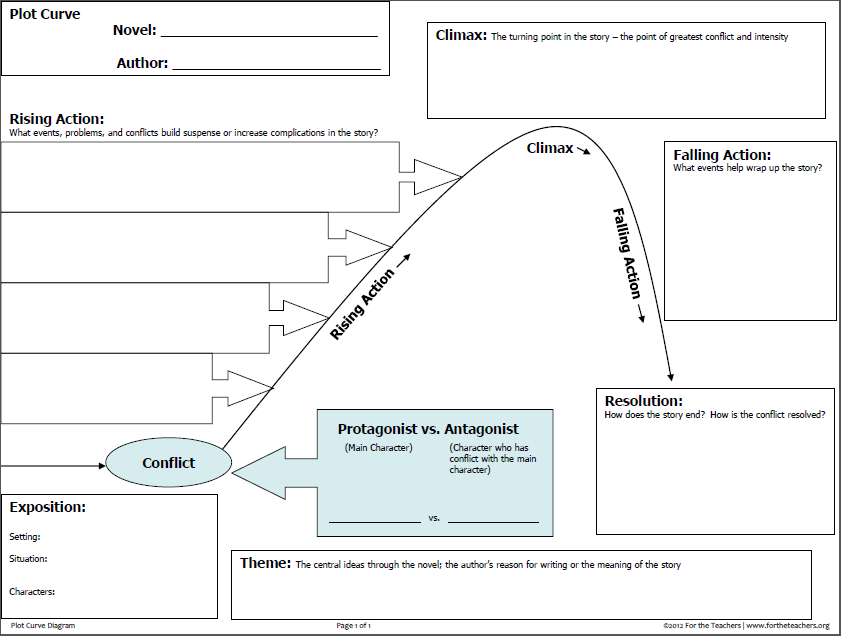
However, I don't think this hits the nail quite on the head with what you're referring to either. After all, this form change was not instantaneous, and occurred between fights. This may be where some cry out "Dragon Ball!" but such a change predates the stories of Saiyans. In fact, this wasn't an instance in manga at all, but in the 1971 film Godzilla vs. Hedorah, in which the mud monster Hedorah changes form multiple times throughout the movie, each time growing stronger. While most occur outside the fight, in the final battle (I cannot find a video of the battle online, my apologies) Hedorah changes to it's final form during the battle at Mt. Fuji. This is a more condensed form of the earlier reasoning: Hedorah is defeated each time, and the fights need to grow in intensity as the plot continues. You know that plot curve you probably had to draw in elementary school? Well, now another storytelling element is introduced in the climax: it looks like Godzilla is about to win against this strongest form, but surprise! Hedorah has a final form that it changes into. This is a wonderful storytelling tactic, as it turns a fight scene on it's head, and you likely see it over and over and over again in modern media. Our protagonist is about to win, but a surprise causes the fight to be turned on it's head and suddenly our protagonist is struggling. The form change was the perfect way to go about this, it's a clear visual signifier of increased strength instead of the monster suddenly being able to do new things it couldn't before. This is further utilized in the Kamen Rider show (also started in 1971).
So, in addition to our previous elements of storytelling, a form change during a fight is exciting due to how it shifts the dynamic of the fight in an unexpected, yet easy to understand way.
I've seen enough he--uh, highly upvoted threads to know where this is going.
Welcome, good readers of /r/all and the frontpage, to /r/AskHistorians! Here on /r/AskHistorians we have very stringent standards for depth and expertise. For once, your eleven day binge-watch of Dragonball's Golden Frieza saga may actually qualify as relevant. Your whole life has been building to this moment.
Unfortunately, your encyclopedic knowledge of Dragonball alone won't be sufficient. Your model collection probably not either. Rather, we'll expect contributions here to be contextualised in a broader discussion of the history and portrayal of anime villains and those really kickass transforming knightmare frames from Code Geass. It's a tall order, and will require you to collect dragon balls a range of sources and discussions, and work with both primary and secondary evidence to ground your broader argument.
The work which volunteers put into /r/AskHistorians is phenomenal, and that's just as true for more modern and mainstream topics as for any more distant historical discussion. Please be patient in the time it takes for good answers to arise, and appreciate when they arrive, as they almost always do.
And a word of warning to those who would post deliberately pointless or insufficient comments - your actions shall have consequences.