Were the African-American kids being taught that they were inferior by their teachers in the public school?
Could a parent protect their child from the rampant racism and insults?
And lastly, did the African-American schools had the same curriculum as the white only schools?
Thank you in advance, and i am sorry if there are a lot of questions for just one thread.
Great question! I’m going to try to hit each of your main points, though entire books could and have been written about these topics. Your questions seem to primarily focus on overt educational disparities, and while they were certainly many of those, as we’ll see, the very nature of Jim Crow in general and segregated education itself resulted in disparate educational opportunities. “Separate but equal” was always a myth. No society can educate children separately based on race without providing those children with different educations in both substance and experience.
#Curriculum/Funding/Infrastructure:
Black schools were funded far less than similar white schools, even in the same community. Where black children had any school books at all, they were typically “hand-me-downs” that had been discarded by the white schools. Rather than a case of different curriculum for black schools, it was “either no books, or old, outdated, abused books.” Conditions in black schools were The funding disparity also extended to city and rural areas. As POC were more heavily concentrated in rural areas, this had a double effect. In rural areas the school schedule followed the cotton harvest, for both black & white schools, so children were often attending only two to three months out of the year. Most African American children who attended school at all were below grade 4, with many leaving around that time to work their sharecropping family’s farm. As such, the skills taught typically covered what was necessary for the common vocational opportunities open to POC in the south, namely agricultural work and domestic service.
In the 1890 census, 60% of black adults in the US were considered illiterate, compared to 30% for whites. By the 1930s, while this had improved such that 80% of black adults were considered “literate” compared to 90% of white, black students still lagged far behind. Some seventeen states had segregated schools under Jim Crow, and they spent, on average, three times as much per white student as they did for each black student. The situation was even worse in the Deep South:
| State | $ per White Student | $ per Black Student |
|---|---|---|
| South Carolina | $53 | $5 |
| Alabama | $37 | $7 |
| Georgia | $32 | $7 |
| Mississippi | $31 | $6 |
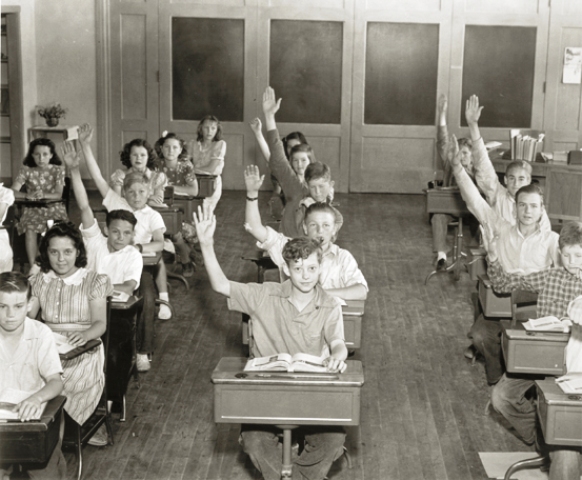
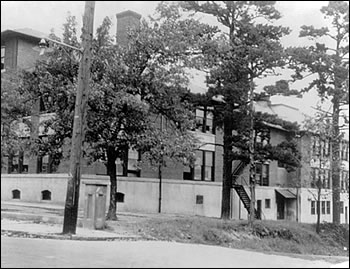
Black schools were typically in a poor state of repair. Amenities were scarce, even extending to windows without any glass. They were poorly maintained and often downright filthy. Overcrowding was common, as were much higher student to teacher ratios compared to white schools. In fact, many black schools had all the grades in one room. Black children in segregated schools had black teachers, so racism and inferiority would not have been taught in class per se, though obviously issues of race, and the real struggles that POC faced under Jim Crow would have been topics of conversation, both in class and on the playground. That said, black teachers typically received less training and were paid 60% less than their white counterparts in the South. Since the white school year was approximately 2 months longer, white teachers made even more money by comparison when you take this into account. In 1931, famous African-American educator Horace Mann Bond administered the SATs to a large number of black teachers in Alabama. Their average score was below the national average for ninth-graders, but what would we expect when the educational system was so one sided? It’s a testament to the strength of black educators that they were able to accomplish as much as they did given the limited resources and opportunities they were facing.
###Visual Examples: Black schoolroom circa 1930s
White school, Halifax County VA
Black school, Halifax County VA
One more positive note to finish off the infrastructure question. As Southerners were not interested in providing sufficient funding to black schools, Northern foundations stepped in to raise money to build proper, healthy, comfortable schools for black children in the south. The most successful and famous of these groups was the Rosenwald Fund. Julius Rosenwald, was part-owner of Sears and served as either it’s president or chairman from 1908-1932. Prior to establishing the fund in 1917 “for the wellbeing of mankind,” Rosenwald directly supported Booker T. Washington and funded what became Tuskeegee University, a Historic Black College. Rosenwald’s fund focused on improving educational opportunities for African American children, and he required that the group disperse all it’s funding by a specific date (they spent the last dime in 1948), rather than hoarding it to build an ongoing endowment. The Fund donated $4.4 million dollars ($81,000,000 in today’s money) to build five thousand schools for black students in the Jim Crow South.
#Could a parent protect their child from the rampant racism and insults? That’s a difficult question to quantify, and to answer. On the one hand, it’s absolutely true that black parents in the South would, naturally, do all they could to minimize the impact of racism on their children. At the same time, when literally every part of society is structured to reinforce racial lines and “places”, it would be impossible for any parent to fully shield their children from racism. Nor would they have wanted to. Learning the vital survival skills that would enable their children to survive and hopefully thrive in a deeply divided, dangerous world was crucial. This “racial etiquette” was, of course, taught to black children by their parents in the home, but also by other adults, including teachers and community/religious leaders. Failure to instil this lesson on the part of the adults, or of the children to continually put it into practice, could and often did prove fatal. The lynching of fourteen-year-old Emmet Till based on confirmed lies told by an adult white woman is a perfect example of this, as it was rooted in the accusation that he spoke impertinently to her. That was, after all, the point of lynching, as an object lesson to POC on their place in the world, and the consequences of stepping out of it. In some areas the Klan “required” black residents to attend their meetings and cross burnings as an intimidation tactic. It is not a lesson that school children could have avoided learning at an early age.
##TL;DR:
In 1950, the mid-century edition of the Journal of Negro Education surveyed black educators regarding the educational system. Benjamin E. Mays, then president of Atlanta's Morehouse College, wrote the following, which I feel serves as a fitting summation:
[The Jim Crow system,] with its inevitable consequences of inequality has warped the minds and spirits of thousands of Negro youths. They either grow to manhood accepting the system, in which case they aspire to limited, racial standards; or they grow up with bitterness in their minds. It is the rare Negro child who comes through perfectly normal and poised under the segregated system…. The greatest thing that anyone can do to improve the morale of Negro children and youth is to continue to fight to destroy legalized segregation.
###Further Resources:
Growing Up Jim Crow: How Black and White Southern Children Learned Race by Clara Silverstein
Jim Crow’s Schools, American Federation of Teachers
###Bonus A/V Materials: (caveat: I haven’t watched all these as some are region blocked for me)
Samuel L. Jackson and Henry Louis Gates Jr discuss growing up under Jim Crow.
The Education section of interviews in the Civil Rights in Black & Brown Oral History Project.
To supplement /u/amanforallsaisons' solid and informative response, this post gets into more detail on curriculum in segregated schools.