Paratroopers had been used to great effect in previous invasions, so if the English channel was a huge impediment to a land invasion, why wouldn't the Germans drop troops into England from planes? Obviously they couldn't have taken over the UK solely through paratroopers, but one would think that they would be beneficial for sabotage, destroying targets that bombers couldn't reach, or maybe even securing a beachhead.
There are several major problems with this hypothetical airlanding in southern England.
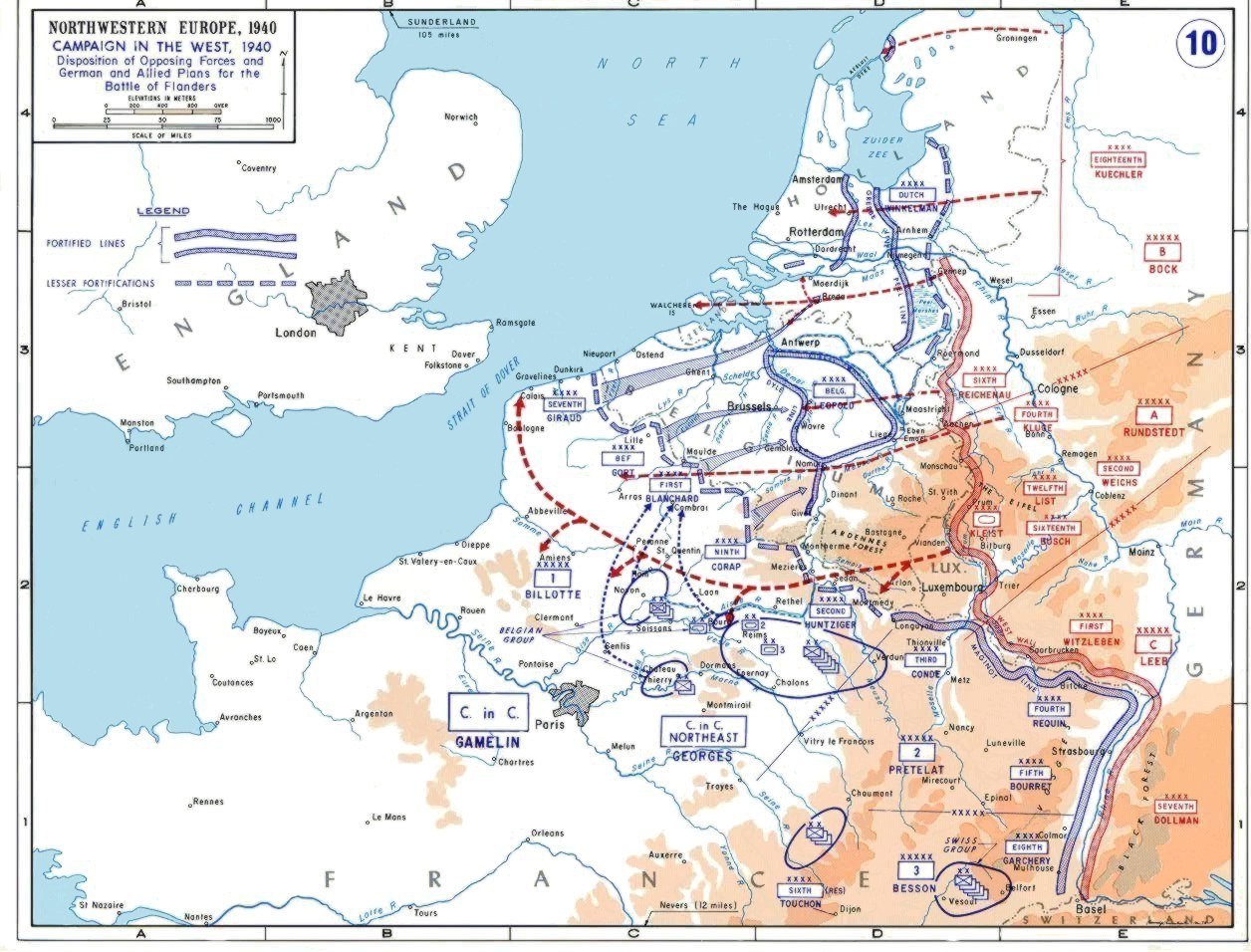
Firstly, the Luftwaffe success in the Low Countries and France in 1940 was far from easy. The Germans managed to win air superiority for Fall Gelb only after a hard-fought campaign that managed to overrun a number of French airbases. Like the rest of the French military establishment, the Armée de l'air assumed that the war would be somewhat protracted, so it planned a national dispersion scheme of its air assets. This meant the Germans practically blundered into destroying the French ability to counter Gelb in the air. French aircraft had to travel to the combat zone while Luftwaffe aircraft had the benefit of operating proximate to their bases in Germany. There were other problems with the Armée de l'air in 1940 such as doctrine and equipment that all contributed to its defeat. Yet, even this victory was dear-bought by the Germans, which lost a quarter of its frontline strength from all causes. These losses were nothing though compared to the Battle of Britain in which German efforts to win air superiority over the British isles came to naught. The Luftwaffe tried to destroy the RAF in the late summer of 1940 and although it was a hard-fought campaign, the Germans could not destroy Fighter Command.
The fact that the RAF was a viable and present force in the field in 1940 meant a massive airlanding was not a militarily viable option to invade the UK. Subsequent experience with airdrops in Crete in 1941, Normandy and the Low Countries in 1944, and the Rhine crossings in 1945 showed that transport aircraft were vulnerable. Not only were they loaded with heavy cargo of troops and their equipment, the transport aircraft were slow and flew in a straight path at relatively low level. In short, they were a massive target. There were large losses of transport aircraft even in conditions of near-absolute air superiority such as Overlord, Market-Garden, and Varsity. The latter successful operation crossing the Rhine saw the Army Air Force lose as many men in the air as the 17th Airborne Division did on the ground. Granted the numbers of the UK's antiaircraft gun defenses were not at the levels of the late-war German Flak arm, but it was large enough to extract significant losses as too was the intact Fighter Command.
This is also a very academic exercise since there was no massive German Fallschirmjäger arm available to invade the UK. The Germans had used paratrooper and glider troops in the Low Countries on a massive scale. Some of these attacks were successful like the Eben Emael raid, but others less so such as the seizure of Dutch airfields. The high profile successes led to the expansion of the two airborne divisions of thr Fallschirmjäger and Heer into properly-sized divisions. This was an expansion that only bore fruit in 1941, in time for the German paratroops to be massacred in the Pyrrhic victory at Crete. Additionally, the Germans in 1940 lacked not only the warm bodies for a UK air assault, biut also the transport aircraft for such an operation. Among the losses in Gelb were a number of Ju-52 transports. The Low Countries had also exposed the deficiencies of German glider aircraft like the DFS 230 which were too small for operations other than small-scale assaults. The DFS 230's replacement, the Gotha Go 242 would be available in 1941/42 as was the heavy-lift glider initially meant for a UK invasion, the Me 321.
So even had the Luftwaffe had managed to wrest air superiority over southern England in 1940, it had no means to reliably convey enough troops in the numbers necessary to subdue the UK. Neither and air assault nor an amphibious invasion were practical when the Germans had no means to conduct either.