For example, Kelly's armor absorbed no less than 18 bullets before he was finally brought down by multiple shots to the legs.
Edit: Apologies for the typo.
In a word: weight. If you want more words: too little protection and too much weight.
Body armor was used at the onset of WWI, by French cuirassier, who still wore Napoleonic-style helmets and metal breastplates. These couldn't stop a rifle bullet and were only "practical," because the wearer was riding a massive, specially-bred warhorse. Suffice to say, the armor was quickly shelved once fighting began...
The nature of trench fighting did lead to a variety of different kinds of body armor. Helmets were the most obvious and widespread form of armor. Trench warfare lead or a horrific number of head injuries. By 1916, nearly every major combatant on the Western Front had widely-issued helmets for protection against artillery shrapnel.
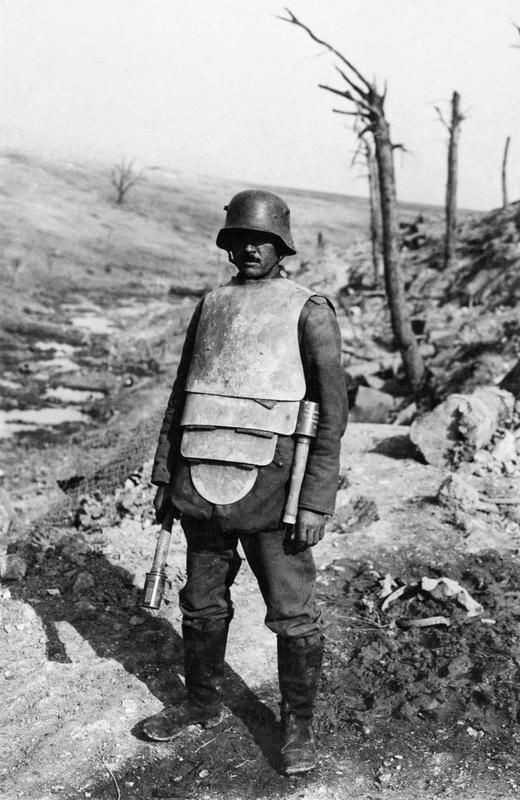
Body armor was also issued or privately purchased in smaller numbers. The most common armor was perhaps the German "lobster armor," which had a distinctive hinged breatsplate and skirt (hence the name). It was also usually issued with an additional front plate for the stahlhelm.
Because it weighed about 20 pounds, it was mostly issued to troops in static positions, like machine gunners. It was also used by trench raiders (see below), who left behind their heavier rifles in favor of lighter grenades, pistols, knives, spades, and clubs.
It was barely proof against grenade fragments and pistol rounds. At the close ranges of trench fighting, a .303 bullet would punch right through it.
https://flashbak.com/wp-content/uploads/2015/03/735cdcf4a896e8b9d474080e15c8fc90.jpg
An American-made "Brewster Bodyshield" armor was impervious to rifle bullets (the inventor demonstrated it by being shot at by a firing squad), but it weighed 40 pounds and was very balky to move it, so it was never purchased or issued.
Non-wearable armor was a little more useful. Observation posts, machine gun nests and sniper hideouts often had an armored loophole that was impervious to rifle fire. Some British officers took to using elephant guns to shoot through them!
You may be interested in u/wotan_weevil 's did provide an interesting discussion of the historic ballistic protection provided by armour, including that of the Kelly Gang at https://www.reddit.com/r/AskHistorians/comments/88kbr2/why_did_ned_kellys_armour_work_against_firearms/
You should note that the Kelly Gang's armour was only proof against black powder fire arms and was not particularly effective in defending the Kelly Gang from the police.