Today:
AskHistorians is filled with questions seeking an answer. Saturday Spotlight is for answers seeking a question! It’s a place to post your original and in-depth investigation of a focused historical topic.
Posts here will be held to the same high standard as regular answers, and should mention sources or recommended reading. If you’d like to share shorter findings or discuss work in progress, Thursday Reading & Research or Friday Free-for-All are great places to do that.
So if you’re tired of waiting for someone to ask about how imperialism led to “Surfin’ Safari;” if you’ve given up hope of getting to share your complete history of the Bichon Frise in art and drama; this is your chance to shine!
Week 60 – (Back to the Parliament)
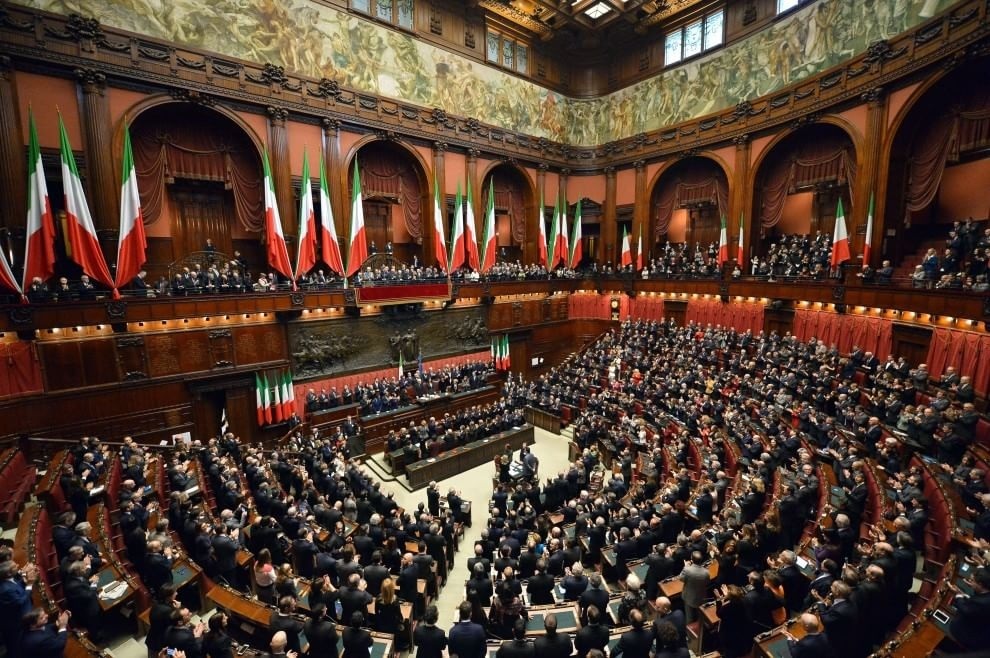
On November 20^th 1918 the Italian nation was ready to open a new phase in its political history; the reopening of Parliament session, interrupted in early October because of the urgent preparations for the last Italian offensive of Vittorio Veneto, took place in the renovated seat of the Italian Parliament: the new Chamber designed by Ernesto Basile within the old Montecitorio Palace (here in a much more recent picture). So that the reopening of the works and the inauguration after repeated delays over the past years came to coincide, in what certainly appeared to be a fortunate concurrence of events, with the celebration of the Italian victory in the Great War.
The veteran President of the Chamber of Representatives, Giuseppe Marcora emphatically opened the session with the proclamation: “Honorable colleagues: Italy is complete!”. Marcora, who had fought in the last two Italian Independence Wars as well as serving under Garibaldi, had good reasons to see in the recent events the confirmation that Italy was indeed walking – if faltering from time to time – on the right path to take her place among the great nations of the world.
The prime vote of Victor Emmanuel II who, receiving the cry of misery from the whole of Italy, became the origin of our redemption, has been , thanks to the virtue of Victor Emmanuel III, satisfied. No stranger feet tread on our ground anymore, nor ever will again, not on our Trentino, not on Trieste daughter of Rome, not on any other land of ours. […] the epilogue of a century of miseries, of persecutions, of martyrs, of conspiracies, of insurrections, of wars, of crafty statesman's efforts. […] An annunciation more fortunate in this chamber where soon will be present […] those elected in the provinces freed from foreign oppression, to dictate laws and provisions worthy of the fates of the greatest of lands, of its duties, of the cause of freedom, civilization and human justice, to which [this place] is sacred.
After his salute to the King, the people, the Army, the Fleet and the dead; Marcora reclaimed again the attention of his audience to proclaim the value of the Italian War:
Italy can declare with pride: out of this long war full of atrocities and devastation […] I rise without soiling myself of any of those awful crimes that marred the nefarious efforts of our enemies. […] I went to war not for myself alone, but to protect the right of the nationalities […] assaulted in Belgium and Serbia; I came out of it by striking the mortal blow to the most implacable enemy of all nationalities, opening the road to redemption for so many peoples oppressed by it […] This is Italy, as it was conceived in the mind of our Sommo Poeta, as stirred to action by the indefatigable work of Mazzini, as trained to discipline by Garibaldi […], as willed by the Great King and his great Ministry, Camillo Cavour, and all the many others […]
Honorable colleagues, here I see before the eyes of my mind, this chamber full with the images of our many martyrs: down from their gallows, turned into altars […] Can you hear them? […] They sing the fateful hymn of Mameli, the poet of our redemption. […] Yes, honorable colleagues: long live Italy! Long live the great resurrected!
The nature of a parliamentary speech, and especially that of a celebratory one, leads to look at it with a certain dismissive attitude; since one can't – of course – take everything at face value, it seems convenient to dismiss it as rhetorics, political words dictated by circumstances. And yet if the arguments, by themselves, can't always give an accurate and truthful representation of reality, their choice does indeed reveal something of what themes and ideas the political world used to frame its own action, of the way it made sense of itself, of that grand or small act of self-representation that is a part, beyond the spoken words, of political actions and choices. And while the words itself may soon be forgotten, they provide some insight into a contemporary world view that would be otherwise difficult to appreciate.
After Marcora's brief reopening speech, it was Prime Minister V.E. Orlando's turn; not to illustrate any program of reforms, that the circumstances did not allow for that – the recent events being such as to “transcend the power of human intellect” - but again to celebrate the Italian victory and Italy's role in the War.
[…] we have victory; and, if not peace already, the certain promise of peace, and the scourge of death and destruction has ended.
While humankind looks to relieve themselves – still incredulous – of the massacre, one like that the world had never experienced before […] our soul goes back to the long past terrible months, that we spent in anguish; goes back to the whole of earth shaken by the carnage of war, to the millions of young lives cut down in the immense fight, to the deadly unleashing of man's worst instincts, wrath, cruelty, hatred, vengeance; but even confronted with this tragic view, our conscience does not falter, since it can't move us any recrimination.
And indeed, even if the cry of victory was to suddenly turn into silence, our soul […] would surely recognize that what we did had to be done, because our war was fair and necessary. We had at the same time to solve our obligation to accomplish national unity, the sacred heritage of our fathers,of the apostles and the martyrs of the Italian Risorgimento, and to ensure the fundamental and necessary conditions of our existence as an independent state, and, therefore, safe within its borders; we had, on the same side of those peoples unjustly assaulted, defend the freedom of all and justice for all, against the violent hegemony of one alone. […] Now, with the favorable completion of the war, the inescapable causes and the ideal motives that pushed us into the colossal fray shine in the face of the whole world to proclaim the greatness and the nobility of the Italian war.
Not only was the concrete measure of the Italian victory over the Austro-Hungarians – something that the Italian Government was most intent to reaffirm, as showcased by Orlando's own instruction to “correct” the front bulletin detailing the enemy's disarray in the final days of October – a parallel and confirmation of the value of the Italian effort; but the final victory and its size were also a consequence of the ideal values that inspired the action of the Entente powers:
Not that we want to take the conflict as the judgment of God of old times, where one finds right on their side just because they have come out victorious [but] the Entente wouldn't have been able to overcome the formidable enemy […] if, besides their material strength, a great ideal strength had not sustained them. […]
Thanks to those virtues Italy has been able to end with her triumph the duel which lasted for three quarters of a century […] And by striking down her opponent, she had not only found the consecration of her unchallenged rights and rallied to freedom all of her children, but with her blood, by means of her victory, she offered a decisive contribution to the liberation of those people who had to suffer the most insufferable domination, one founded of ethnic supremacy, and to those peoples she opened the ways of more civilized and fortunate fates.
It is above all the strength of such idea that inspired the Italian people to hold to their faith, which sustained them through forty one months of war, without the doubts insinuated by the arguments of certain subtle thinkers, nor the disillusionment caused by material setbacks, ever managing to weaken their resolve nor shake their spirits.
[…] And even when the worst possible adversity fell abruptly upon us, carrying a threat as much more dangerous as it was insidious, and the enemy could boost about destroying our army and dissolving our national unity […] a whole people jumped forward, fiercely resolved to fight them all, enemy, events and fate. […] To resist: that was the choice that carried our salvation. And to resist one hour more than our enemy: that was the secret of our victory.
But the resistance that had inspired the victorious defensive battle of June 1918 on the River Piave was not enough. The Italian people
awaited, impatient, the time [of the offensive] […] to reconquer our lands, to redeem our brothers who called upon us, to vanquish the enemy.
Then the Army leaped forward in an impetus that swept away any resistance. Nor could the river's flow halt it […] nor the mountains […] nor the opposition of the enemy […] which mounted a desperate defense, as if it had resolved to end its century old history with a last heroic effort. […] But even this extreme resistance is forced to give in […] no longer a victorious battle but a whole army falling apart, a whole empire in ruins!
In a few days we take back or cities, […] we liberate those brothers that for decades had invoked our assistance […] the same day sees the Italian tricolore re-enter Udine, rise in Rovereto, in Trento, in Trieste. […] What sacrifice, even the greatest, could appear excessive if compared with the virtues of those cities, which suffered with latin nobility through any sort of martyr just to protect their whole Italian soul? […] Italy owed [them] no less than this: the offering of all her strengths, to the extreme end, of her blood, to the last drop; to die for them, or be victorious with them.