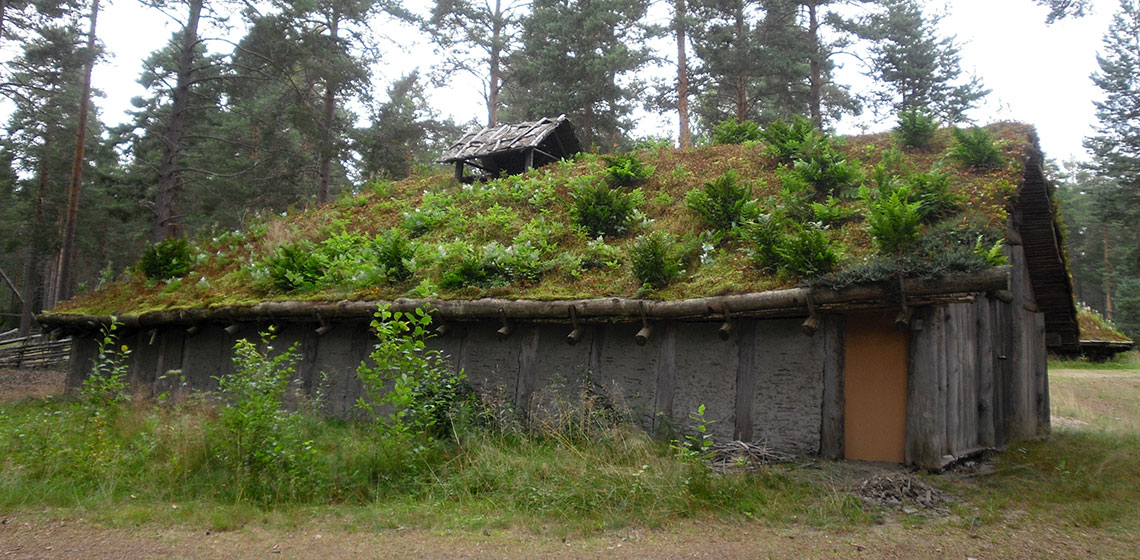
Sod, Paint, Plaster, Something different entirely?
This era is in the midst of a shifting in conscruction technique in Scandinavian buildings - from the poles, weaved wicker and straw and mud (and often animal dung) walls of the older types of houses to skiftesverk (I am sorry, but I have no idea how to translate that) or knot-timbered. The earliest surviging knot-timbered building is Granhult's church from sometime after 1220.
The older type of house did not really need protection against weathering - if the mud-straw mix on the skeleton of woven wicker started to crumble, you simply replaced it with new mud-straw mix, and such maintenance would have been fairly common with the older longhouses.
The newer wood buildings, wether fackverk or knot-timbered, would be made from carefully selected pine, with the core wood from chosen trees that had grown slowly and were this very dense, that was allowed to dry slowly to avoid cracks and twists in the wood. This combined with a large overhang of any roof usually protected the walls against dampness, water and rot.
Tar was used on ends (especially the knot-timbered houses logs' ends) to protect them against rot while the rest was allowed to go grey. For more prestigeous buildings, such as Granhult's church, shingles could be used (and replaced as needed) to protect the timber below.
That said, from sometime in the 16th century it is established that leftovers from the mining at Falu copper mine were used to create the famous Swedish falu rördfärg (falu red paint) that has been used to paint first the ends of the logs, then the entire houses.