I think spears are among the coolest weapons used through history and today I went into the woods with a broom handle and practised some different thrusting techniques on a tree however even after just 20 or so thrusts I became quite red and sore at the base of my thumb (I'm male and work out quite a bit so I wouldn't say I have tender skin).
Would Greek hoplites use gloves to protect themselves or did develop massive callouses?
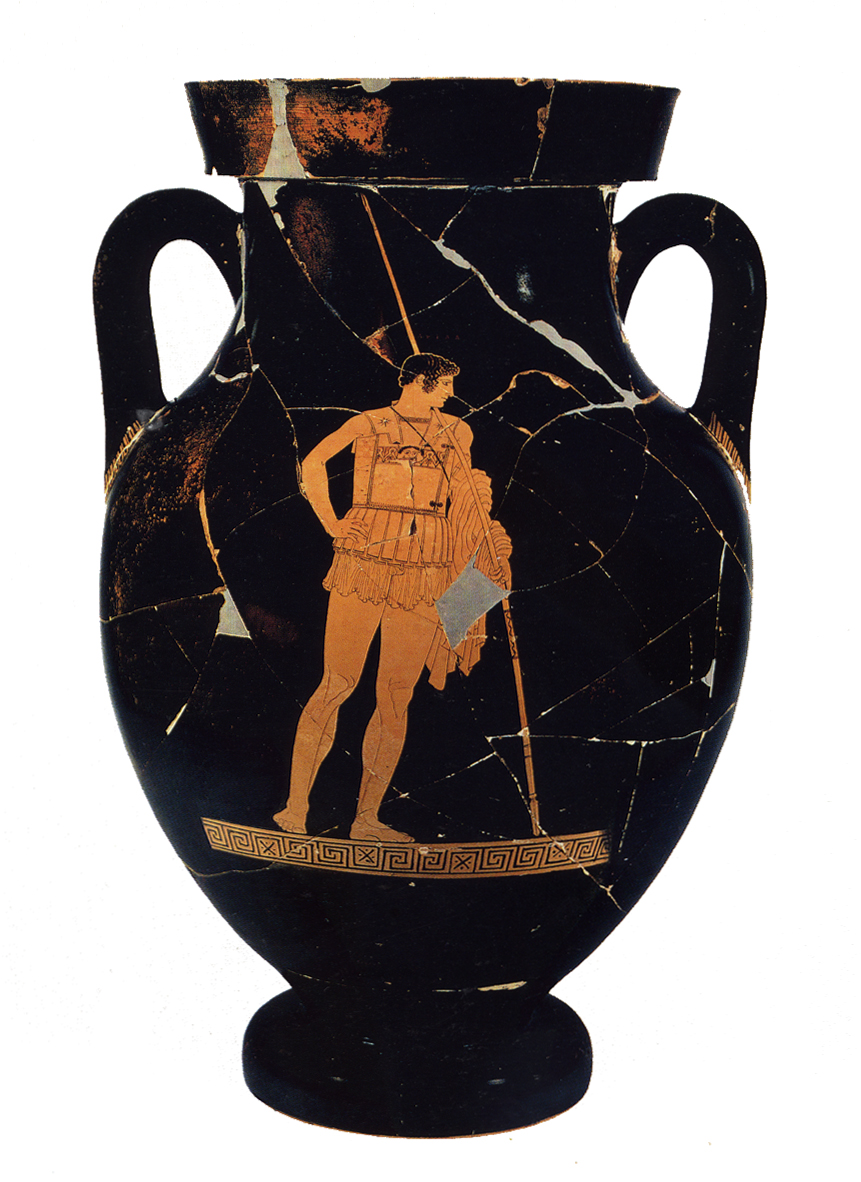
As far as we know, they did not use gloves. Vase paintings show that some would add a sleeve to the shaft of their spear at the point of balance, which we assume was made out of cloth or leather. You can see an example just below the hoplite's hand on this vase. However, there are also many depictions of spears that don't have a sleeve like this.
It seems fair to suggest that chafing and irritated skin was a common problem, since Greek hoplites would rarely use their spears, and your average hoplite would never get as many as 20 thrusts in. Most men, posted in ranks behind the front for the few pitched battles in which they would take part in their lifetime, might hold their spears for long periods of time, but wouldn't use them in anger. Since there was no organised training in peacetime there would be no opportunity for them to develop a 'spear hand' unless they chose to spend their spare time stabbing stuff.
So how come we don't hear of Greeks with blisters on their hands after a battle? Most likely, the answer is that the great majority of Greek hoplite levies worked with their hands every day. They were farmers and craftsmen, for the most part; the poorest among them might be labourers or builders or sailors. They would be holding ploughs and shovels and hammers when not called upon to carry spears. Their hands came pre-hardened.
They did, however, idolise the life we live now - the leisured life in which using your muscles is a choice, and in which working out in the gymnasion is your substitute for back-breaking labour. The rich lived this life, in which the body was carefully honed to meet a high standard of balance and beauty rather than worn out every day as a tool. Many hoplites would have been of the class that could afford this, and their skin would have been comparatively tender. Perhaps those who spent their time practicing with the javelin might have an advantage, or those who used their hands for contact sports like boxing or wrestling. But many of the wealthier hoplites would not have bothered with all that much exercise, and for them - the "fat rich men" Plato ridiculed as the useless core of every phalanx - battle would certainly have been a challenge, and not just because they might get blisters on their hands.