As Russia expanded into Siberia and northern Eurasia, they took over/incorporated/colonized lands of peoples that the various Chinese, Japanese and Korean kingdoms - and those in central Asia - of the time must've had some form of contact with.
So I wonder, what was the sentiment of these kingdoms bordering what would become Russia, at its eastward-expansion? Is it mentioned in contemporary sources, and if so what is said about it? And what was the relationship between these places and Russia as it happened?
I hope the question makes sense; I have no real knowledge whatsoever on this subject, so it may be clumsily asked.
Thank you for your time!
I’m not really expert in this area and period, but I mentioned (albeit very briefly) on the beginning of Russo-Japanese relation in my second comment for the answer to When did Asia learned about "the discovery of America" and how much did they knew about it?, so just add a few word on Russo-Japanese relations around NE Eurasia in the 18th century, mainly relying on Morinaga’s monograph in Japanese (Morinaga 2008), as a introduction of the primary sources between these two countries.
As I wrote in the post mentioned above, Russia first expanded into the coast of the Pacific around the middle of the 17th century. Fort Okhotsk (the name of Okhotsk Sea, NW Pacific comes from this fort) was founded in 1649 and functioned as a Russian foothold around that region, and the Russians kept on the exploration of Kamchatka Peninsula around 1700. The main purpose of this expansion was not the land itself, but the fur, especially that of sable. In course of this expansion, the Russians met a shipwrecked Japanese at the southern end of Kamchatka Peninsula drifted from the Pacific: His name was Denbei who had been a merchant in Osaka, Japan and suffer a shipwreck on his way from Osaka to Edo (now Tokyo) in 1695. The Russians freed him from the locals and sent him to Moscow. He finally saw Tsar Peter the Great in 1702, and later became a first teacher in Japanese to a small number of the Russians on the instruction of the tsar. Morinaga analyzes this Russian attitude to Denbei from a standpoint of the two-fold contemporary Russian southward policy both western and eastern parts of her realm (Morinaga 2008: 16).
Sporadic contact between the shipwrecked Japanese and the Russian authority kept on going still in the 18th century, and the Russian employed them to expand Japanese language school now under the supervision of Russian Academy of Science in St. Petersburg. Tsarina Catherine the Great (1727-96) was also said to open a very small Japanese language school in Irkutsk, Siberia. The school in St. Petersburg continued at least until the late 19th century, and among such Japanese ex-shipwrecked, Kodayu DAIKOKUYA (1751-1823) is the most famous and widely known in Japan as a protagonist of several historical fictions. He had been a captain of the merchant’s ship, but his ship suffered a wreck in 1783 and first the survivors drifted ashore in the Aleutian Islands. It took 6 years for them to build a boat and managed to get to Irkutsk, trading center for the fur in the region. There he met a famous Finnish-Russo naturalist, Kirill Gustavovich Laksman (1737-1796 1736). Laksman who had been familiar even with Tsarina Catherine the Great helped him to travel to Moscow-St. Petersburg to meet the Tsarina. Tsarina Catherine instructed a son of Kirill, Adam Laksman to accompany Kodayu and co. survivors from Siberia to Japan, and further, to delegate him as an imperial Russian envoy in 1793 to negotiate some issues like the treatment of the wrecked like Kodayu as well as the trading. Kodayu and co. successfully returned to Japan in 1792/93, but the negotiation of Adam Laksman largely failed since Shogunate does not wish to establish the direct contact with Russia out of Dejima, Nagasaki.
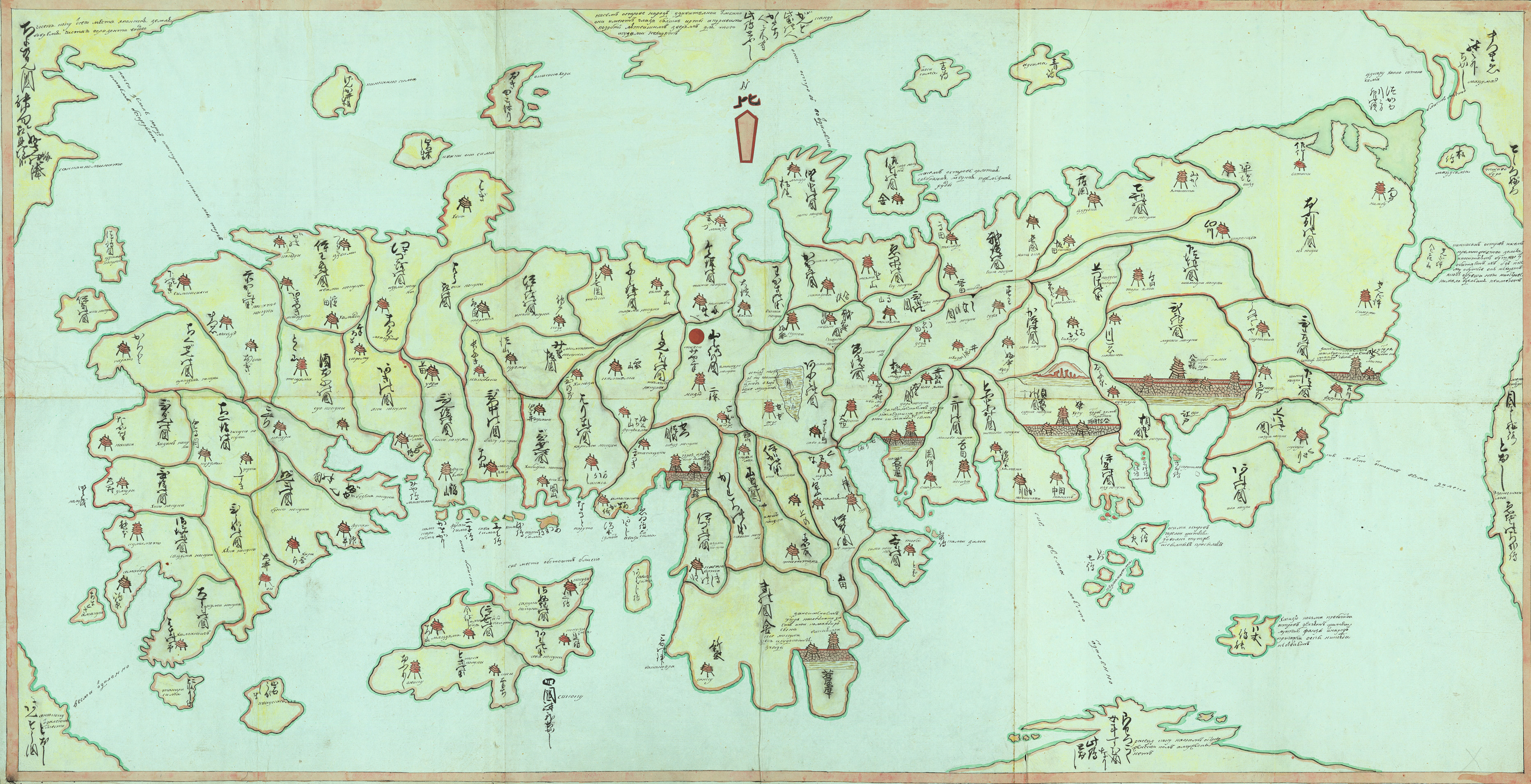
Officers of Tokugawa shogunate interviewed (interrogated?) Kodayu and co. on his wreckage, travel, and the social custom of the 18th century Russia, and the record of this interview was later complied by Yogakusha (‘scholar in western studies, mainly via the Netherlands’) Hoshu KATSURAGAWA as Hokusa Bunryaku (‘Stories about Russia Told by a Repatriated Drifter’) in 1794. Though not available still now in English and not circulated in public in Edo Period, this valuable account of Kodayu offers us some insights of the Russo-Japanese relationship at that time (and easily assessible in Japanese). Based on this primary source, Novelist Yasushi INOUE wrote a famous historical novel, Oroshiya koku Suimu tan ('The Dream of Russia') with some historical inaccuracies, and the novel was later adapted also as the namesake film (link to IMDB) in 1992. I’ve found that Adam Laksman also wrote the record of his visit in Japan, but I don’t know about any translation availability of Laksman’s work. And also, this map of Japan had been depicted as Kodayu told the Russians and dedicated to Tsarina at their meeting.
On the other hand, the further Russian expansion, as notified by the Russian exile Móric Benyovszky who was actually Hungarian and escaped from Siberia) in 1771 and further represented by the envoys like Laksman and Kodayu, warned Tokugawa Shogunate and divided their elites between the more rigorous isolationism (Sakoku) and those who wished to have more free diplomatic relations. Shihei HAYASHI (d. 1793), a thinker, belonged to the former, and wrote multi-volume Kaikoku Heidan ('The Defense Treaty for a Sea Nation), in which he earnestly warned the threat of Russian invasion. The shogunate itself regarded Hayashi’s work as more dangerous than the potential threat of Russia, however, and forbade the publishing of the work. This work is also not so easily accessible to Anglo-Phone people, I assume (according to Wikipedia, there is at least a German translation).
References:
[Edited]: corrects the date of death of Kirill Laxsmann. fixes typo.