My question might sound stupid but I always wondered why. Europeans might not have had knowledge of islands such as Japan, the Philippines or Australia. However, with the silk road and Marco Polo's trip to China, they did knew that there were kingdons further east? Why didn't he think he would reach these ones first?
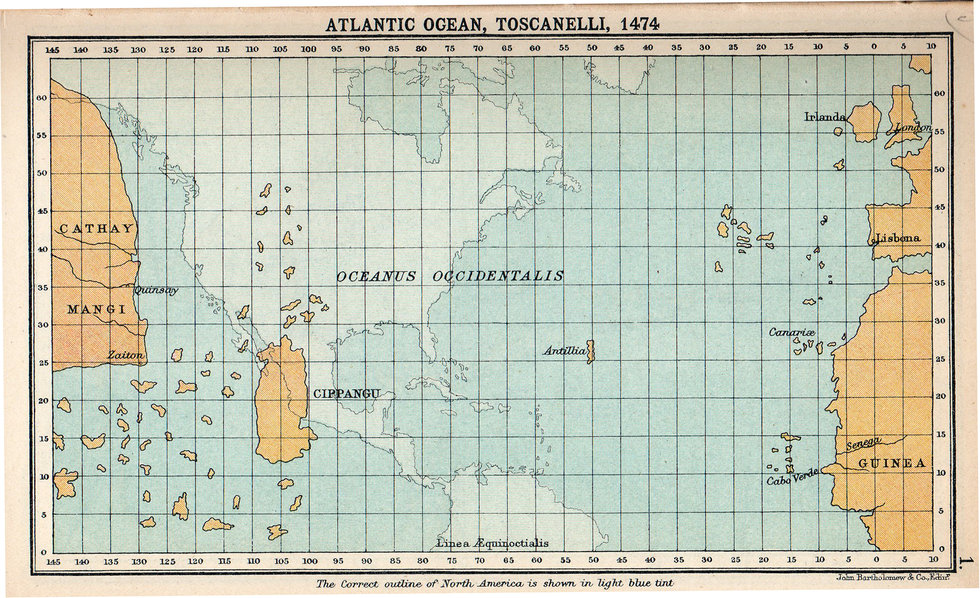
Actually, Columbus did thought he was exactly going to find China or Japan, or as he referred to it Cipango. He didn't know about Phillipines or Australia, and Columbus view of what he would find was most likely modified version of this 1474 map made by Toscanelli which Columbus had seen.
There are many references throughout the first log of exactly Cipango, especially around the time Columbus bumped into Cuba, which he thought was Cipango. Most obvious entry is from October 21st, where he says:
I would like to leave here to-day for the island of Cuba which I believe must be Cipango {Japan}
There are other references to Cipango, like on October 6th, 13th, and 21st-26th of the same month.
He also references Marco Polo's descriptions of China, where he very bluntly states on October 21st:
But still, I have determined to go to the mainland to the city of Guisay and give your Highnesses' letters to the Great Khan, and beg for a reply and come back with it."
Great Khan obviously comes from Marco Polo, as well as city of Guisay / Quisay / Kinsay which is a town supposedly on mainland China coast, also present in Polo's account. It is quite clear Columbus was both familiar and expecting to find China and Japan, not modern India.
So, how does India feature here? The intro to Columbus log says, gives a clue:
because of the information which I had given your Highnesses about the lands of India, and about a Prince who is called Great Khan
Basically, in medieval European mind Asian continent was at best very blurry idea, and the term India, or Indies was used not just for the area of the modern subcontinent/country, but spanning the whole the area from East Africa to the Islands of Indonesia, which would include the islands that Columbus found (if they were in Asia that is). For example, a book by Duarte Barbosa, written in 16th century, so after Portuguese reached Asia says:
Between this river [Ganges] and the Eufrates are the first and the second India, a territory very abundant and well provided, very healthy and temperate, and from this river further on to Malaca [in modern Malaysia] is the third India, according as the Moors say.
And that's after the Europeans were present in the Indian ocean. Before the concept was even wider, as we have seen.