I have an answer and a contention. The answer is that they were made using different processes. The contention is you're therefore comparing apples to oranges, and so you miss several advantages that Roman coins had over Chinese ones.
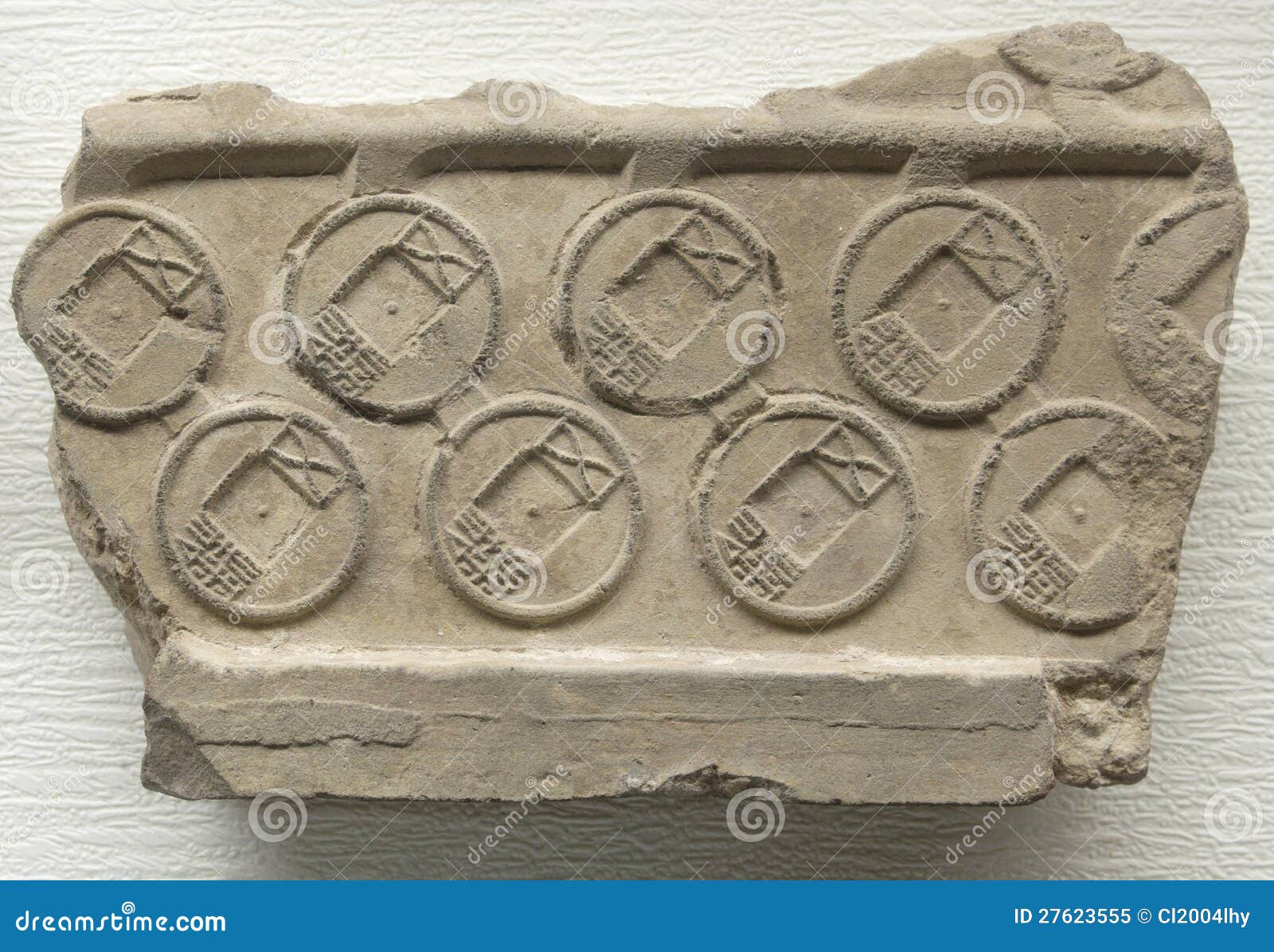
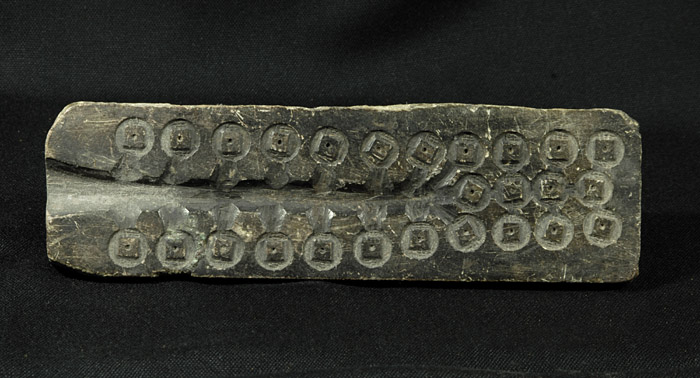
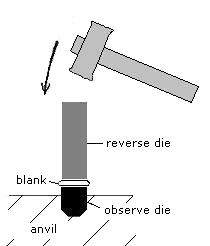
Firstly, the answer. Chinese coins were cast rather than struck. What's the difference? Well, Chinese coins were made of cast bronze, using moulds like this or this to produce something not dissimilar to this. The square holes existed to facilitate the coins being turned on a lathe, hence the rounder, smoother edges. By contrast, Roman coins were struck – that is, a metal flan (disc) called a 'blank' is heated up and placed on an anvil with a die (a hard iron stamp), and is then hammered with another die on top, creating an image on both sides. A diagram can be seen here. Subtle variations in the flan's dimensions, temperature and position relative the dies can significantly affect the quality of the image in a way that cast coins, with consistent, standardised moulds, cannot. Additionally, the reason that Chinese coins' edges appear to last longer is that they are made of copper alloys, which are far more resistant to wear than silver and gold.
However, I disagree strongly on the suggestion that Chinese coins were 'made better' – indeed I'd argue much the opposite – and I do so on two major counts. Firstly, by virtue of being struck rather than cast, Roman coins could be made of copper alloys, silver or gold, whereas Chinese coins were almost exclusively copper and copper alloy, as precious metal (particularly silver) was mainly used in the form of cast ingots. On neither side of the Eurasian continent was precious metal coinage made using casting in any significant quantity: a large amount of metal gets left over every time in the form of a sprue, it does not need to be as large as bronze coinage and is thus harder to cast – indeed it is more useful to have smaller denominations of silver and gold – and, importantly, my next point:
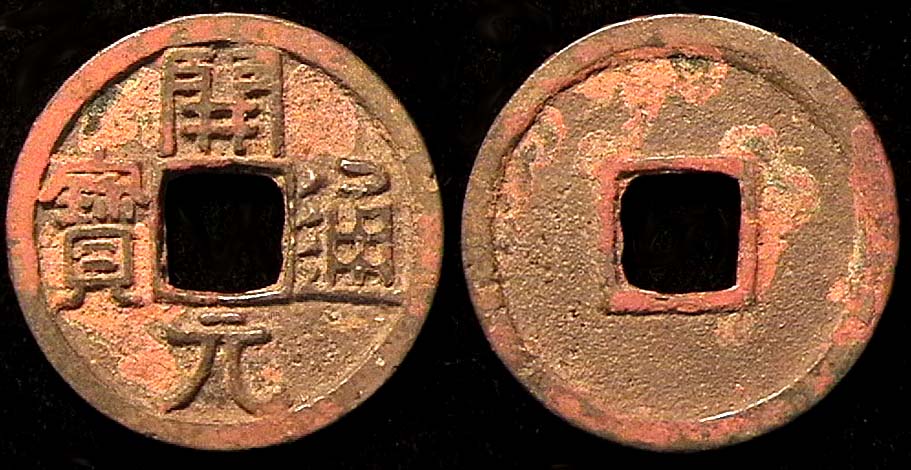
Secondly, striking allows for much higher quality images than casting, which is particularly useful when coins circulate widely and can thus serve as useful vehicles for broadcasting messages. Contrast this coin of Tang Xuanzong, which is roughly 25mm in diameter, with this gold aureus of Nero, which is roughly 19mm in diameter. The inner surface of the Tang coin is slightly uneven, a hallmark of cast bronze, and the only detail is the era name (Kaiyuan) and the fact that the coin is legal tender. By contrast, the Neronian coin is smooth where there is no detail, and the detail itself conveys a vast quantity of information, particularly on the reverse side (with the temple). The temple is that of Janus at Rome, the doors of which were closed only in times when Rome was at peace – a rare enough occasion to be widely celebrated whenever it occurred. The inscription around it? 'NERO CAESAR AVGVSTVS' on the obverse (simple enough to understand), and on the reverse 'IANVM CLVSIT PACE P R TERRA MARIQ PARTA' – 'closed the temple of Janus, pacifying by land and sea'. The sheer density of both explicit and implicit meaning that could be imparted on a struck coin – of less than an inch in diameter, no less – was light-years ahead of the cast copper cash.
So no, I would not agree that Chinese coins were made better. They were made differently, and while this had a couple of benefits (the one significant one really being the ability to store them as strings, which is not particularly impressive and at most situationally useful), the process for making Roman coins was arguably more efficient in terms of material and fuel costs, allowed for the creation of precious metal coinage and made full use of the potential for the coin as a form of mass media.
Bibliography: